(0086)18936474568 sales@immay-auto.com

- Home
- Equipment
- Industries
- We Immay
- Resource
- Contact
Author: Site Editor Publish Time: 2026-10-15 Origin: Site
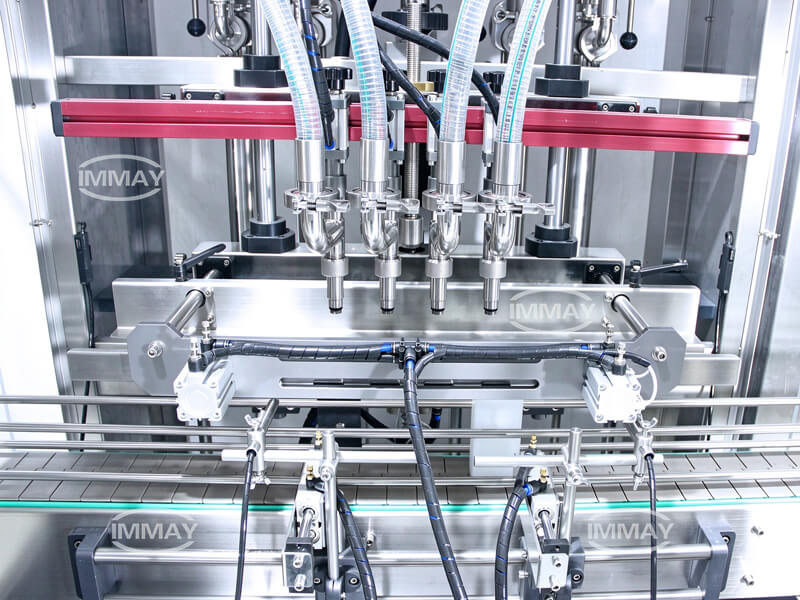
Liquid filling speed can vary from one product to another. When filling products such as shampoo, liquid hand soap, and hand dishwashing liquid, manufacturers may find that the filling process behaves differently than it does with liquids that produce little foam.
Even when a filling machine is capable of operating at a certain speed, its actual performance can vary depending on the product being filled. This raises an important question: why does foaming affect liquid filling speed?
Foaming occurs when air enters a liquid and forms bubbles. Surface-active ingredients in the formula can stabilize these bubbles, allowing foam to remain on the liquid surface. During filling, the way the liquid flows through the filling system and enters the container affects how much air becomes entrained.
A higher filling flow rate can increase turbulence and splashing under certain conditions, introducing more air into the liquid and promoting foam formation. This is particularly relevant for products such as shampoo, liquid hand soap, and hand dishwashing liquid, which commonly contain surfactants that help stabilize bubbles.
As foam builds up in the container, the visible foam level can rise before the required volume of liquid has been filled. If the foam reaches the container opening, it can overflow even when the actual liquid volume is still below the target. When this requires a lower filling flow rate or additional time for each container, overall production output can decrease.
The amount of foam produced during filling depends on the product's properties and the filling conditions. Some formulas form foam more readily or retain it longer than others. The filling setup also influences how much air enters the liquid during transfer.
The filling nozzle position can affect foam formation. When liquid falls from a considerable height or strikes the liquid already in the container with excessive force, splashing and turbulence can introduce more air. Container geometry can also influence the flow pattern and splashing, depending on how the liquid enters the bottle.
The product formula and filling conditions therefore need to be considered together. A formula that readily stabilizes bubbles may produce more persistent foam when the filling process introduces excess air, while a less turbulent filling process can help limit unnecessary foam formation.
Reducing foam during liquid filling starts with controlling the flow of liquid into the container. If a high filling flow rate causes excessive splashing or foam buildup, reducing the flow rate can help limit air entrainment. The appropriate setting depends on the product and the filling system.
The filling nozzle position also matters. Starting near the bottom of the container and raising the nozzle as the liquid level increases can reduce the free-fall distance and splashing. This method is suitable only for machines designed to support this type of filling.
The settings should be tested with the actual formula and container. Adjusting the filling flow rate and nozzle position can help control excessive foam while maintaining a practical filling speed. The goal is to find filling conditions that control foam while maintaining efficient production.
When choosing a filling machine for foaming liquids, consider the product's foaming behavior, viscosity, container dimensions, and required production output. These factors help determine a suitable filling method and machine configuration.
The number of filling nozzles affects how many containers can be filled at the same time. However, the actual production output also depends on the time required to fill each container, container handling, and the operating speed of the machine.
It is also important to check whether the filling flow rate and filling nozzle position can be adjusted to suit the product. These practical details help determine whether a machine can meet production requirements without excessive foam buildup.
Foaming affects liquid filling speed because the way a product flows into a container influences air entrainment, foam buildup, and the control of the filling process. The impact varies with the formula, filling conditions, and equipment configuration.
For manufacturers, choosing a suitable filling speed means considering the product and the filling process together. A machine’s rated speed is only one part of the decision; the more important consideration is how consistently it can fill the actual product at the required production output.