- Home
- Equipment
- Industries
- We Immay
- Resource
- Contact
Author: Site Editor Publish Time: 2026-07-18 Origin: Site
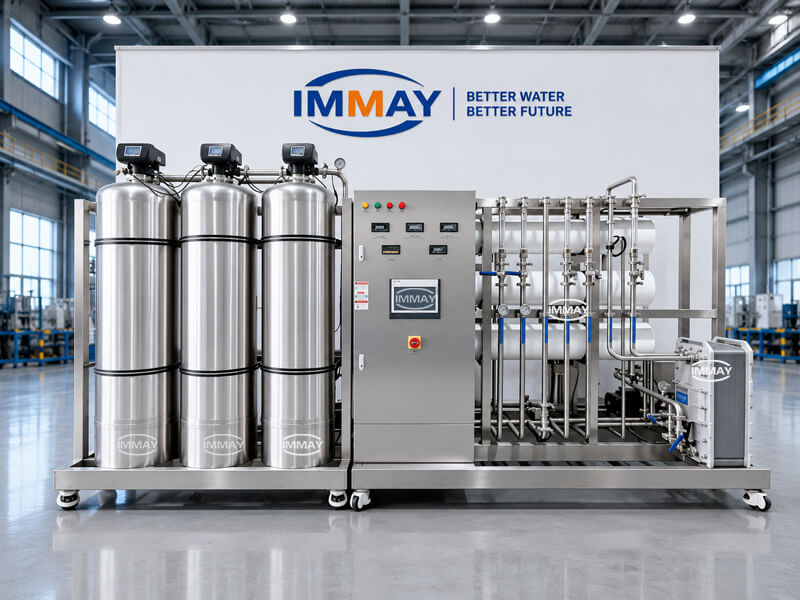
Many industrial manufacturing processes require a continuous supply of purified water, leading many manufacturers to ask: Can an industrial RO system run continuously?
In most cases, industrial reverse osmosis (RO) systems are designed for continuous operation and can run 24 hours a day. However, stable long-term performance depends on several factors, including proper system sizing, feed water quality, operating conditions, pretreatment performance, and routine maintenance. Understanding these factors helps maximize system reliability, maintain consistent water production, and extend membrane service life.
Yes. Unlike residential RO systems, industrial reverse osmosis systems are typically designed to support continuous operation and meet the purified water demands of manufacturing facilities. Many industrial applications, such as cosmetics, food processing, pharmaceuticals, and chemicals water treatment, require a stable water supply throughout the production process, making continuous operation an important design consideration.
However, continuous operation does not mean the system can operate under any condition without limitations. An industrial RO system should be operated within its designed capacity, operating pressure, and feed water specifications. When combined with appropriate pretreatment and routine maintenance, continuous 24-hour operation can help maintain stable water production, consistent water quality, and reliable long-term system performance.
Whether an industrial RO system can operate continuously depends on more than the equipment itself. Stable 24-hour operation requires the system to operate within its design parameters while maintaining consistent feed water quality and proper operating conditions. The following factors have the greatest impact on continuous performance.
An industrial RO system should be operated within its designed production capacity. Running the system beyond its rated flow for extended periods can increase membrane loading, reduce water quality, and accelerate component wear. Selecting a system that matches actual production demand is essential for reliable continuous operation.
Feed water quality has a direct impact on RO system performance. High levels of suspended solids, hardness, organic matter, or other contaminants can increase the risk of membrane fouling and scaling. Poor feed water quality may reduce water production and require more frequent maintenance, making continuous operation more difficult.
Stable operating pressure is essential for consistent RO performance. Pressure that is too low may reduce permeate production, while excessive pressure can place unnecessary stress on the membranes and system components. Operating within the recommended pressure range helps maintain stable water production during continuous operation.
Pretreatment plays a critical role in protecting the RO membranes. Filters and other pretreatment equipment should operate effectively to remove suspended solids, residual chlorine, hardness, and other contaminants before the water enters the RO system. Poor pretreatment performance can quickly lead to membrane fouling, scaling, or damage.
The condition of the RO membranes directly affects continuous operation. As membranes become fouled or scaled, water production may gradually decline while operating pressure increases. Monitoring membrane performance and addressing fouling when necessary helps maintain stable operation and extend membrane service life.
Continuous operation depends not only on system design but also on proper operation and routine maintenance. Following good operating practices helps maintain stable water production, protect RO membranes, and reduce unexpected downtime.
Regularly monitor key operating parameters such as feed pressure, operating pressure, permeate flow, concentrate flow, and water quality. Identifying abnormal changes early helps prevent performance problems from developing into more serious issues.
Pretreatment equipment should be inspected and maintained on a regular schedule. Keeping multimedia filters, activated carbon filters, water softeners (when required), and other pretreatment components operating properly helps reduce the risk of membrane fouling, scaling, and chlorine damage.
Cartridge filters should be replaced according to their operating condition rather than waiting until they become heavily clogged. Timely replacement helps maintain stable feed water quality and provides continuous protection for the RO membranes.
Regularly evaluating membrane performance helps identify gradual changes in water production, salt rejection, and operating pressure. Early detection of membrane fouling or scaling allows corrective action to be taken before system performance is significantly affected.
Industrial RO systems should be operated within their designed production capacity and recommended operating conditions. Avoiding excessive loading helps maintain stable system performance, extend membrane service life, and support reliable 24-hour operation.
Industrial RO systems are generally designed for continuous operation and can run 24 hours a day when they are properly sized and operated under suitable conditions. Stable feed water quality, effective pretreatment, and routine maintenance all contribute to reliable long-term performance.
For manufacturers that require uninterrupted purified water, selecting the right industrial RO system is only part of the solution. Matching system capacity to production demand and maintaining the equipment properly helps achieve stable water production while extending membrane service life and reducing operating costs.