- Home
- Equipment
- Industries
- We Immay
- Resource
- Contact
Author: Site Editor Publish Time: 2025-10-03 Origin: Site
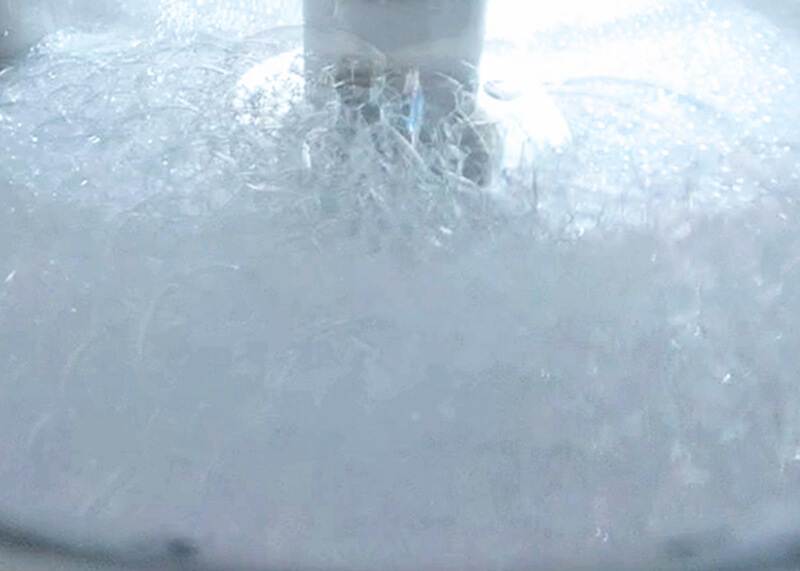
Foaming is a common phenomenon during cosmetic manufacturing, especially in products that contain surfactants or require intensive mixing. While foam itself is not always harmful, excessive or uncontrolled foaming can create challenges in production, such as longer processing times, inconsistent product appearance, and difficulties in filling and packaging. In addition, visible bubbles trapped in creams, lotions, or liquid formulations may affect the consumer’s perception of quality.
Understanding why foaming occurs and how to manage it is essential for ensuring smooth operations and stable product performance. As a professional manufacturer of cosmetic manufacturing machines, IMMAY has observed this challenge in cosmetic production. This article focuses on the key causes of foam formation during cosmetic manufacturing and explores practical ways to address them.
Surfactants are essential ingredients in many cosmetic formulations, serving to solubilize oils, stabilize emulsions, and provide cleansing or foaming properties in products such as shampoos, body washes, and facial cleansers. While these functions are important for product performance, surfactants also naturally reduce the surface tension of liquids. This reduction makes it easier for air to be trapped in the formulation during mixing, leading to foam formation.
Certain surfactants are particularly prone to creating foam. Ingredients like sodium lauryl sulfate (SLS), sodium laureth sulfate (SLES), cocamidopropyl betaine, and various PEG-based emulsifiers are common examples. When these high-foaming raw materials are combined with vigorous mixing or pumping, the likelihood of excessive foam increases.
Understanding the role of surfactants is a key first step in managing foam during cosmetic manufacturing. By carefully selecting and balancing these ingredients, manufacturers can maintain the desired product properties while minimizing unwanted foaming.
High speed mixing and high shear homogenization are common steps in cosmetic manufacturing, particularly for creams, lotions, and emulsions. While these processes are essential for achieving uniform texture and stable emulsions, they can also introduce air into the formulation, leading to foam.
The type of mixing equipment plays a significant role in foam formation. Different impellers, blade designs, and rotor-stator configurations affect how much air is drawn into the product. Open-top mixers or conventional high-shear mixers tend to trap more air compared to enclosed with vacuum-assisted systems.
IMMAY’s vacuum cream mixer machines offer an effective solution for foam management. After the mixing and homogenization process, the vacuum function can be activated to remove trapped air, significantly reducing foam. This post-production vacuum defoaming allows manufacturers to achieve smooth, consistent formulations without compromising the product’s texture or stability.
The viscosity of a cosmetic formulation plays a key role in foam formation and retention. Low-viscosity products, such as toners or liquid cleansers, allow air bubbles to rise and escape more easily, often resulting in transient foam that dissipates quickly. In contrast, high-viscosity products, like creams, lotions, and gels, can trap air more effectively, causing bubbles to remain suspended within the product for longer periods.
Different product types also exhibit varying foam behaviors. Creams and emulsions often retain microbubbles due to their dense structure, while shampoos and body washes, despite having lower viscosity than creams, may generate visible foam because of high surfactant content. Understanding these differences is crucial for controlling foam during production.
The structure of the formulation—how oils, water, and emulsifiers interact—also affects how air is incorporated and retained. Formulations with a stable emulsion network can trap tiny bubbles within the matrix, making them more resistant to immediate collapse. By considering both viscosity and formula structure, manufacturers can anticipate foam behavior and implement appropriate measures, such as adjusting mixing parameters or applying post-production vacuum defoaming.
The way raw materials are introduced into a cosmetic formulation can significantly influence foam formation. Powdered ingredients, such as thickeners, stabilizers, or active powders, can trap air when added too quickly or without proper dispersion, leading to unwanted bubbles in the final product.
The dissolution speed of these powders also affects air incorporation. Rapid addition or insufficient wetting can cause clumping, which not only traps air but also makes it more difficult for bubbles to escape during mixing. Slow, controlled dissolution helps minimize the amount of air introduced into the system.
The order of ingredient addition and process control are equally important. Adding powders gradually into a well-agitated liquid phase, or pre-dispersing them in a small amount of solvent before incorporation, can reduce air entrapment. Careful control of temperature and agitation during feeding further ensures smoother integration of raw materials, ultimately reducing foam formation and improving product consistency.
Temperature plays a critical role in foam formation during cosmetic production. During the heating stage, certain ingredients dissolve more effectively, and trapped gases within the formulation are more likely to escape. Proper temperature control at this stage can help reduce the initial incorporation of air.
However, rapid cooling after heating can increase the risk of foam retention. As the formulation cools, viscosity rises and air bubbles become trapped within the product matrix. This can lead to persistent foam that affects product appearance and consistency if not addressed.
Effective temperature management throughout the production process is therefore essential. Gradual cooling and maintaining appropriate temperatures during both heating and post-mixing stages allow gases to escape more easily and minimize foam retention. Coupled with post-production vacuum defoaming, this ensures smooth, consistent cosmetic formulations with minimal trapped air.
Foam formation is a common challenge in cosmetic manufacturing, influenced by surfactants, mixing and homogenization processes, viscosity, formula structure, raw material handling, and temperature management. Proper control of these factors is essential for achieving smooth, consistent, and high-quality formulations.
For manufacturers seeking a reliable solution, IMMAY’s vacuum cosmetic emulsifying mixers provide an effective way to manage foam, ensuring uniform texture and stable product performance. By integrating advanced vacuum defoaming capabilities with precise mixing and homogenization, IMMAY machines help improve overall efficiency.
Investing in IMMAY cosmetic mixing equipment allows cosmetic producers to minimize foam issues while maintaining the quality and consistency that consumers expect. Contact IMMAY now to explore the ideal vacuum emulsifying mixer for your production needs.