- Home
- Equipment
- Industries
- We Immay
- Resource
- Contact
Author: Site Editor Publish Time: 2026-07-06 Origin: Site
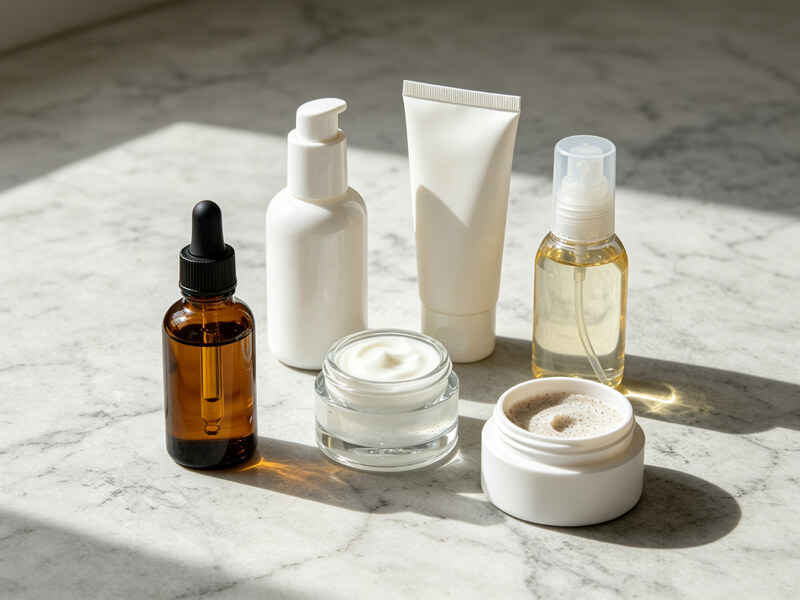
Selecting a cosmetic filling machine is not simply a matter of choosing between semi-automatic and automatic equipment. Cosmetic products vary widely in viscosity, formulation, and packaging, making their filling requirements fundamentally different.
Successful filling begins with understanding the product itself. Factors such as viscosity, container type, filling volume, production capacity, and product characteristics all influence equipment selection, filling accuracy, production efficiency, and overall manufacturing consistency. Matching these factors with the appropriate filling method helps manufacturers achieve stable production while minimizing product waste and operational issues.
This guide explains how cosmetic manufacturers evaluate filling requirements, compare different filling technologies, and select suitable equipment for products such as creams, lotions, serums, shampoos, perfumes, and gels. It further covers common filling challenges, container compatibility, and how filling machines are integrated into complete cosmetic production lines, helping manufacturers make more informed equipment decisions.
Before Selecting a Cosmetic Filling Machine, Ask These 5 Questions
Before comparing equipment specifications, manufacturers typically evaluate 5 fundamental factors that determine the most suitable filling solution.
Question | Why It Matters |
What cosmetic product will be filled? | Different formulations have different flow characteristics and require different filling technologies. |
What is the product's viscosity? | Viscosity directly influences filling speed, dosing accuracy, and machine configuration. |
What type of container will be used? | Bottles, jars, tubes, and pouches each require different filling methods and nozzle designs. |
What filling volume is required per unit? | Filling volume determines dosing accuracy requirements, filling stroke control, and the overall metering system design. |
What production capacity is required? | Expected output helps determine the appropriate level of automation and overall production efficiency. |
The following sections explain how these factors influence filling machine selection and how different filling technologies are matched with specific cosmetic products and production requirements.
Cosmetic products cannot be treated as a single uniform filling category. Even within the same production line, different formulations and packaging requirements create distinct demands on the filling process. As a result, filling systems must be configured based on product characteristics rather than using a fixed machine setup for all products.
The key differences come from several core factors that directly influence how the product behaves during filling, how it interacts with the equipment, and what level of control is required to ensure stable and accurate production.
From a filling perspective, cosmetic product behavior is primarily determined by formulation properties. These properties define how the product flows through pipelines and filling systems, how it responds to mechanical force during transfer, and how consistently it can be dosed during the filling process.
Different formulations show variations in flow resistance, transfer consistency, and dosing accuracy under pumping and filling conditions. As a result, filling parameters such as pressure, speed, and dosing control must be adjusted to maintain stable and accurate output.
Packaging design has a direct impact on how the filling system must operate. Bottle neck diameter, container shape, and material type all influence nozzle design, positioning accuracy, and filling speed.
Narrow-neck bottles require more precise filling control, while wide-mouth jars allow more flexible filling conditions. Pump bottles and specialty containers may require anti-drip or anti-overflow control to ensure clean and accurate filling.
Because each packaging type creates a different physical interface, filling systems must be configured to match these structural differences.
The required filling volume directly affects how the dosing system is designed and controlled. Small-volume products require high-precision dosing to ensure consistency, while medium and large-volume products prioritize stable and continuous output.
For small packaging sizes, even minor deviations can significantly affect product consistency. For larger volumes, the focus shifts toward maintaining stable flow and reducing production variation across batches.
Therefore, filling volume determines the level of precision control required in the system configuration.
Production requirements directly influence the overall structure of the filling system. Low-output production may rely on semi-automatic systems, while medium and large-scale manufacturing requires fully automated filling lines with integrated conveying and synchronization systems.
Higher production capacity also increases the need for multi-head filling systems, automated control systems, and stable continuous operation to maintain efficiency.
As a result, production capacity is a key factor in determining the level of automation and overall machine configuration.
Piston filling systems are widely used in cosmetic manufacturing due to their stable volumetric dosing principle. They are particularly suitable for products with medium to high viscosity, where consistent volume control is required.
This technology works well for products such as lotions, creams, shampoos, and gels, where accurate and repeatable dosing is more important than ultra-high speed flow.
Piston systems are less suitable for very low-viscosity products that flow too easily, as well as formulations requiring ultra-precise micro-dosing at very small volumes.
Pump filling systems are designed for flexible and precise control of liquid dosing. They are particularly suitable for low to medium viscosity products where stable and accurate flow control is required.
This type of system is commonly used for serums, facial cleansers, lotions, and liquid cosmetic formulations that require smooth and controlled filling behavior.
Pump systems are less suitable for very high-viscosity products, as thicker formulations can reduce flow efficiency and increase filling resistance.
Vacuum filling systems operate based on liquid level control and are commonly used for products where visual filling consistency is important. They are especially suitable for thin, low-viscosity liquids where maintaining a uniform fill level is critical.
This technology is often applied in perfume, toner, and similar cosmetic liquid filling applications where overflow control and clean filling appearance are important.
Vacuum filling systems are not ideal for high-viscosity products, as thicker formulations cannot respond effectively to vacuum-based liquid level control principles. In addition, this technology requires rigid containers that can maintain structural stability under negative pressure conditions. Flexible or soft bottles deform during filling, which can affect filling accuracy and liquid level consistency.
Viscosity is one of the most critical factors in determining the appropriate cosmetic filling machine. Different viscosity levels directly influence flow behavior, dosing accuracy, and filling stability. As a result, cosmetic products must be matched with suitable filling technologies rather than using a one-size-fits-all approach.
Below is a practical classification of common cosmetic products based on viscosity and their typical filling equipment requirements.
Typical products:
Perfume
Facial toner
Makeup remover
Liquid essence
Alcohol-based cosmetic solutions
Recommended filling machines:
These products flow easily and require high filling precision rather than strong displacement force. The main challenge is controlling overfilling, splashing, and maintaining consistent dosing accuracy.
Typical products:
Lotion
Shampoo
Shower gel
Liquid foundation
Facial cleanser
Recommended filling machines:
Piston filling machine
Pump filling machine
These formulations require stable and controlled flow behavior. Piston systems are widely used due to their volumetric accuracy, while pump systems offer flexible adjustment for different container sizes and production speeds.
Typical products:
Cosmetic cream
Thick moisturizer
Body butter
Gel cream
Vaseline
Hair wax (soft type)
Recommended filling machines:
Piston filling machine (heavy-duty configuration)
Heated filling machine with hopper (for high resistance materials)
High-viscosity products require strong displacement force and stable pressure control to ensure consistent filling without interruption or uneven dosing.
Note
The classification above represents general industrial practice. In real production environments, filling machine selection varies depending on formulation design, production conditions, and packaging requirements. If your product has special characteristics or requires a customized filling solution, you can consult IMMAY for technical evaluation and equipment recommendations.
Packaging is another key factor that directly affects cosmetic filling machine design. Different container structures require different filling methods, nozzle designs, and control systems to ensure accurate and stable production.
Typical packaging:
PET bottles
Glass bottles
Plastic rigid containers
Suitable machines:
Pump filling machine for bottles
Vacuum filling machine for bottles
Rigid bottles allow stable filling conditions and are suitable for most cosmetic filling systems.
Typical packaging:
Face cream jars
Body butter containers
Gel containers
Suitable machines:
Piston filling machine for jars
Pump filling machine for jars
Vacuum filling machine for jars
Wide-mouth design allows flexible filling, especially for semi-solid or high-viscosity products.
Typical packaging:
Hand cream tubes
Cosmetic cream tubes
Squeeze tubes
Suitable machines:
Tube packaging requires integrated filling and sealing systems to ensure sealing integrity and consistent dosing.
Typical packaging:
Cosmetic sample sachets
Single-use cream sachets
Shampoo sachets
Lotion sachets
Suitable machines:
Vertical form fill seal (VFFS) system
Sachet packaging is widely used for single-use cosmetic products and sample formats. It requires precise dosing control to ensure consistent filling weight and reliable sealing performance. Because sachets are flexible and lightweight, the filling system must maintain stable dosing accuracy while ensuring clean and uniform sealing across high-speed production.
Typical packaging:
Custom cosmetic bottles
Luxury cosmetic packaging
Irregular geometry containers
Suitable machines:
Customized cosmetic filling machines
These packaging types require flexible machine configuration to ensure positioning accuracy and stable filling performance.
Note
Packaging design directly affects filling accuracy, nozzle selection, and automation level. The optimal filling solution depends on both product viscosity and container structure. If your packaging is non-standard or requires special handling, IMMAY can provide customized filling system solutions based on your production requirements.
Production capacity is one of the key factors that determines whether a cosmetic filling system should be semi-automatic or fully automatic. Unlike product viscosity or packaging type, which affect the filling method itself, production capacity mainly defines the level of automation, line integration, and overall system efficiency.
In practical manufacturing environments, different output requirements lead to significantly different equipment configurations.
Typical output:
Laboratory production
Small cosmetic workshops
Start-up brands
Recommended equipment:
Semi-automatic cosmetic filling machine
1 nozzle piston filling machine
1 nozzle pump filling machine
At this stage, flexibility is more important than speed. Semi-automatic systems allow operators to control filling processes manually while maintaining acceptable accuracy and low investment cost. They are suitable for frequent product changes and small batch production.
Typical output:
Medium-sized cosmetic factories
Contract manufacturing operations
Multi-product production lines
Recommended equipment:
Semi-automatic + automatic hybrid filling systems
Multi-nozzle piston or pump filling machines
At this level, production efficiency becomes more important. Equipment needs to balance flexibility and output stability. Partial automation helps reduce manual labor while maintaining adaptability for different products and packaging formats.
Typical output:
Large-scale cosmetic manufacturers
Continuous production facilities
Export-oriented production lines
Recommended equipment:
Automatic cosmetic filling production line
High speed cosmetic filling system
Integrated filling, capping, and labeling line
High production environments require continuous and stable operation with minimal manual intervention. Fully automated systems are designed to maximize output, reduce downtime, and ensure consistent product quality across large batches.
Note
Production capacity should not be considered in isolation. It must be evaluated together with product viscosity, formulation characteristics, and packaging type. A high-viscosity product with low output requirements still require a specialized semi-automatic system, while low-viscosity products at high volume typically benefit from fully automated production lines.
For complex production requirements or customized factory layouts, IMMAY can provide tailored cosmetic filling system solutions based on your specific capacity and product conditions.
In modern cosmetic manufacturing, filling machines are no longer standalone equipment. Instead, they function as a central component within a fully integrated production line. The way a filling system connects with upstream and downstream processes directly affects production efficiency, stability, and overall product quality.
IMMAY focuses on providing filling systems that are designed for seamless integration within complete cosmetic production lines.
Cosmetic filling machines are typically connected with mixing, storage, and transfer systems. After formulation preparation, the product is transferred to a holding tank or buffer system before entering the filling stage.
A well-designed filling system ensures stable product transfer without interrupting flow consistency or causing unnecessary pressure fluctuations. This helps maintain continuous production and reduces downtime between batches.
After filling, products move directly into capping, sealing, labeling, and packaging systems. A properly integrated filling machine ensures consistent output speed and synchronized operation with downstream equipment.
If the filling speed is not aligned with capping or labeling processes, production bottlenecks or inefficiencies may occur. Therefore, synchronization between machines is essential for stable line performance.
Production line efficiency depends not only on individual machine performance but also on how well each unit is synchronized. Filling speed, conveyor movement, and packaging timing must be carefully balanced to avoid interruptions or product accumulation on the line.
Integrated control systems help maintain stable production flow and reduce manual intervention during operation.
IMMAY designs filling systems with production line compatibility in mind. Each system can be configured to match different upstream and downstream equipment layouts, allowing manufacturers to build flexible production lines.
Whether for semi-automatic setups or fully automated production lines, IMMAY provides technical support to ensure stable integration and long-term operational efficiency.
Note
Cosmetic production line integration requirements may vary depending on factory layout, production capacity, and product type. A well-designed filling system should always consider the entire production flow rather than focusing on a single machine.
For customized cosmetic production line integration solutions, IMMAY provides tailored engineering support based on specific manufacturing requirements.
When selecting a cosmetic filling machine, manufacturers should not only consider current production needs but also anticipate future capacity expansion and product diversification. Choosing equipment based solely on short-term requirements may lead to limitations in scalability, efficiency, and product compatibility as the business grows.
A well-planned selection strategy ensures that the filling system can support both existing production and future manufacturing demands.
At the initial stage, the primary focus is on matching the filling machine with existing product types, packaging formats, and production volumes. This includes evaluating product viscosity, container design, and required dosing accuracy to ensure stable and efficient operation.
For small-scale production, semi-automatic filling machines are often sufficient, as they provide flexibility and lower investment cost while maintaining acceptable accuracy and control.
As production increases, manufacturers may need to introduce new product lines, higher output capacity, or more complex packaging formats. In such cases, equipment scalability becomes a critical factor.
Automatic cosmetic filling systems or modular production lines offer better adaptability for future expansion, allowing manufacturers to increase output without replacing the entire system.
Planning for future requirements helps avoid unnecessary equipment replacement and reduces long-term production costs.
Cosmetic manufacturers often produce multiple product categories, including lotions, creams, serums, and liquid formulations. Each product may have different viscosity levels and filling requirements.
Therefore, selecting a filling machine with adjustable parameters and multi-product compatibility within a range can significantly improve production flexibility and operational efficiency.
Note
Filling machine selection should always balance current production needs with long-term manufacturing strategy. A system that is too limited may restrict future growth, while an overly complex system at an early stage may lead to unnecessary investment.
For manufacturers with evolving production plans or customized requirements, IMMAY can provide tailored cosmetic filling solutions designed to support both present and future production needs.
Selecting a cosmetic filling machine is not simply a matter of choosing equipment, but a process of matching the machine with the product formulation, packaging design, and production capacity.
A well-chosen cosmetic filling system is the result of balancing these factors into a unified production setup, where filling performance, and operational stability work together as one coordinated process.
Ultimately, the primary goal is to ensure the filling solution fully meets current production requirements, while reserving a reasonable margin for future capacity growth.