- Home
- Equipment
- Industries
- We Immay
- Resource
- Contact
Author: Site Editor Publish Time: 2025-11-10 Origin: Site
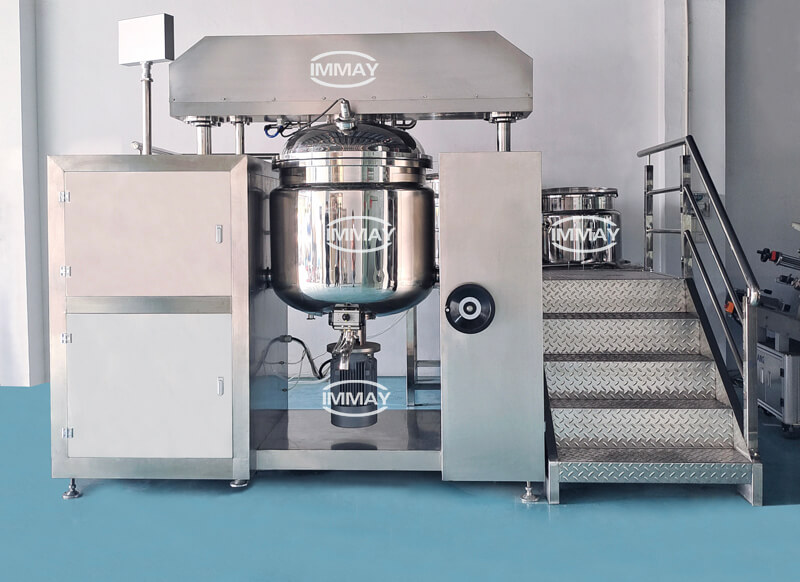
Producing high-quality creams and lotions is a process that depends heavily on the precision, consistency, and reliability of the mixing stage. From texture and stability to absorption and skin feel, the outcome of every batch is shaped by how ingredients are blended, heated, cooled, and emulsified. As consumer expectations rise and formulations become more advanced, the role of the cosmetic mixer machine has become increasingly important in industrial manufacturing.
A well-designed mixer helps manufacturers achieve consistent product quality, reduce formulation failures, and support long-term production growth. This article explores how a cosmetic mixer machine enhances the quality of creams and lotions, the challenges it solves, the technology behind efficient emulsification, and what buyers should look for when selecting equipment.
Creams and lotions are structured emulsions composed of oils, water, waxes, stabilizers, thickeners, and functional ingredients. The way these materials interact depends greatly on how they are mixed. Before discussing the engineering behind a cosmetic mixer machine, it’s important to understand why the quality of the mixing process matters so much.
Uniform distribution ensures that each portion of the product delivers the same performance. When oils, water, and stabilizers do not mix properly, the final product may show inconsistencies such as uneven texture or irregular viscosity. Effective mixing helps maintain a consistent sensory profile and ensures that every batch meets the desired formulation standard.
The emulsion’s particle size influences smoothness, absorption, and stability during shelf life. Smaller droplet sizes, produced through controlled shear energy, help create a smooth, cohesive product that maintains its structure over time. A reliable mixer allows formulators to combine oil and water phases efficiently to form stable emulsions.
Cosmetic formulations often include waxes and functional ingredients that react to temperature. Proper heating and cooling help materials melt and blend smoothly without damaging heat-sensitive ingredients. Controlled temperature transitions also contribute to achieving a stable final emulsion.
Despite the apparent simplicity of creams and lotions, their production involves a series of challenges that require specialized equipment to solve.
When mixing systems are not strong or consistent enough, each batch may end up with different levels of viscosity or smoothness. Variations in agitation patterns or temperature can lead to noticeable differences in product appearance and application feel.
Modern skincare formulas often include functional additives such as stabilizers, pigments, and thickening agents. These materials can be difficult to disperse uniformly without sufficient shear force. Poor dispersion affects the texture and can lead to separation issues during storage.
As formulations thicken, their flowability decreases. Without a proper mixing structure, high-viscosity creams may remain stagnant inside the tank, leading to uneven heating, incomplete mixing, and inconsistent emulsification. This problem is often seen when using basic or low-power mixers.
Creams and lotions require coordinated temperature control during oil-phase melting, water-phase preparation, and emulsification. Uneven temperature distribution may lead to incomplete melting or premature thickening, both of which affect final product quality.
These challenges highlight the need for a cosmetic mixer machine that delivers reliable shear, efficient material flow, and controlled temperature management.
A modern cosmetic mixer machine integrates multiple technologies to solve production challenges and improve product quality. Below are the main mechanisms through which it enhances the performance of creams and lotions.
The high shear component is the heart of a cosmetic mixer machine. By rapidly rotating the rotor against a stator, it applies controlled shear energy to break down droplets and combine oil and water phases. This process influences:
Droplet size distribution
Texture smoothness
Absorption behavior
Spreadability
Long-term emulsion stability
A stable emulsion helps prevent separation and contributes to consistent product experience.
Working in a controlled vacuum environment supports better emulsification and helps create a smooth appearance. This is particularly useful when producing:
High-viscosity creams
Conditioning emulsions
Moisturizing lotions
Vacuum conditions also assist in stabilizing the internal structure of thick emulsions.
High-viscosity materials require a dedicated mixing structure. A frame-type agitator moves slowly but powerfully, supporting material circulation inside the tank. Wall scrapers help distribute heat evenly and keep ingredients moving during the heating and cooling stages.
This combination helps eliminate common issues such as:
Dead zones in the tank
Uneven melting of waxes
Temperature imbalance
Poor blending of thick materials
Temperature control is essential for successful emulsification. Heating melts oil-phase materials and prepares them for emulsification, while cooling stabilizes the final structure. A cosmetic mixer machine uses a jacketed tank to heat or cool the batch evenly, helping to:
Maintain phase integrity
Support sensitive ingredient addition
Avoid overheating
Improve stability during storage
Efficient mixing equipment shortens processing time. Faster emulsification and more consistent heat distribution help manufacturers produce more batches with fewer processing delays. This directly influences production planning and operating costs.
Modern skincare products emphasize lightweight feel, improved absorption, and formula stability. A cosmetic mixer machine helps manufacturers handle complex formulations such as:
Used for lotions, moisturizing creams, and hydrating formulas—these require controlled shear to achieve a soft, lightweight texture.
Common in rich moisturizers and protective creams. Strong, stable mixing is essential to achieve the desired richness and barrier effect.
Functional ingredients such as botanical extracts, peptides, or vitamins are added during the cooling stage. A mixer that allows precise temperature control ensures safe and reliable incorporation.
Products like body butter, nourishing creams, and thick emulsions require both frame-type mixing and powerful homogenizing ability.
The right mixer helps manufacturers achieve formulation targets without compromising product character.
Selecting the correct cosmetic mixing equipment is essential for consistent quality and efficient manufacturing. Below are key considerations for buyers.
Manufacturers should consider whether they need:
Laboratory-scale equipment for testing
Pilot-scale equipment for scaling formulas
Industrial-scale equipment for daily production
IMMAY provides options for different production stages.
The tank is made from high-quality stainless steel, supporting durability, strength, and compatibility with cosmetic formulations. This material helps maintain cleanliness after repeated heating and cooling cycles.
Look for equipment with a jacketed structure that supports both heating and cooling. Smooth transitions and stable temperature control are important for achieving the desired final texture.
A typical high shear homogenizer mixer speed of 3000 rpm offers sufficient shear force for stable emulsification. Buyers should evaluate whether the mixer can handle their expected viscosity range and formulation type.
The ideal setup includes:
High shear homogenizer
Frame-type mixing system
Wall scrapers
Support for both oil-phase and water-phase processing
This combination allows the machine to handle a broad range of cosmetic formulations.
Working with a knowledgeable equipment manufacturer provides valuable guidance. Consulting equipment experts can help manufacturers evaluate formulation requirements and match them with suitable equipment. IMMAY provides professional technical support to assist buyers in planning their production process.
IMMAY offers professional mixing equipment designed for real cosmetic production environments, focusing on reliability, practicality, and long-term performance. Key advantages include:
Tanks constructed from high-quality stainless steel
Integrated heating, cooling, mixing, and emulsifying technologies
Suitable for both light lotions and high-viscosity creams
Options for laboratory, lifting-type, and fixed-type equipment
Platform integration for multi-tank configurations when needed
Stable components sourced from reputable brands
Technical assistance throughout planning and operation
These features support manufacturers in achieving smoother processes and consistent results.
The cosmetic mixer machine plays an essential role in improving the quality of creams and lotions. It shapes the final product by ensuring stable emulsification, uniform ingredient distribution, efficient temperature control, and reliable handling of high-viscosity materials. For manufacturers looking to enhance texture consistency, streamline production, and support long-term development, investing in the right mixing equipment is a practical and effective decision.
IMMAY provides cosmetic producers with mixing solutions designed to support stable, efficient, and flexible cream and lotion manufacturing. For businesses planning to upgrade or expand their production capabilities, consulting IMMAY can help identify suitable equipment and create a tailored mixing system that aligns with formulation and production needs.