- Home
- Equipment
- Industries
- We Immay
- Resource
- Contact
Author: Site Editor Publish Time: 2026-07-20 Origin: Site
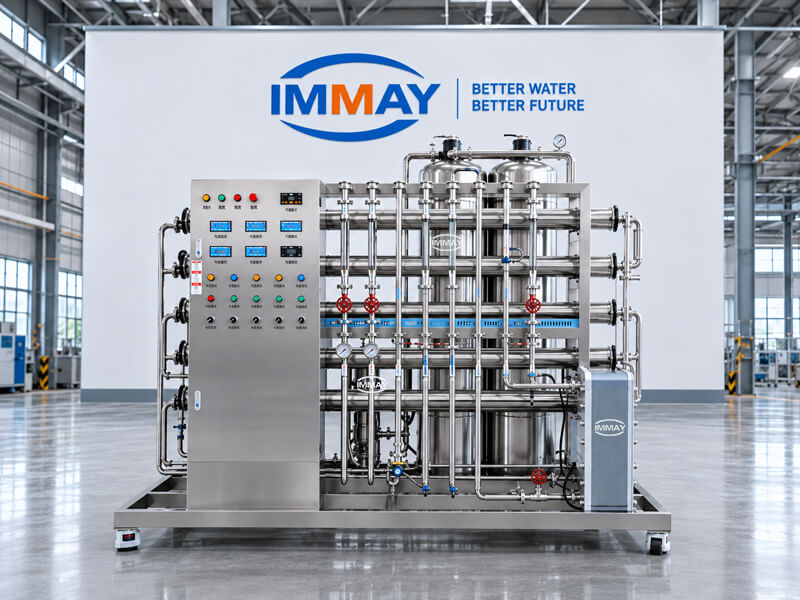
Many manufacturers ask how long an industrial reverse osmosis (RO) system will last before it needs to be replaced. The answer is not determined by a fixed number of years. Instead, the service life of an industrial RO system depends on factors such as equipment quality, feed water conditions, operating practices, pretreatment performance, and routine maintenance. When these factors are properly managed, an industrial RO system can provide reliable performance for many years.
It is also important to distinguish the lifespan of the entire RO system from that of its individual components. While the stainless steel structure, pressure vessels, and control system are designed for long-term use, consumable components such as RO membranes and filter cartridges require periodic replacement. This article explains the factors that influence the service life of an industrial RO system, the typical lifespan of its major components, and practical ways to maximize long-term performance.
An industrial RO system is made up of multiple components, and each component has its own expected service life. While the overall system can remain in operation for many years, some parts are designed for long-term use, whereas others are consumable items that require periodic replacement. Understanding the lifespan of individual components helps manufacturers plan maintenance, reduce unexpected downtime, and maintain consistent system performance.
The table below provides typical service life ranges for the main components of an industrial RO system. Actual service life may vary depending on feed water quality, operating conditions, equipment quality, and maintenance practices.
Component | Typical Service Life |
Stainless Steel Frame | 15–20+ years |
Pressure Vessels | 10–20 years |
High-Pressure Pump | 8–15 years |
Control System | 8–15 years |
RO Membranes | 2–5 years |
Cartridge Filters | Replaced regularly as needed |
Activated Carbon | Depends on operating conditions |
Multimedia Filter Media | Several years, depending on feed water quality |
Note: These are typical service life ranges for individual components rather than the entire industrial RO system. Actual replacement intervals depend on factors such as feed water quality, operating conditions, pretreatment performance, and routine maintenance.
The service life of an industrial RO system is influenced by multiple factors rather than a single component. Proper system design, suitable operating conditions, and regular maintenance all contribute to long-term reliability and stable performance.
Feed water quality is one of the most important factors affecting the lifespan of an industrial RO system. Water containing high levels of suspended solids, hardness, organic matter, iron, or other contaminants places a greater burden on the pretreatment system and RO membranes. If these impurities are not effectively controlled, membrane fouling and scaling can occur more frequently, reducing system performance and shortening the service life of key components.
Effective pretreatment helps protect RO membranes from fouling, scaling, and chlorine damage before the water enters the RO system. Properly maintained pretreatment equipment can significantly extend membrane service life, improve system stability, and reduce maintenance frequency. In many cases, pretreatment performance has a greater impact on membrane longevity than the RO system itself.
Operating an industrial RO system within its recommended design conditions helps maximize equipment life. Factors such as operating pressure, recovery rate, and feed water temperature all influence system performance. Excessive pressure, overly high recovery rates, or operating outside the recommended temperature range can increase stress on the membranes and other system components, leading to faster wear over time.
The materials used to manufacture the RO system also affect its long-term durability. Stainless steel frames and piping, pressure vessels, and other components are selected according to the operating environment and water quality. For example, 316L stainless steel generally offers better corrosion resistance than 304 stainless steel in more demanding applications, while FRP pressure vessels are widely used because of their strength, corrosion resistance, and long service life.
Routine maintenance is essential for maintaining long-term system performance. Replacing consumable components when required, inspecting key equipment regularly, and monitoring operating conditions help prevent minor issues from developing into major failures. A well-maintained industrial RO system typically operates more reliably and achieves a longer overall service life than one that receives only reactive maintenance.
An industrial RO system is designed for long-term operation, but not all components have the same service life. Some parts are consumable items that require regular replacement, while the main structure and core equipment are intended to remain in service for many years. In most cases, the entire RO system rarely needs replacement at one time. Instead, routine replacement of wear components helps maintain stable performance and extends the overall lifespan of the system.
The filter media inside multimedia (sand) filters also requires periodic replacement. Over time, repeated operation and backwashing reduce its filtration effectiveness. Replacing the filter media when necessary helps maintain efficient removal of suspended solids and provides consistent protection for the RO system.
Activated carbon gradually becomes exhausted as it removes residual chlorine and organic contaminants from the feed water. Once its adsorption capacity is depleted, chlorine may reach the RO membranes and cause irreversible damage. Regular monitoring and replacement of the activated carbon help maintain effective pretreatment performance.
Cartridge filters are among the most frequently replaced components in an industrial RO system. Their primary function is to capture fine particles before the water enters the RO membranes. As the filters become loaded with contaminants, pressure drop increases and filtration efficiency declines. Timely replacement helps maintain stable feed water quality and protects downstream equipment.
RO membranes are consumable components that gradually lose performance over time due to fouling, scaling, and normal operating conditions. Depending on feed water quality, pretreatment performance, and operating practices, membranes may require replacement after several years of service. Maintaining good pretreatment and operating the system within its design conditions can significantly extend membrane life.
While consumable components require periodic replacement, the stainless steel frame, pressure vessels, piping, pumps, and control system are generally designed for long-term operation when properly maintained. Replacing wear components at appropriate intervals is usually sufficient to keep the industrial RO system operating reliably, making complete system replacement unnecessary in most applications.
Industrial RO systems are designed for long-term operation, but their condition should be evaluated regularly as they age. While many performance issues can be resolved through maintenance or component replacement, persistent problems may indicate that major repairs or system upgrades should be considered.
A gradual decrease in water production is normal as membranes age, but a continuous decline that cannot be restored through routine maintenance may indicate more significant problems. If membrane replacement and pretreatment maintenance do not improve performance, other system components should be inspected.
A steady increase in operating pressure often indicates increasing resistance within the system. While membrane fouling and scaling are common causes, persistently high pressure after maintenance may suggest that major components require further inspection or replacement.
Frequent failures of pumps, valves, sensors, or electrical components can reduce system reliability and increase production interruptions. As equipment ages, repeated repairs may become less practical than replacing worn components or upgrading parts of the system.
When maintenance becomes increasingly frequent and expensive, it may indicate that multiple components are approaching the end of their service life. Evaluating the overall condition of the system can help determine whether continued repairs remain cost-effective.
The control system plays a key role in monitoring and operating an industrial RO system. As electrical components age, reliability may gradually decline, and replacement parts for older control systems may become more difficult to obtain. Upgrading the control system can improve operational stability while extending the useful life of the overall RO system.
Note: These signs do not necessarily mean the entire industrial RO system must be replaced. In many cases, replacing worn components or upgrading specific parts can restore reliable performance and extend the service life of the existing system.
The service life of an industrial RO system is largely determined by how it is operated and maintained. Following good operating practices helps protect key components, maintain stable water production, and reduce long-term operating costs.
Understanding feed water quality is the foundation of effective RO system operation. Testing parameters such as hardness, suspended solids, chlorine, iron, and organic contaminants helps identify potential risks and select appropriate pretreatment measures before they affect the RO membranes.
Pretreatment is the first line of defense for an industrial RO system. Regularly inspecting and maintaining multimedia filters, activated carbon filters, water softeners (when required), and cartridge filters helps prevent membrane fouling, scaling, and chlorine damage, extending the service life of the entire system.
Consumable components such as cartridge filters, RO membranes, activated carbon, and multimedia filter media should be replaced according to their operating condition. Timely replacement helps maintain consistent system performance and prevents unnecessary stress on other equipment.
Tracking operating parameters such as feed pressure, operating pressure, water production, and permeate quality helps detect performance changes at an early stage. Regular monitoring allows maintenance to be scheduled before minor issues develop into more serious problems.
Industrial RO systems should always be operated within their designed production capacity and recommended operating conditions. Avoiding excessive loading and maintaining stable operating parameters help reduce equipment wear, improve long-term reliability, and maximize the service life of the system.
Industrial RO systems are designed for long-term operation, but their service life depends on proper system design, feed water quality, operating conditions, and routine maintenance. While the overall system can remain in service for many years, individual components such as RO membranes and filter cartridges require periodic replacement to maintain stable performance.
Rather than focusing only on the expected lifespan of the equipment, manufacturers should consider the total life-cycle performance of the system. Proper pretreatment, regular maintenance, and operating within the designed capacity help maximize service life, reduce operating costs, and maintain reliable purified water production.