- Home
- Equipment
- Industries
- We Immay
- Resource
- Contact
Author: Site Editor Publish Time: 2025-11-14 Origin: Site
The global perfume market continues to grow steadily, supported by rising consumer demand for refined fragrances and consistent product quality. As manufacturing scales up, producers are increasingly focusing on equipment that ensures stable performance and efficient production control.
In modern perfume manufacturing, key processes such as mixing, cooling, and filtration are typically handled within a 3-in-1 perfume mixing, freezing, and filtration machine, ensuring uniform blending and clarity before filling. Subsequent steps—such as storage, filling, and bottle sealing—are configured according to the required production scale and packaging format.
For many manufacturers, one of the first questions when planning or upgrading a facility is: “How much does it cost to build a perfume production line?” The total investment depends on several factors, including production capacity, automation level, equipment configuration, and material standards.
This article provides a detailed breakdown of what’s included in a perfume production line, the factors that influence its cost, and practical guidance on how to select the right setup. It also highlights how IMMAY, a professional perfume production equipment manufacturer, offers tailored solutions to support efficient, stable, and high-quality perfume production.
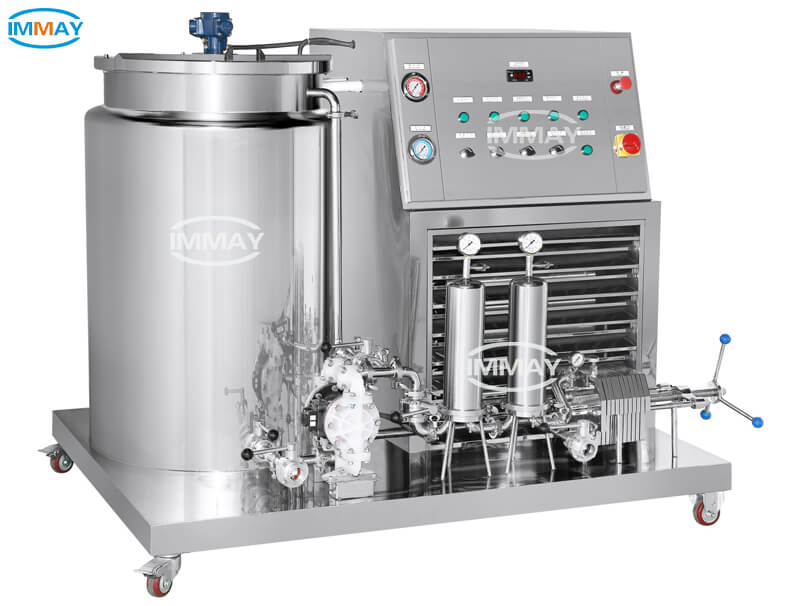
A complete perfume production line consists of a carefully selected set of equipment designed to ensure product consistency, efficiency, and high-quality output. Each unit serves a distinct function within the overall workflow, from raw material preparation to final packaging. The core components typically include:
The heart of any perfume production line is the 3-in-1 mixing, freezing, and filtration machine. This integrated unit performs multiple critical functions in one compact system: it thoroughly blends fragrance oils, alcohol, and other solvents; controls the temperature to ensure stability and proper solubility; and filters out any suspended particles or impurities. By combining these processes in a single machine, manufacturers can achieve a uniform, clear, and stable base for the perfume, reducing the risk of inconsistencies or defects in the final product.
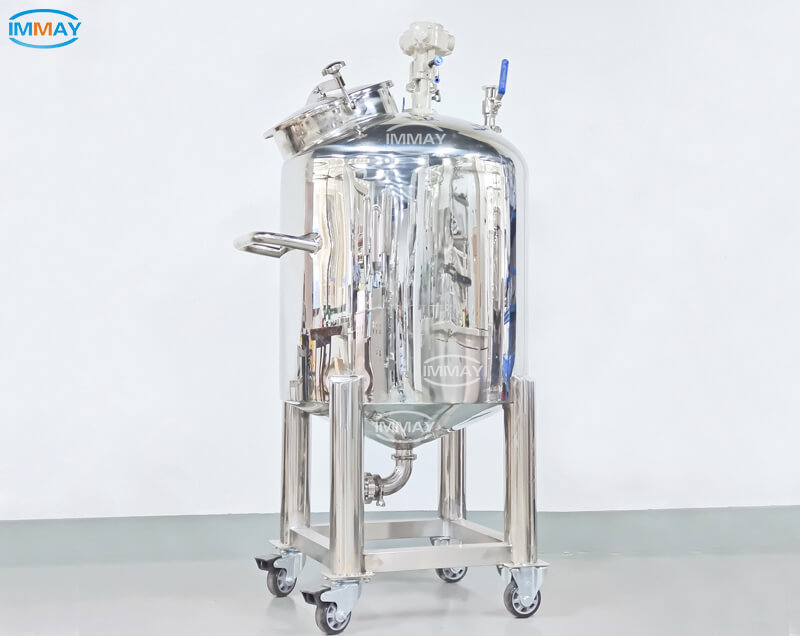
Once the perfume base is prepared, it is temporarily stored in a stainless steel storage tank. These tanks are designed to maintain the integrity of the liquid, ensuring it remains uncontaminated and stable before filling. High-quality stainless steel materials with polished interior surfaces are used to prevent any chemical reactions and facilitate maintenance. In addition to acting as a buffer between production and filling stages, the storage tanks allow the perfume to undergo a brief maturation process, enabling the fragrance components to blend fully and develop a balanced aroma.
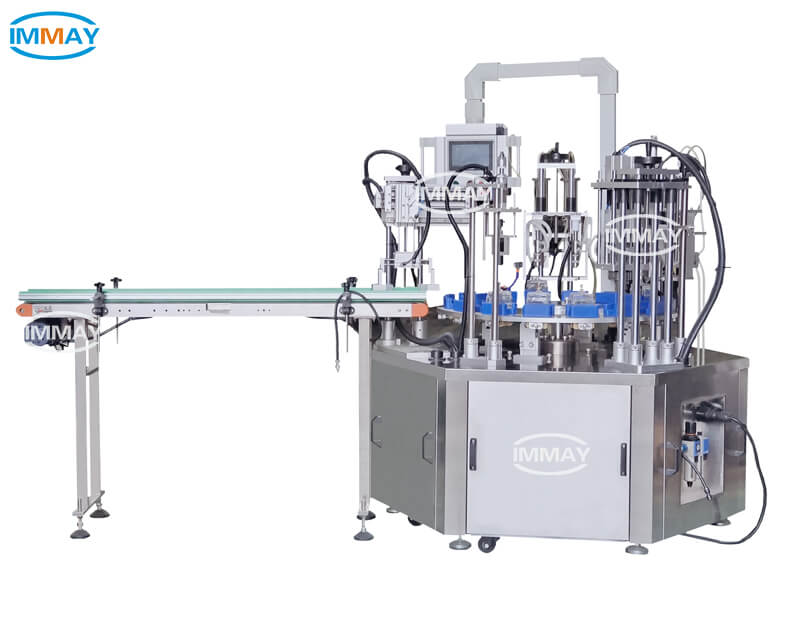
The next stage in the production line is precise filling and capping. The perfume filling and crimping machine accurately dispenses the liquid into bottles, ensuring each container receives the correct volume. The integrated crimping mechanism then seals the bottles with aluminum caps, providing a secure and airtight closure. This equipment can be customized according to the shape and size of the bottles, ensuring high production efficiency while minimizing spillage and waste.
After filling and sealing, the final step involves protecting the product and enhancing its presentation with transparent film packaging. This machine wraps or shrinks a clear protective film around each bottle, keeping it clean and safe from scratches or dust during storage and transport. Transparent film packaging also adds a professional finish to the product, making it ready for retail display or shipment.
Together, these components form a streamlined perfume production line that allows manufacturers to move from raw material preparation to finished, packaged products with efficiency, precision, and reliability. By carefully selecting each unit and ensuring compatibility, businesses can optimize production capacity, maintain consistent quality, and meet market demands effectively.
Production capacity is one of the most significant factors influencing the cost of a perfume production line. It determines the overall scale of the system, including the volume of the perfume mixing tank, the flow rate of the filling machine, and the speed of the packaging process. A higher daily production target requires larger equipment or multiple units operating in parallel, which increases the initial investment. For example, a line designed to produce several thousand bottles per day will require higher-capacity perfume stainless steel mixing tanks and more substantial stainless steel storage tanks compared to a line producing only a few hundred bottles daily. Selecting equipment that matches your intended production volume ensures cost efficiency while avoiding underutilized capacity.
The level of automation is another key factor affecting both cost and operational efficiency. A semi-automatic production line may involve some manual intervention, such as manually placing bottles and filling them, and typically has a lower initial investment. In contrast, a fully automatic line can handle bottle feeding, filling, crimping, and packaging with minimal human involvement. While fully automatic systems require a higher upfront investment, they can significantly reduce labor costs, improve consistency across batches, and enhance overall productivity. Manufacturers should evaluate their staffing capabilities, production volume, and long-term operational goals when deciding on the appropriate automation level.
The materials and components used in a perfume production line have a direct impact on cost and equipment longevity. High-quality materials, such as high quality stainless steel, are commonly used for mixing tanks, storage vessels, and piping to ensure hygiene, corrosion resistance, and durability. Critical components like precision valves and high-grade pumps contribute to reliable performance and reduce the risk of contamination. Investing in premium materials and components may increase initial expenditure but can lead to lower maintenance costs and extended equipment lifespan, making it a worthwhile consideration for long-term production stability.
The size and shape of bottles or other packaging containers influence the configuration and customization of the filling and sealing equipment. Standard bottle shapes and sizes are easier to handle and often require minimal adjustments, keeping costs lower. Non-standard or uniquely shaped bottles may require specialized nozzles, crimping heads, or custom guides to ensure accurate filling and proper sealing. These adaptations can affect both the design and investment cost of the production line. By carefully planning the types of bottles to be produced, manufacturers can optimize equipment selection and minimize unnecessary customization expenses.
Finally, customization requirements play a role in determining the total cost of a perfume production line. These include adaptations for factory layout, workflow optimization, and potential future capacity expansions. For example, specific equipment arrangements, tailored piping routes, and interface configurations may be necessary to accommodate the available space and ensure a smooth production flow. Considering future growth during the design phase allows manufacturers to avoid costly upgrades or replacements later, providing flexibility while maintaining production efficiency.
The cost of a perfume production line varies depending on production scale, automation level, and equipment configuration. Understanding the typical ranges for different setups helps manufacturers plan investments more effectively.
Small-scale lines are ideal for startups, boutique perfume brands, or limited production batches. They usually include a compact 3-in-1 mixing, freezing, and filtration machine, along with semi-automatic perfume bottle filling and crimping equipment. These lines require minimal space and a lower initial investment while providing reliable control over product quality. Small-scale semi-automatic setups allow brands to produce high-quality perfumes without committing to large-scale industrial infrastructure.
Medium-scale automatic lines are designed for growing brands or mid-sized production volumes. These systems typically include mid-to-large 3-in-1 mixing, freezing, and filtration machines integrated with fully automatic filling and crimping equipment. They offer a balance between investment cost and production efficiency, supporting higher daily output while maintaining product consistency. Medium-scale lines are suitable for brands looking to expand production without immediately moving to fully industrial-scale operations.
Large-scale industrial lines are tailored for high-volume perfume manufacturing. These lines often feature PLC-controlled systems, continuous bottle feeding, automated filling and crimping, and transparent film packaging for finished products. Designed for maximum efficiency, consistency, and throughput, they represent a higher upfront investment but enable substantial long-term productivity. Large-scale lines are typically implemented by well-established brands aiming for consistent large-batch production.
Specific costs vary according to production targets, bottle types, and equipment configurations. For accurate pricing, manufacturers can consult IMMAY, a professional perfume production machine supplier, for tailored assessments and quotes based on their unique production requirements.
Selecting the appropriate perfume production line for your factory requires careful consideration of multiple factors to ensure efficiency, product quality, and cost-effectiveness. By referencing the key factors that influence investment and operational performance, manufacturers can make informed decisions that align with their production goals.
The first step is to determine your factory’s intended daily or annual production volume. Production capacity influences the size of the 3-in-1 mixing, freezing, and filtration machine, as well as the flow rate and throughput of the filling and crimping equipment. Matching equipment to your desired output prevents underutilization or overloading, optimizing both cost and operational efficiency. For smaller brands or limited batches, a compact setup may suffice, while larger factories require proportionally higher-capacity machines.
Consider the level of automation that best fits your staffing capabilities and operational goals. Semi-automatic lines may be sufficient for smaller operations or startups, offering lower upfront costs with some manual involvement. Fully automatic systems, on the other hand, can streamline production, reduce labor requirements, and ensure consistent results across batches. Evaluating the trade-off between investment cost and operational efficiency is critical for selecting a line that meets long-term production needs.
The durability and reliability of your equipment depend heavily on the materials and components used. High-quality stainless steel tanks, corrosion-resistant pumps, and precision valves are essential for hygiene, product safety, and long-term performance. Investing in premium components can increase upfront costs but often reduces maintenance expenses and ensures more stable production, making it a strategic consideration when choosing the right line.
The dimensions and geometry of your bottles or containers will influence the configuration of filling and sealing equipment. Non-standard bottle shapes may require custom nozzles, crimping heads, or guides, which can impact both cost and production workflow. Evaluating your packaging requirements early helps ensure that the chosen production line can handle your specific bottles efficiently and without compromise.
Finally, consider any factory-specific customization needs, such as layout constraints, workflow optimization, or planned capacity expansion. Custom piping arrangements, equipment placement, and interface configurations can improve efficiency and flexibility but may affect the overall investment. Working closely with IMMAY, a professional perfume production machine supplier, helps you design a perfume line tailored to your unique production environment, ensuring it meets both current and future requirements.
By carefully considering these factors, manufacturers can select a perfume production line that balances cost, efficiency, and product quality. Consulting with IMMAY, an experienced perfume production machine supplier, ensures that your investment aligns with your production goals and provides a reliable foundation for consistent, high-quality perfume manufacturing.
IMMAY specializes in manufacturing perfume production equipment and offers complete, tailored solutions for brands of all sizes.
Customized Complete Production Lines
Every perfume production line is designed according to the client’s specific requirements, optimizing efficiency, production stability, and factory space utilization. Whether for small boutique setups or large-scale industrial operations, IMMAY ensures that each line meets precise production needs.
High-Quality Materials and Components
IMMAY uses premium materials and parts, including high standard stainless steel, corrosion-resistant pumps, and precision valves, to guarantee long-term reliability, product safety, and consistent performance throughout production.
Comprehensive Technical Support
From initial design and manufacturing to installation and commissioning, IMMAY provides full technical support, guiding manufacturers through every stage of the production line setup to ensure smooth, efficient, and high-quality operations.
By choosing IMMAY, manufacturers gain a trusted partner capable of delivering reliable, customized perfume production solutions that align with both current and future production goals.
Investing in a perfume production line involves careful consideration of multiple factors, including production capacity, automation level, equipment configuration, materials, bottle specifications, and factory-specific customization. Each factor directly impacts both the initial investment and the long-term efficiency of the production process. Selecting the right production line ensures smooth workflow, consistent product quality, and reliable performance, while also allowing flexibility for future growth or changes in production requirements.
Partnering with IMMAY, a professional perfume production machine supplier, provides access to expert guidance, tailored solutions, and technical support throughout the entire process—from equipment design and manufacturing to installation and commissioning. Consulting IMMAY ensures that your production line investment is optimized, your operations run efficiently, and your perfume products consistently meet high standards.
Contact IMMAY today to discuss your production requirements and receive a customized quotation for a perfume production line that fits your unique needs.
Q1: How much does it cost to set up a small, medium, or large perfume production line?
A: The cost varies based on production scale, automation level, and equipment configuration. Small-scale semi-automatic lines require a lower investment and are suitable for startups or boutique brands. Medium-scale automatic lines balance cost and efficiency for growing operations, while large-scale industrial lines involve higher upfront investment but support maximum throughput and consistent production.
Q2: What factors influence the price of a perfume production line?
A: Key factors include production capacity, automation level, the quality of materials and components, bottle size and shape, and factory-specific customization requirements. Each factor affects both initial investment and long-term operational efficiency.
Q3: Can IMMAY customize a perfume production line according to my factory’s space and production requirements?
A: Yes. IMMAY provides fully tailored solutions, designing production lines to fit your factory layout, workflow, and capacity needs, ensuring efficient and reliable operations.
Q4: What equipment is included in a complete perfume production line?
A: A typical line includes a 3-in-1 mixing, freezing, and filtration machine, stainless steel storage or maturation tanks, and filling and crimping equipment. Each component is designed to maintain product quality, support efficient workflow, and accommodate the required production volume.
Q5: Do small-scale perfume production lines require full automation?
A: Not necessarily. Semi-automatic lines can be sufficient for small batches or startups, offering lower initial investment while maintaining quality. Automatic systems are recommended for higher production volumes or for brands seeking maximum operational efficiency.
Q6: How can I ensure consistent quality in my perfume production line?
A: Consistent quality depends on high-quality perfume stainless steel mixing tanks, precision pumps and valves, accurate filling and crimping systems, and professional technical support. IMMAY provides guidance and customized solutions to help maintain stable, repeatable production.
Q7: How long does it take to install and commission a perfume production line from IMMAY?
A: Installation and commissioning time depends on the perfume line’s size and complexity. IMMAY offers full technical support, including equipment setup and operating, to ensure a smooth and efficient launch.