- Home
- Equipment
- Industries
- We Immay
- Resource
- Contact
Author: Site Editor Publish Time: 2021-11-19 Origin: Site
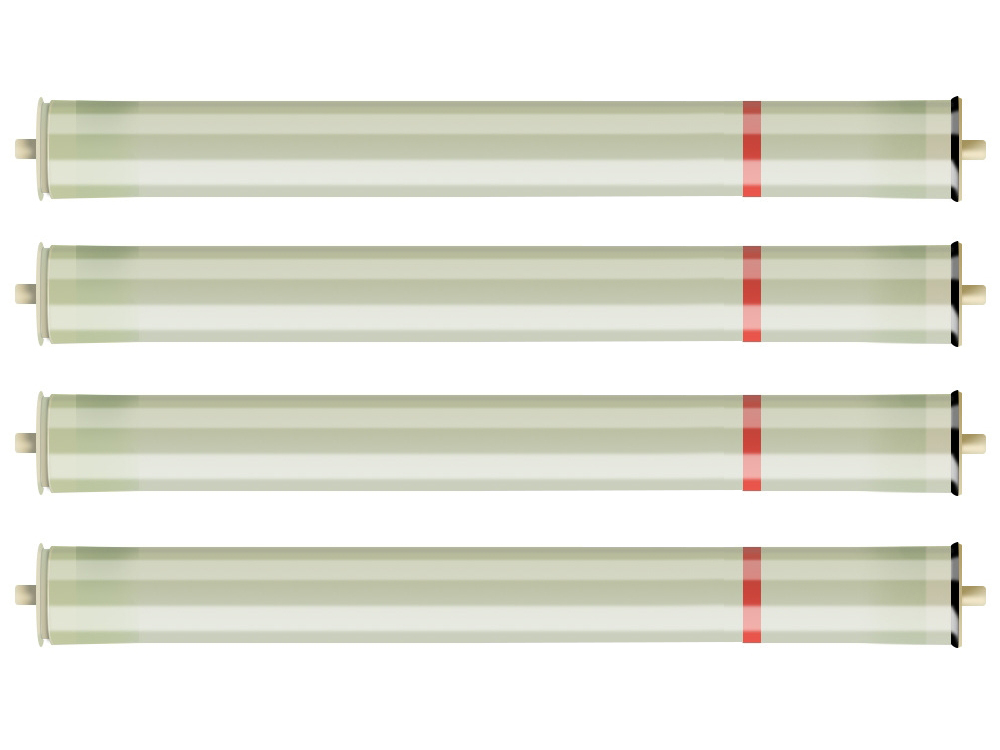
In industrial water purification, the reverse osmosis (RO) membrane plays a central role in ensuring consistent water quality, stable production performance, and reliable system output. From cosmetics and food processing to electronics manufacturing and chemical production, RO technology has become one of the most widely used methods for removing dissolved salts, organic matter, and trace contaminants from process water. Its ability to deliver high-purity water with controlled conductivity makes it an essential component in modern industrial operations.
As production requirements continue to rise and water quality becomes a more critical factor in product stability, understanding how to select the right RO membrane has become increasingly important. The choice of membrane directly affects desalination performance, energy consumption, operational stability, and long-term running costs of the entire water treatment system.
Before exploring the key selection criteria, it is important to understand what an RO membrane is and how it functions within industrial water purification systems.
A reverse osmosis (RO) membrane is the core separation component in an RO water purification system. It is a semi-permeable barrier designed to allow water molecules to pass through while restricting the movement of dissolved salts, organic substances, and other impurities. This selective filtration function makes the RO membrane one of the most effective technologies for producing high-purity water used in industrial applications.
Most industrial RO membranes are made from thin-film composite (TFC) materials. This structure typically consists of three layers:
A dense polyamide active layer, responsible for selective salt rejection.
A microporous support layer, which provides mechanical strength without restricting flow.
A polyester base layer, offering overall structural stability.
During operation, pressure is applied to the feed water, forcing water molecules through the membrane while leaving dissolved contaminants behind. This pressure-driven separation process produces two streams:
Permeate water, which has significantly lower salt and impurity levels.
Concentrate water, which contains the rejected contaminants.
Because RO membranes can remove a wide range of dissolved solids—including ions, organic matter, silica, and certain microorganisms—they are widely used in industries that require stable and controlled water quality. Whether for cosmetic emulsification, beverage formulation, chemical dilution, or electronic component cleaning, the RO membrane serves as the foundation for achieving consistent and reliable process water.
This understanding of the membrane’s structure and separation mechanism provides the basis for evaluating which type of RO membrane is most suitable for different industrial water treatment needs.
Industrial reverse osmosis (RO) water treatment machine needs to be designed and produced according to the feed water, the required product water quality, and the desired flow rate. Therefore, when selecting the reverse osmosis membrane elements of reverse osmosis water treatment equipment, they should also be selected according to these conditions.
When designing RO water treatment, how do we choose the membrane model and specifications? This is essential for the normal and efficient operation of RO water treatment, otherwise the efficient operation of the reverse osmosis system will not be guaranteed.
When the influent water TDS is less than or equal to 1000ppm, the ultra-low pressure membrane element can be used for influent;
When the influent water is 3000ppm≥TDS≥1000ppm, the anti-pollution membrane element can be used for water inflow;
When the influent water TDS≥3000ppm, the brackish water desalination membrane element can be selected;
When influent water TDS≥5000ppm, seawater desalination membrane element can be selected.
4040 reverse osmosis membrane, the first 40 means the RO membrane element diameter is 4.0 inches; the second 40 means the RO membrane element length is 40 inches; the 8040 reverse osmosis membrane the first 80 means the RO membrane element diameter is 8.0 inches; the second 40 means the RO membrane element length is 40 inch.
General situation: 4040 RO membrane elements are mostly used for reverse osmosis equipment with water production less than 4T/H; for 0.25 tons/hour reverse osmosis water treatment equipment, choose 4040 membrane for 1, 0.5 tons/hour for two, and 1 ton/hour for reverse osmosis 4. Root, and so on.
8040 membrane elements are mostly used for reverse osmosis equipment with water production ≥ 4T/H. 8040 membrane element is about 1 ton/hour, 4 ton/hour reverse osmosis equipment chooses 4 8040 membrane elements.
The choice between a 1 stage and a 2 stage RO design is closely related to the required product water quality. Even when the feed water and flow rate are fixed, the target permeate TDS or conductivity will determine whether a single-stage membrane arrangement is sufficient or whether a 2-stage configuration is necessary.
1 stage RO:
A 1-stage RO system is commonly used when the required permeate quality is moderate. It is suitable when the target TDS is not extremely low and when the feed water quality is stable. Many industrial users apply 1 stage RO for general process water preparation, dilution water, and cosmetic production where a standard conductivity level meets process requirements.
2 stage RO:
A 2-stage RO system is selected when the application requires a significantly lower TDS, tighter conductivity control, or higher overall desalination performance. It provides higher salt rejection and greater stability when feed water quality fluctuates. In applications where permeate purity is critical, a 2 stage system offers a more reliable margin for meeting the required water specifications.
Selection guidance:
Choose 1 stage RO when the required product water quality falls within standard industrial ranges and the feed water TDS is relatively low.
Choose 2 stage RO when lower TDS, more stable permeate quality, or additional polishing is needed to support sensitive production processes.
By matching the RO membrane configuration to the required permeate quality, the system can achieve efficient operation while maintaining consistent and reliable output.
Selecting the right reverse osmosis membrane is a key step in building a stable and efficient industrial water purification system. From evaluating feed water conditions to determining the required pure water quality and choosing the appropriate membrane size or configuration, each decision directly influences system performance, operational reliability, and long-term cost. Whether the application involves cosmetic production, food processing, fine chemicals, or electronics manufacturing, a properly selected RO membrane helps maintain consistent water quality and supports smooth production processes.
With a clear understanding of membrane types, specifications, and performance requirements, manufacturers can choose RO systems that align with their operational goals and ensure dependable output water quality.
If you are planning to set up or upgrade your industrial RO water treatment line, IMMAY is ready to provide technical support and help you configure a system that matches your production needs.
Contact IMMAY today to discuss your industrial RO water treatment project and explore solutions tailored to your application.