- Home
- Equipment
- Industries
- We Immay
- Resource
- Contact
Author: Site Editor Publish Time: 2026-08-04 Origin: Site
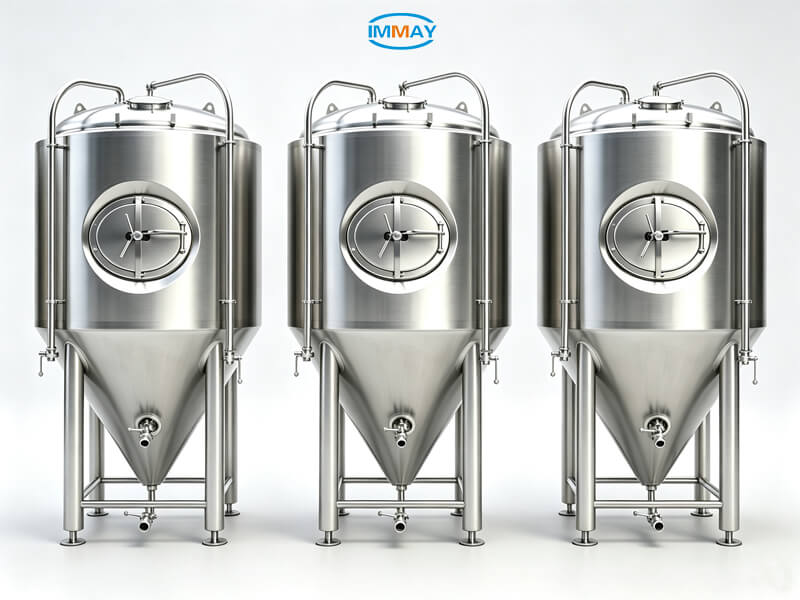
Beer fermentation temperature is one of the most important factors affecting the brewing process. Even when the same recipe, ingredients, and yeast strain are used, different fermentation temperatures can produce noticeably different results.
Temperature directly influences yeast activity, fermentation speed, flavor development, and the overall quality of the finished beer. Poor temperature control may lead to unwanted flavors, inconsistent fermentation performance, or incomplete fermentation.
Understanding how fermentation temperature changes and how to control it throughout the brewing process helps brewers achieve more consistent results and select the most suitable temperature control solution for their production scale.
Beer fermentation is a natural biological process in which yeast converts fermentable sugars into alcohol and carbon dioxide. During this process, yeast also generates heat as a byproduct, making fermentation an exothermic reaction.
As yeast activity increases, the temperature of the fermenting beer can rise above the surrounding environment. For example, if the brewery or fermentation room is maintained at 25°C (77°F), the temperature inside an actively fermenting tank may increase to 28–30°C (82–86°F) or even higher, depending on factors such as batch size, yeast strain, and fermentation intensity.
Without effective temperature control, excessive heat can accelerate yeast metabolism, leading to faster fermentation and the production of unwanted flavor compounds, such as excessive esters or higher alcohols. On the other hand, temperatures that are too low may slow yeast activity, prolong fermentation, or even cause fermentation to stall before reaching the desired final gravity.
Maintaining a stable fermentation temperature allows yeast to perform within its recommended range, helping achieve consistent fermentation performance, predictable production schedules, and the intended flavor profile of the finished beer.
There is no single fermentation temperature that is suitable for every beer. The ideal temperature depends primarily on the yeast strain being used, as different yeasts perform best within different temperature ranges. Beer style provides a useful guideline, but the yeast manufacturer's recommended fermentation range should always be the primary reference.
The table below shows typical fermentation temperature ranges for several common beer styles.
Beer Style | Typical Fermentation Temperature |
Ale | 18–22°C (64–72°F) |
Lager | 8–14°C (46–57°F) |
Wheat Beer | 18–24°C (64–75°F) |
Belgian Styles | Often 20–28°C (68–82°F), depending on the yeast strain |
These temperatures are general industry references rather than fixed requirements. Different yeast strains within the same beer style may have different recommended fermentation temperatures.
For example, most American ale yeasts perform well around 18–20°C (64–68°F), while some Belgian ale yeasts are intentionally fermented at higher temperatures to develop their characteristic fruity and spicy aromas. Likewise, modern yeast strains such as Kveik can ferment successfully at temperatures well above those used for conventional ale yeasts.
For consistent results, brewers should always follow the recommended fermentation temperature provided by the yeast supplier and maintain that temperature as steadily as possible throughout active fermentation.
Fermentation temperature does not remain constant from start to finish because yeast activity changes throughout the fermentation cycle. As the yeast becomes more active, it generates more heat. When activity slows, heat production also decreases. Understanding these changes helps brewers apply temperature control more effectively at each stage.
During the first several hours after yeast is pitched, yeast cells begin adapting to their new environment. Heat production is relatively low, so the beer temperature usually remains close to the initial pitching temperature.
As yeast rapidly consumes fermentable sugars, fermentation becomes much more vigorous. Carbon dioxide production increases significantly, and the fermentation process generates a substantial amount of heat. Without cooling, the beer temperature can rise several degrees above the surrounding environment.
The highest heat output typically occurs during the most active period of fermentation. This is when temperature control becomes most critical. Commercial breweries commonly use jacketed fermentation tanks with glycol cooling systems to remove excess heat and maintain a stable fermentation temperature.
As fermentable sugars become depleted, yeast activity gradually slows and heat generation decreases. At this stage, brewers may maintain the fermentation temperature, slightly adjust it according to the brewing process, or begin cooling the beer for conditioning and clarification.
After understanding how heat generation changes throughout fermentation, it becomes easier to see why commercial breweries rely on dedicated temperature control systems. Rather than maintaining the same cooling intensity throughout the process, modern fermentation systems adjust cooling according to the changing heat output of the yeast, helping maintain stable fermentation conditions and consistent beer quality.
There are several ways to control fermentation temperature, ranging from simple room temperature management for small-scale brewing to fully automated cooling systems used in commercial breweries. The most suitable method depends on production scale, required temperature stability, and available equipment.
For home brewers and very small batches, controlling the temperature of the fermentation room is often the simplest solution. Keeping the fermenter in a cool basement, temperature-controlled room, or insulated cabinet can reduce temperature fluctuations. However, this method offers limited precision because the beer itself may become warmer than the surrounding air during active fermentation.
Small breweries may use refrigerated fermentation rooms to maintain a stable environment for multiple fermenters. While this approach provides better temperature stability than ambient cooling, all fermenters in the room are generally exposed to the same air temperature, making independent temperature control for each tank more difficult.
Commercial breweries typically control fermentation temperature using an integrated glycol cooling system. Rather than relying on room temperature alone, this system continuously removes the heat generated by yeast during fermentation, allowing the beer to remain within the desired temperature range.
A typical temperature control system consists of several key components:
A glycol chiller, which supplies chilled glycol at a controlled temperature.
A jacketed fermentation tank, where the glycol flows through external cooling jackets to absorb heat from the beer without coming into direct contact with the product.
A temperature sensor, installed in the fermenter to continuously monitor the beer temperature.
PLC system, which compares the measured temperature with the preset value.
Valves, which automatically regulates glycol flow through the cooling jacket.
When fermentation becomes more active and the beer temperature rises above the set point, the controller opens the valve, allowing chilled glycol to circulate through the cooling jacket. As heat is removed and the beer returns to the target temperature, the valve closes automatically to prevent excessive cooling.
This closed-loop control system enables commercial breweries to maintain stable fermentation temperatures throughout the entire fermentation cycle while reducing manual intervention and improving product consistency.
Maintaining a stable fermentation temperature is often more important than simply reaching a specific target temperature. The following practices can help improve fermentation consistency and reduce the risk of unwanted flavor variations.
Regularly monitor the temperature of the fermenting beer rather than relying solely on room temperature. During active fermentation, the beer can become several degrees warmer than the surrounding environment due to the heat generated by yeast activity.
Large or rapid temperature fluctuations can stress yeast and affect fermentation performance. If temperature adjustments are necessary, make gradual changes instead of raising or lowering the temperature abruptly.
Small-scale brewing may only require a temperature-controlled room or refrigerator, while commercial breweries typically rely on glycol cooling systems and jacketed fermentation tanks. Selecting an appropriate cooling method helps maintain more stable fermentation conditions.
Consistent temperature control plays an important role in every stage of beer fermentation. Whether brewing at home or operating a commercial brewery, maintaining the recommended fermentation temperature helps support healthy yeast activity, stable fermentation, and consistent beer quality.
The most suitable temperature control method depends on brewing scale, production goals, and available equipment. From simple ambient temperature management to integrated glycol cooling systems, selecting an approach that matches the brewing process can improve temperature stability and produce more predictable fermentation results.