- Home
- Equipment
- Industries
- We Immay
- Resource
- Contact
Author: Site Editor Publish Time: 2026-08-05 Origin: Site
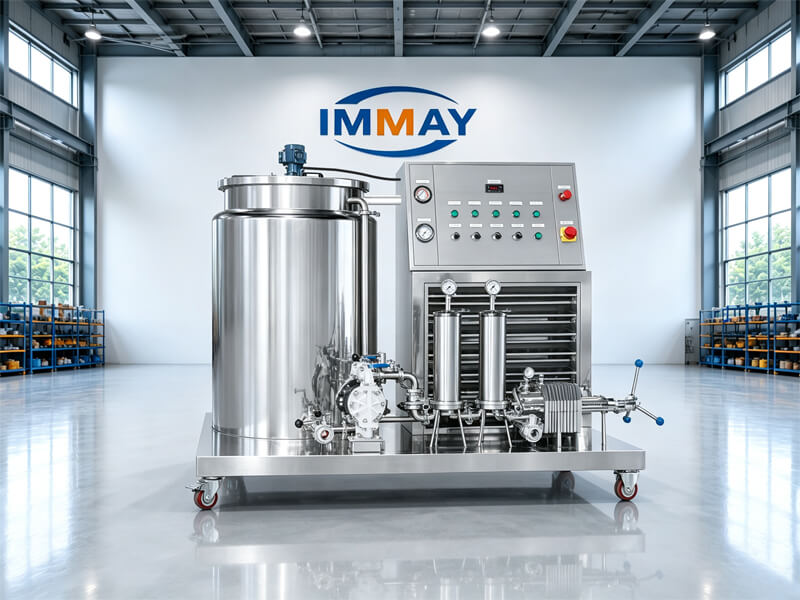
Perfume filtration plays an important role in maintaining product clarity and production consistency. During perfume manufacturing, filtration performance can directly influence the appearance of the final product, the efficiency of the production process, and the stability of each batch.
Over time, filter performance will gradually change due to factors such as perfume formulation, filtration frequency, operating conditions, and the amount of impurities removed. Proper filter maintenance is not only about replacing filter elements but also includes regular inspection, cleaning of filtration components, and correct operation of the filtration system.
This guide explains the key maintenance practices that help extend filter service life, identify potential filtration issues, and maintain consistent perfume filtration performance throughout the production process.
In perfume manufacturing, filtration is an important step that influences the appearance and consistency of the final product. A well-maintained filtration system helps manufacturers keep filtration performance stable, reduce unexpected production issues, and maintain a more predictable production process.
Filter performance can gradually change during operation due to factors such as product characteristics, filtration load, and operating conditions. Without proper attention, issues such as slower filtration speed, increased pressure, or reduced clarity may affect overall production efficiency.
Perfume products often require a clear and uniform appearance before filling. During production, filtration helps remove unwanted particles and improve product clarity.
A properly maintained filter system helps maintain consistent filtration results and reduces the risk of appearance variations between different production batches.
A filter does not always perform the same throughout its service life. As filtration continues, accumulated particles may gradually affect flow rate and filtration efficiency.
Regular inspection and proper maintenance help manufacturers identify performance changes earlier, allowing adjustments to be made before filtration problems impact production.
In commercial perfume production, filtration time directly affects the overall manufacturing schedule. A poorly maintained filtration system may result in slower processing, additional downtime, or unnecessary interruptions.
Keeping filtration equipment in good condition helps maintain a smoother workflow and supports more efficient production planning.
Unexpected filter issues can delay filling schedules and affect production arrangements. Regular maintenance practices, including checking filter conditions and monitoring operating performance, help manufacturers reduce avoidable interruptions.
Proper filter maintenance supports both product quality and production efficiency. By understanding how filtration performance changes during operation, perfume manufacturers can make better decisions about inspection, cleaning, and filter replacement.
The performance and service life of a perfume filter are influenced by more than the filter element itself. In commercial perfume production, filtration results depend on multiple factors, including the product formulation, filtration conditions, filter selection, and the quality of previous processing steps.
Understanding these factors helps manufacturers identify why filtration performance may change over time and make better decisions about filter maintenance, replacement, and process optimization.
Different perfume formulations can have different effects on filter performance. The type and concentration of fragrance ingredients, essential oils, and other components may influence how quickly a filter collects retained particles during filtration.
For example, formulations containing more natural extracts, oils, or complex fragrance components create a higher filtration load compared with simpler formulations. As a result, the same filter may have different service performance when used for different perfume products.
Manufacturers should consider the characteristics of each formulation when selecting filter specifications and planning maintenance schedules.
The frequency of filtration directly affects filter service life. A filter used for occasional small-batch production will usually experience different operating conditions compared with a filter running continuously in a large-scale perfume production facility.
For manufacturers producing multiple batches per day, accumulated filtration load can gradually affect flow rate and pressure conditions. Monitoring filtration frequency and production volume helps determine when inspection or replacement may be required.
The selected micron rating has a direct impact on filtration performance. A smaller micron rating can capture finer particles and improve filtration precision, but it may also increase resistance and become blocked more easily when the product contains a higher amount of retained materials.
A suitable filter rating should balance filtration requirements, product characteristics, and expected operating conditions. Choosing a filter that is too fine or too coarse may affect both filtration efficiency and maintenance frequency.
Operating pressure and flow rate are important indicators of filtration performance. Changes in pressure or a gradual reduction in flow rate may indicate that the filter is becoming loaded or that filtration conditions need adjustment.
Maintaining suitable operating conditions helps the filtration system work more consistently and reduces unnecessary stress on filter components.
For industrial perfume production, monitoring pressure changes can also help operators identify potential filtration issues before they affect the production schedule.
A proper pre-filtration process can help reduce the amount of larger particles and suspended solids entering the final filtration stage. This helps lower the filtration load and supports more stable performance of the final filter.
For perfume production, the pre-filtration configuration should match the product characteristics and overall filtration requirements. An unsuitable pre-filtration process may cause faster filter loading and affect filtration efficiency.
Perfume manufacturers can improve overall filtration efficiency by optimizing the complete production process instead of relying only on the final filter stage.
Regular inspection and maintenance help manufacturers identify filtration issues before they affect production. Instead of replacing filters based only on a fixed schedule, many production facilities monitor filter condition, operating performance, and product quality to determine when maintenance is required.
The following checklist covers common practices for maintaining stable perfume filtration performance:
Maintenance Task | Recommended Practice |
Visual inspection | Check the filter system and components before production to identify visible damage or abnormal conditions |
Pressure monitoring | Record pressure changes during operation to identify possible filter loading or flow issues |
Seal inspection | Check seals and connections regularly to prevent leakage during filtration |
Filter housing cleaning | Remove remaining product residue and keep the filtration components clean |
Filter replacement | Replace filter elements based on condition, filtration performance, and production requirements |
Proper maintenance routines help maintain stable filtration performance and reduce unexpected interruptions during perfume production.
There is no universal replacement interval for perfume filters because service life depends on factors such as perfume formulation, production volume, filtration conditions, and filter specifications. Instead of replacing filters based only on time, manufacturers usually evaluate filter condition and filtration performance.
The following signs can help determine when a perfume filter needs replacement:
A gradual decrease in filtration flow rate can indicate that the filter element has accumulated retained materials and the filtration resistance is increasing.
When filtration takes significantly longer than usual under the same operating conditions, the filter condition should be checked to determine whether replacement is required.
Pressure changes are an important indicator of filter loading. As retained particles build up inside the filter element, the pressure difference between the inlet and outlet may increase.
Monitoring pressure during operation helps operators identify performance changes before filtration efficiency is affected.
Changes in the final perfume appearance, such as reduced clarity or inconsistent filtration results, may indicate that the filter is no longer performing effectively.
When filtration quality does not meet production expectations, the filter condition and the overall filtration process should be evaluated.
Physical damage to the filter element, housing components, seals, or connections can affect filtration performance and may require immediate attention.
Regular inspection helps identify cracks, deformation, leakage, or other visible problems before they influence production.
Filter replacement decisions should also consider the recommendations provided by the filter manufacturer or equipment supplier. These recommendations are usually based on filter material, design, operating conditions, and intended application.
Combining supplier guidance with actual production data allows manufacturers to develop a more suitable filter replacement plan.
Keeping maintenance records allows manufacturers to better understand how a perfume filtration system performs under actual production conditions. Instead of relying only on fixed replacement schedules, recorded data such as filter usage, pressure changes, filtration time, and production volume can help identify performance changes and support more effective maintenance decisions.
Maintenance Record | Why It Matters |
Filter replacement date | Helps track filter service life under different operating conditions |
Perfume type or formulation | Helps compare filtration performance between different products |
Filtration time | Helps identify changes in filtration efficiency |
Pressure readings | Helps monitor filter loading and potential blockages |
Production volume | Helps evaluate the relationship between usage and filter performance |
Maintaining consistent perfume filtration performance involves more than replacing filter elements at fixed intervals. Production conditions, perfume formulation, operating practices, and equipment design all influence filtration performance and maintenance requirements during perfume manufacturing.
For manufacturers investing in a Perfume making machine, selecting equipment with suitable mixing, freezing, and filtration capabilities is an important part of building an efficient production process. Considering filtration requirements during equipment selection and daily operation can help reduce downtime, improve production efficiency, and support consistent perfume quality.