- Home
- Equipment
- Industries
- We Immay
- Resource
- Contact
Author: Site Editor Publish Time: 2021-11-19 Origin: Site
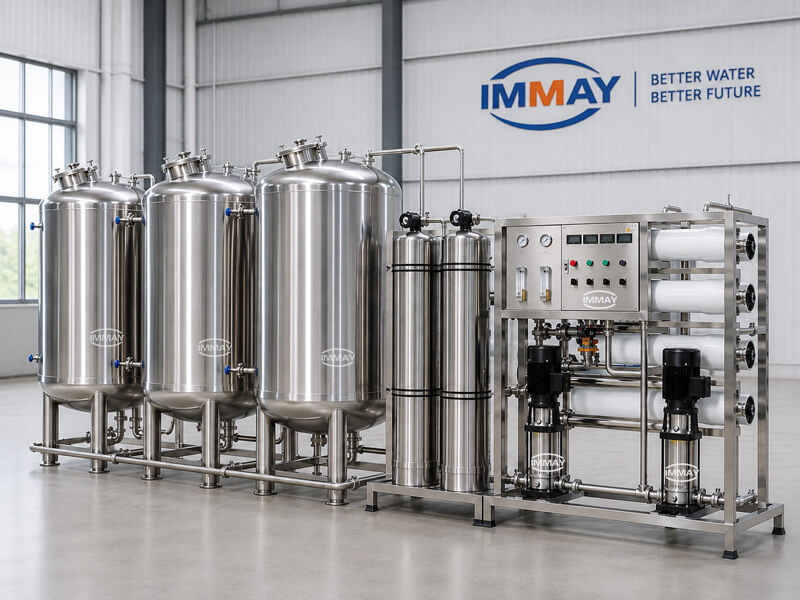
Selecting an RO membrane for an industrial water treatment system involves far more than comparing technical specifications or choosing a well-known brand. In real-world industrial applications, the appropriate membrane is determined by the overall water treatment requirements rather than by membrane specifications alone. Required water quality, feed water characteristics, operating conditions, and long-term performance objectives all play a role in determining which membrane characteristics are most suitable for the system.
This article explains how different industrial water treatment requirements influence RO membrane selection and why evaluating the complete application leads to a more appropriate membrane choice.
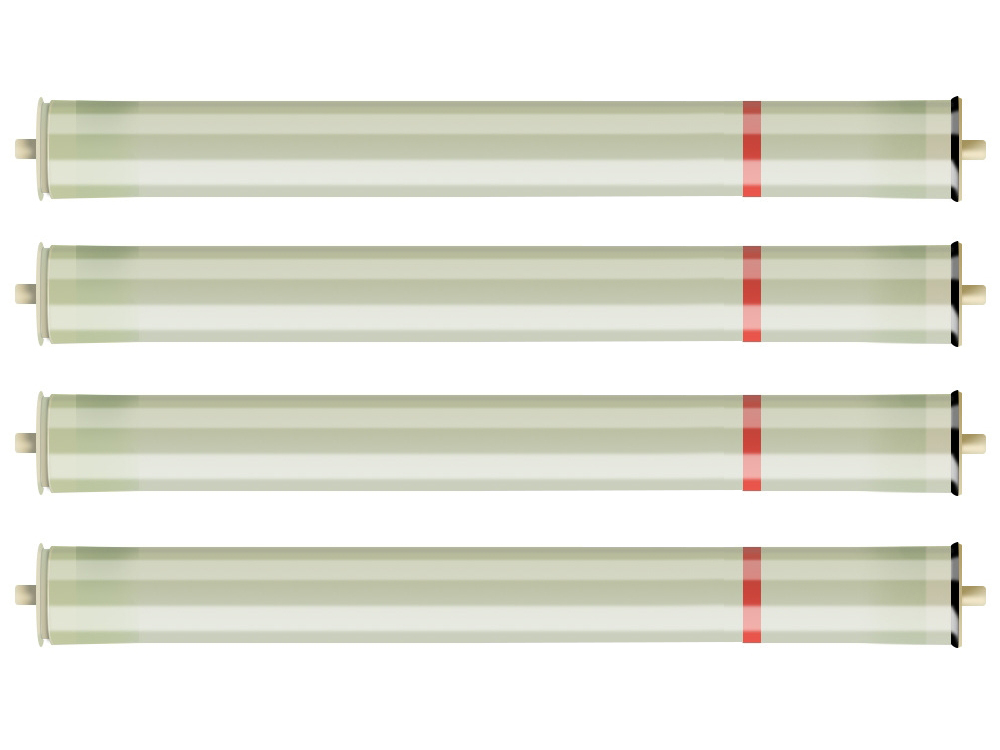
The required water quality is one of the first factors to consider when matching an RO membrane to an industrial water treatment system. Different manufacturing processes require different levels of purified water, so membrane selection should always begin with the quality of water the production process needs to achieve rather than with membrane specifications alone.
Some industrial applications require RO water with very low conductivity or reduced dissolved solids to support sensitive production processes or downstream purification systems. In these cases, membranes with higher salt rejection can help produce water that more closely meets the required quality target.
However, selecting the highest rejection membrane is not always the best solution. The required water quality should be evaluated together with the overall system design, operating conditions, and long-term performance objectives.
Many industrial manufacturing processes do not require extremely high-purity water. If the required water quality can already be achieved with a standard industrial RO membrane, selecting a higher-specification membrane may provide little practical benefit while increasing operating pressure, energy consumption, or overall operating costs.
Matching membrane performance to actual production requirements often results in a more balanced and economical water treatment solution.
In continuous industrial production, maintaining stable water quality is often more valuable than achieving the highest possible salt rejection under ideal operating conditions. Consistent permeate quality helps support stable production processes and reduces unexpected variations caused by changing operating conditions.
For many industrial RO systems, the most suitable membrane is not necessarily the one with the highest published rejection rate, but the one that can consistently deliver the required water quality throughout long-term operation.
Feed water characteristics have a direct influence on RO membrane performance and should always be evaluated before selecting a membrane. Two industrial RO systems with the same production capacity may require different membrane characteristics simply because their feed water conditions are different. Understanding these conditions helps match membrane performance to long-term operating requirements rather than relying solely on published specifications.
Feed water with a high concentration of dissolved salts generally places greater demands on an RO membrane. As feed water salinity increases, the system typically operates at higher pressure to achieve the required permeate quality and production capacity. Under these conditions, membrane selection should consider whether the membrane characteristics are suitable for the expected operating pressure and long-term system performance.
High hardness caused by calcium and magnesium increases the likelihood of scale formation on the membrane surface. Although membrane selection alone cannot eliminate scaling, feed water with higher hardness may require greater consideration of membrane durability and stable long-term operation under challenging conditions.
Water containing elevated levels of organic matter or biological contaminants increases the risk of membrane fouling. In these applications, maintaining stable membrane performance over time often becomes more important than focusing solely on the highest salt rejection specifications. Selecting membrane characteristics that support reliable operation under fouling-prone conditions can contribute to more consistent long-term performance.
Industrial facilities supplied with relatively stable and consistently treated feed water generally have greater flexibility in membrane selection. When feed water quality remains stable and the required permeate quality is well defined, standard industrial RO membranes are often capable of meeting production requirements without requiring specialized membrane characteristics.
Feed water conditions represent only one aspect of membrane selection. Even with similar feed water quality, different operating objectives may lead to different membrane choices depending on how the RO system is expected to perform over time.
Industrial RO membrane selection is not determined by water quality alone. Even when two systems have similar feed water and produce the same permeate quality, membrane selection may differ depending on the facility's operating priorities. Long-term operating costs, production stability, maintenance frequency, and expected membrane life can all influence which membrane characteristics are the most appropriate.
For facilities seeking to reduce energy consumption and operating costs, membranes designed to perform effectively at lower operating pressures may be a suitable choice. Lower operating pressure can help reduce power requirements while still achieving the required water quality under appropriate operating conditions.
Some industrial environments experience operating conditions that increase the likelihood of membrane fouling over time. In these cases, selecting membrane characteristics that support stable performance under fouling-prone conditions may provide greater long-term value than focusing solely on maximum salt rejection or water productivity.
Many industrial users place greater importance on reliable long-term operation than on achieving the highest possible initial performance. Membrane selection should therefore consider the expected operating environment, maintenance practices, and long-term system reliability rather than evaluating membrane specifications in isolation.
Maximum membrane flux does not always result in the most stable industrial operation. For continuous manufacturing processes, maintaining consistent daily water production is often more valuable than maximizing short-term output. Selecting membrane characteristics that support stable production under normal operating conditions can contribute to more predictable system performance over time.
Although membrane specifications are important, they represent only one part of an industrial reverse osmosis system. In practical engineering projects, membrane performance depends on how the entire RO system is designed and operated rather than on the membrane itself.
The same membrane can produce different results when installed in different systems. Feed water characteristics determine the operating environment, while pretreatment effectiveness influences the amount of contaminants reaching the membrane. Operating pressure, recovery rate, cleaning practices, and overall system configuration all affect how the membrane performs throughout its service life.
For this reason, membrane selection is typically performed after the overall water treatment requirements have been evaluated. In industrial RO system design, engineers usually define the required water quality, assess feed water conditions, establish appropriate operating parameters, and then match membrane characteristics to the overall system requirements.
In industrial RO water treatment, successful membrane selection is therefore not an isolated component decision but part of the complete RO system design strategy.
Many membrane selection problems are not caused by the membrane itself, but by overlooking the actual requirements of the industrial water treatment system. Focusing on individual membrane specifications without considering the complete application can lead to unnecessary operating costs, unstable system performance, or reduced membrane service life.
Membrane selection should begin with the required permeate quality rather than the membrane itself. Without clearly defining the target water quality, it is difficult to determine whether a higher rejection membrane or a standard industrial membrane is the more appropriate choice.
Feed water quality has a significant influence on membrane performance. Two industrial RO systems using the same membrane may operate very differently if their feed water characteristics are not the same. Ignoring factors such as TDS, hardness, or fouling potential can result in membrane selection that does not match the actual operating environment.
Published specifications such as salt rejection, flux, or operating pressure are useful reference values, but they should not become the only selection criteria. Industrial membrane selection should also consider long-term operating priorities, including production stability, energy consumption, maintenance requirements, and expected membrane life.
Selecting the membrane with the highest published specifications does not always produce the best overall system performance. Higher rejection or higher productivity may provide little additional benefit if the required water quality has already been achieved. Matching membrane performance to actual production requirements often results in a more practical and cost-effective solution.
An RO membrane does not operate independently. Feed water conditions, pretreatment effectiveness, operating pressure, recovery rate, cleaning practices, and overall system configuration all influence membrane performance throughout its service life. Evaluating the membrane without considering the complete RO system may lead to unrealistic expectations and inconsistent operating results.
Successful membrane matching is ultimately a system-level engineering decision rather than simply selecting a membrane with the highest specifications.
Before selecting an RO membrane, verify that the following key factors have been evaluated. A systematic assessment helps match membrane characteristics to the actual requirements of the industrial water treatment system rather than relying solely on membrane specifications.
Checklist Item | Why It Matters |
Required water quality | Defines the target permeate quality the membrane must consistently achieve. |
Feed water analysis | Identifies feed water characteristics that influence membrane selection and long-term performance. |
Feed water stability | Determines whether membrane performance must accommodate seasonal or operational water quality variations. |
Operating pressure | Confirms that the selected membrane characteristics are compatible with expected operating conditions. |
Expected operating hours | Continuous and intermittent operation may place different demands on membrane performance and service life. |
Fouling potential | Helps evaluate whether membrane characteristics should prioritize long-term resistance to fouling. |
Long-term maintenance capability | Supports membrane selection based on realistic maintenance and cleaning practices. |
Overall RO system configuration | Ensures the membrane is matched to the complete system rather than selected as an independent component. |
Completing this evaluation before selecting an RO membrane helps improve long-term system reliability and supports membrane performance that aligns with actual industrial water treatment requirements.
There is no single RO membrane that is suitable for every industrial water treatment application. The most appropriate membrane is the one that matches the required water quality, feed water conditions, operating priorities, and overall system requirements.
Successful membrane selection is therefore a system-level engineering decision rather than simply comparing membrane specifications. Evaluating the complete application before selecting a membrane helps support more reliable long-term performance and a better-balanced industrial RO system.