- Home
- Equipment
- Industries
- We Immay
- Resource
- Contact
Author: Site Editor Publish Time: 2026-10-21 Origin: Site
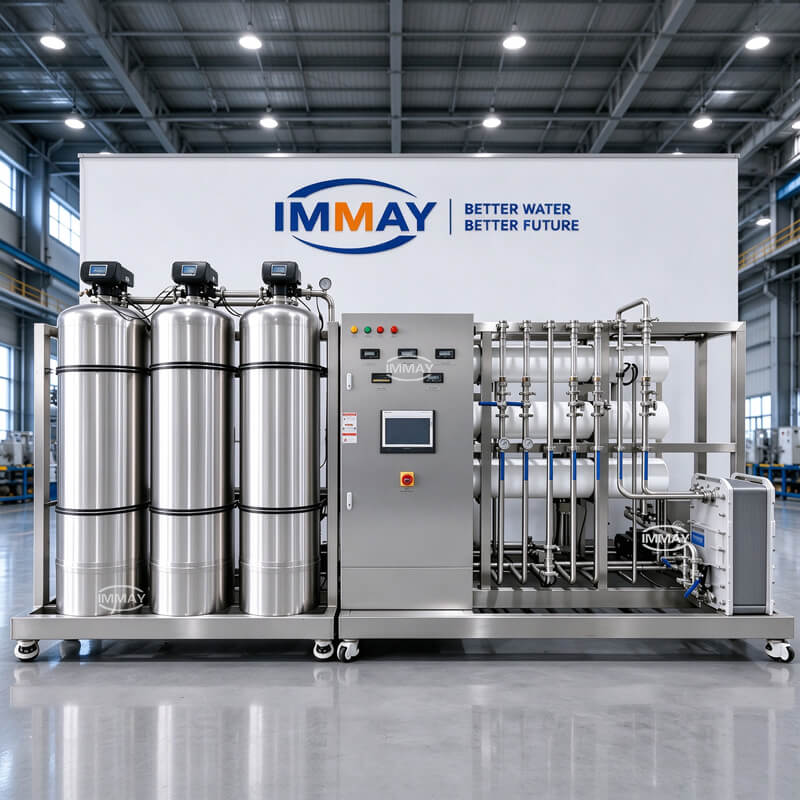
Industrial water treatment is an important part of many manufacturing processes, from cosmetics and food and beverage to pharmaceuticals, chemicals, and electronics. Water used in these industries serves different purposes, and its quality can influence both the manufacturing process and the finished product.
For manufacturers planning a water treatment system, understanding the water requirements of their specific industry is an important starting point. What treatment processes are needed, and how should the system be configured to meet those requirements?
Water is a key ingredient in many cosmetic products, including shampoos, lotions, creams, facial cleansers, and toners. Its quality affects the formulation process and the characteristics of the finished product, making water treatment an important part of cosmetic manufacturing.
In cosmetic manufacturing, water is often used directly in product formulations. The required water quality depends on the product type, formulation, and manufacturing process. Excessive dissolved minerals and other impurities can affect formulation stability, product appearance, and compatibility with other ingredients.
Manufacturers need to establish the required water quality before selecting a treatment system. The specific requirements depend on the formulation and intended use of the water.
Reverse osmosis (RO) reduces dissolved salts and other impurities in feed water. An industrial RO water treatment machine supplies treated water for manufacturing shampoos, lotions, creams, and other personal care products.
The system configuration depends on the incoming water quality and the required output. Pretreatment can include sand filtration, activated carbon filtration, water softening, and precision filtration, depending on the feed water characteristics. When a single RO stage cannot meet the required water quality, a second RO stage or additional purification equipment can be added.
After treatment, RO water is commonly transferred to a pure water storage tank before being supplied to production equipment. The storage capacity depends on water consumption, batch sizes, and the production schedule.
Connecting the RO water treatment machine to a storage tank and production water supply system provides a reliable supply of treated water for cosmetic manufacturing. The overall system configuration should reflect the manufacturer's actual water requirements, including the required water quality, daily consumption, and production capacity.
Water is used as an ingredient in many food and beverage products, including bottled drinks, juices, sauces, and other liquid foods. Its quality can affect the taste, appearance, and consistency of the finished product. The water treatment system must therefore match the requirements of the product and the manufacturing process.
When water is used directly in a product, its mineral content, taste, odor, and other characteristics can influence the finished product. Manufacturers need to assess the incoming water quality and determine the required water quality for their specific applications before selecting a treatment system.
Different treatment methods address different water quality issues. The choice depends on the impurities present in the incoming water and the quality required for manufacturing.
Pretreatment may include sand or multimedia filtration, activated carbon filtration, water softening, and cartridge filtration. These processes remove specific impurities and prepare the water for subsequent treatment when necessary.
Ultrafiltration (UF) uses a membrane to remove suspended particles, colloids, and many microorganisms. It is suitable for applications where these contaminants need to be reduced, but it does not effectively remove most dissolved salts.
Reverse osmosis (RO) reduces dissolved salts and many other dissolved impurities. It is suitable for food and beverage manufacturing processes that require lower levels of dissolved substances in the production water.
These methods can be used individually or combined according to the water quality requirements of the application. For example, pretreatment alone may be sufficient for some uses, while other applications may require pretreatment followed by ultrafiltration or reverse osmosis.
After treatment, water can be transferred to a storage tank before being supplied to mixing tanks, beverage processing equipment, or other production equipment. The required storage capacity depends on water consumption, batch sizes, production schedules, and the output of the treatment system.
The treatment system, storage tank, and water supply arrangement should be selected according to the actual manufacturing requirements. Determining the required water quality and consumption in advance helps manufacturers choose equipment that fits their production process.
Water is used in pharmaceutical manufacturing to prepare medicinal products, dissolve ingredients, and support various production processes. The required water quality depends on the intended application and applicable pharmacopoeial requirements. Different applications therefore require different water treatment processes.
Pharmaceutical manufacturing uses different grades of water, including Purified Water and Water for Injection (WFI). Purified Water is used in many pharmaceutical preparations and manufacturing operations, while WFI is required for specific applications, particularly the preparation of medicines for parenteral administration. Each grade has defined quality requirements that determine the necessary treatment process.
The treatment process depends on the required water grade and the incoming water quality. Pretreatment may include multimedia filtration, activated carbon filtration, and water softening to prepare feed water for further purification.
Reverse osmosis (RO) is widely used in pharmaceutical water systems to reduce dissolved salts and other impurities. For applications requiring further purification, RO can be combined with electrodeionization (EDI) or other suitable treatment technologies.
Distillation is an established method for producing Water for Injection. Depending on the applicable pharmacopoeia and regulatory requirements, validated alternative technologies may also be permitted. The selected process must meet the chemical and microbiological quality requirements for its intended use.
Water quality must be maintained after treatment. Pharmaceutical water storage and distribution systems are designed to maintain the required water quality and control microbial growth during storage and delivery.
Storage tanks, distribution piping, and associated equipment must be selected according to the water grade, consumption demand, and manufacturing requirements.
Water is used in electronics manufacturing for component cleaning, rinsing, and semiconductor production. Dissolved salts, particles, and other contaminants can leave residues on components or affect manufacturing processes. These applications require water with low levels of impurities.
Pretreatment
Pretreatment removes suspended solids, chlorine, hardness, and other contaminants that can affect downstream treatment equipment. Depending on the incoming water quality, pretreatment can include multimedia filtration, activated carbon filtration, water softening, and precision filtration.
Two-Pass Reverse Osmosis (RO)
The pretreated water passes through two RO stages. The first stage reduces dissolved salts and other impurities, while the second stage further reduces the remaining dissolved substances. Two-stage RO provides lower-salinity water for subsequent purification.
Electrodeionization (EDI)
After the second RO stage, EDI removes residual ions from the water to achieve higher purity and lower conductivity. The combination of two-stage RO and EDI is used in electronics water treatment systems that require high-purity process water.
The required water quality and consumption determine the system capacity and configuration. Manufacturers need to establish the target water quality and daily water demand before selecting pretreatment equipment, RO capacity, and EDI specifications.
Water is used to dissolve raw materials, prepare chemical solutions, and formulate products such as windshield washer fluid, liquid soap, laundry detergent, and dishwashing liquid. Water quality can affect the formulation and appearance of the finished product. The required water quality depends on the product formulation and manufacturing process.
Pretreatment
Pretreatment prepares the incoming water for reverse osmosis. Depending on the raw water quality, it can include multimedia filtration, activated carbon filtration, water softening, and precision filtration. These processes reduce suspended solids, chlorine, hardness, and other substances that could affect the RO membranes.
Reverse Osmosis (RO)
After pretreatment, the water passes through an RO system to reduce dissolved salts and other impurities. A 1-stage RO system may meet the water quality requirements of some chemical products, while applications requiring lower dissolved salt levels may need 2-stage RO. The choice depends on the incoming water quality and the water quality required for the finished product.
Chemical manufacturers need to determine the required water quality and daily water consumption before selecting a treatment system. Pretreatment and RO form the main treatment process, while the number of RO stages depends on the product formulation and water quality requirements. The system capacity should also match the water demand of the production process.
The incoming water quality determines the pretreatment requirements and influences the overall system design. Manufacturers should assess the source water for hardness, suspended solids, chlorine, dissolved salts, and other impurities before selecting treatment equipment.
The required water quality depends on how the treated water will be used. Cosmetic formulations, food and beverage processing, pharmaceutical manufacturing, and chemical production have different water quality requirements. These requirements determine which treatment methods are needed, such as ultrafiltration (UF), reverse osmosis (RO), or electrodeionization (EDI).
The treatment system should provide enough water to meet production demand. Manufacturers need to consider daily water consumption, batch sizes, peak demand, and the time available for water treatment. Storage tank capacity should also correspond to the production schedule and water usage.
The treatment process should be selected according to the incoming water quality and the required output. When RO is used, appropriate pretreatment is generally needed to protect the membranes. Depending on the target water quality, the system may use single-stage RO, two-stage RO, or additional purification such as EDI. The final configuration should reflect the actual process requirements and water consumption.
Industrial water treatment is not a one-size-fits-all process. From cosmetic and chemical formulations to food processing, pharmaceutical production, and electronics manufacturing, each application has its own water quality requirements. Understanding how water is used in production is the starting point for determining the appropriate treatment method.
A suitable industrial water treatment system must account for both the incoming water quality and the demands of the manufacturing process. By considering the required water quality, water consumption, and production capacity together, manufacturers can select a treatment process and system configuration that fit their actual needs.