- Home
- Equipment
- Industries
- We Immay
- Resource
- Contact
Author: Site Editor Publish Time: 2025-11-11 Origin: Site
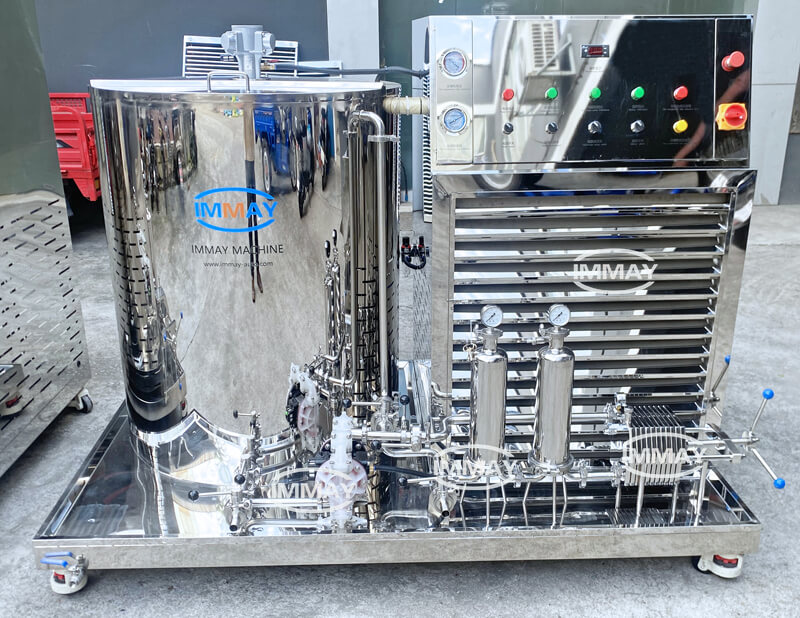
Perfume production combines the precision of science with the subtlety of artistry. Every step, from the initial mixing of ingredients to the final filling into bottles, directly impacts the clarity, stability, and aromatic quality of the finished product. For small boutique brands producing as little as 100L per batch, the focus often lies in flexibility, careful handling, and meticulous quality control. In contrast, industrial manufacturers operating 2000L lines prioritize efficiency, scalability, and consistent performance across large volumes.
Despite the difference in scale, the fundamental workflow of perfume production remains consistent. This includes mixing high-purity ethanol, fragrance oils, and deionized water; cold treatment to remove insoluble components; filtration to achieve crystal-clear clarity; intermediate storage to stabilize the product; and accurate filling into bottles with minimal loss of aroma or alcohol content. Properly understanding and managing these steps is critical for any manufacturer aiming to produce a high-quality, commercially viable perfume.
The modern perfume market also demands adaptability. Manufacturers often produce multiple fragrances with unique formulas, each requiring slightly different handling, temperatures, or filtration approaches. A production line designed without scalability or flexibility in mind may struggle to accommodate new products, resulting in inefficiencies or product inconsistencies. By planning production capacity carefully—from small experimental batches to full-scale industrial output—manufacturers can optimize workflow, reduce downtime, and maintain product excellence.
In this guide, we will provide a comprehensive reference for perfume production lines ranging from 100L to 2000L, focusing on workflow, equipment selection, and configuration strategies. We will examine key production stages, including mixing, freezing, filtration, storage, and filling, and discuss how equipment scale, design features, and automation impact quality and efficiency. Additionally, we will highlight the benefits of integrated systems that combine multiple processes into streamlined, modular units.
IMMAY’s expertise in perfume mixing, freezing filtration, and filling machinery will serve as a practical reference throughout this guide, illustrating solutions that are adaptable to different batch sizes and operational requirements. Whether the goal is small-batch experimentation or industrial-scale manufacturing, this guide will help manufacturers design production lines that are reliable, flexible, and capable of delivering consistently high-quality perfume products.
By the end of this guide, readers will gain a clear understanding of
How each stage of perfume production influences product quality
How to select and scale equipment based on production capacity
The advantages of modular and integrated systems for efficiency and scalability
With this knowledge, manufacturers can confidently plan and implement perfume production lines that ensure every batch meets desired standards of clarity, stability, and fragrance integrity.
Before any perfume production line can be effectively designed or implemented, it is essential to have a thorough understanding of the workflow. Each stage, from initial mixing to final filling, plays a critical role in ensuring clarity, stability, and consistency in the finished product. Missteps at any point in the process can compromise fragrance quality, lead to haziness, or introduce variability between batches.
The standard perfume production workflow typically consists of the following stages
Mixing: Combining ethanol, fragrance oils, and deionized water to create a homogeneous blend. Mixing must be precise to ensure even distribution of fragrance compounds, which directly impacts the final scent profile.
Maturing (optional): Some formulations benefit from a brief resting period, allowing fragrance compounds to stabilize chemically. This step can enhance the richness and depth of the final aroma.
Cold Treatment (Freezing): The mixture is cooled to a low temperature, typically between –5°C and –7°C, to precipitate waxes, lipophilic residues, and other cold-insoluble components. Proper cold treatment improves visual clarity and prevents future haze formation.
Filtration: Precision filtration removes precipitated solids and ensures crystal-clear clarity. Multi-stage filtration is often required for larger volumes or for formulas containing high concentrations of oils or complex components.
Storage: After filtration, perfume is temporarily held in sealed stainless steel tanks to stabilize clarity and maintain a consistent flow for subsequent filling operations.
Filling: Perfume is accurately dispensed into bottles, often using vacuum filling systems to minimize evaporation of alcohol and volatile fragrance compounds.
Packaging: Crimping and preparing the bottles for distribution. Efficient packaging ensures product safety and preserves fragrance integrity until the consumer opens the bottle.
While the workflow remains consistent, the scale of equipment, process control, and automation should be adjusted based on batch size. Small batches emphasize flexibility and careful handling, while industrial-scale lines require automation, robust filtration systems, and chilling units capable of maintaining uniform low temperatures across larger volumes.
Understanding this workflow allows manufacturers to identify critical control points, optimize efficiency, and ensure that the final product consistently meets desired quality standards. Integrated systems, which combine mixing, freezing, and filtration into a single modular unit, can significantly enhance process control, reduce handling time, and maintain consistency across multiple batches.
By mastering the production workflow, manufacturers gain the foundation necessary to design scalable perfume lines that balance flexibility, efficiency, and high-quality output. This knowledge also informs decisions on equipment selection, capacity planning, and modular integration, ensuring a production line capable of adapting to evolving market demands.
Mixing is the core stage of perfume production, establishing uniformity, stability, and consistency for every batch. In IMMAY perfume production lines, from 100L small-batch units to 2000L industrial lines, high speed mixing is employed to ensure rapid and thorough blending of ethanol, fragrance oils, and other components. This approach guarantees that all ingredients are evenly distributed, creating a consistent aroma and maintaining product quality from the first batch to the last.
Key Considerations for Perfume Mixing
High Speed Mixing: All batches, regardless of volume, use high speed mixing to quickly achieve homogeneity. This method ensures that fragrance oils are fully integrated with ethanol and water, providing uniform scent distribution and preventing uneven layers or separation during subsequent processing.
Temperature Control: Proper mixing temperatures are critical to preserve volatile fragrance compounds. IMMAY mixing tanks are equipped with precise temperature regulation systems, allowing the process to maintain optimal conditions for all formulas, including those with temperature-sensitive aromatic ingredients.
Material and Construction: Tanks are made from high quality stainless steel to resist corrosion, prevent contamination, and avoid chemical reactions with ethanol or fragrance oils. High-purity materials are essential to maintain the integrity of delicate fragrance molecules.
Closed-Tank Design: All mixing tanks are fully enclosed to minimize alcohol evaporation, protect aroma compounds, and ensure operator safety. Closed systems also facilitate seamless connection to downstream cold treatment and filtration processes.
Scalable Design: High speed mixing is applied uniformly across all capacities. Even the 100L small-batch tank incorporates a high-speed agitator, ensuring consistent mixing performance equivalent to larger production lines. This guarantees repeatable quality regardless of batch size.
IMMAY’s high speed perfume stainless steel mixing tanks are designed to support efficient transitions from mixing to freezing, filtration, storage, and filling. Their performance ensures that perfumes maintain clarity, stability, and aromatic integrity. By standardizing on high speed mixing for all batches, manufacturers avoid variability, reduce processing time, and ensure that every product meets quality expectations.
Investing in high speed perfume mixing equipment provides manufacturers with a reliable foundation for all subsequent production stages. Proper mixing directly affects clarity, fragrance consistency, and overall product quality, making it a critical step in every perfume production line.
Cold treatment, also known as freezing, is a critical step in perfume production that ensures visual clarity and long-term stability. After mixing, perfumes often contain small amounts of waxes, lipophilic residues, or other cold-insoluble components that can cause haze or cloudiness. By cooling the mixture to low temperatures, typically between –5°C and –7°C, these compounds solidify and can be effectively removed in the subsequent filtration stage.
Importance of Cold Treatment
Clarity and Visual Appeal: Perfume clarity is essential for consumer perception and marketability. Cold treatment causes waxes and insoluble components to precipitate, preventing haziness in the finished product.
Fragrance Stability: Cooling helps stabilize fragrance molecules and reduces the risk of separation or layering over time. Uniform cold treatment ensures consistent aroma and color across batches.
Preparation for Filtration: By solidifying undesired components, freezing makes filtration more efficient, preventing filter clogging and reducing the risk of contamination.
Key Features of an Effective Freezing System
Stable Low-Temperature Control: Uniform temperature across the entire tank is essential, especially for larger volumes, to ensure complete precipitation of cold-insoluble compounds.
Insulated Tank Walls: Insulation maintains consistent temperatures and improves energy efficiency during extended freezing periods.
Explosion-Proof Components: Since perfumes are ethanol-based, chilling systems must incorporate safety features to prevent ignition in flammable environments.
Scalable Design: IMMAY freezing systems are suitable for 100L boutique batches up to 2000L industrial batches, with proportional chilling capacity to maintain uniform low temperatures throughout the batch.
Cold Treatment Duration
The duration of cold treatment depends on the complexity of the formulation, solvent ratio, cooling equipment capacity, and batch size. Based on experience, after lowering the temperature to –5 °C to –7 °C, insoluble solids in small-batch perfumes are typically fully precipitated within about 2 hours, while for larger batches or formulations containing high wax content, precipitation usually completes within 2–3 hours. Using high-efficiency cooling equipment and optimized processes ensures complete precipitation while maintaining product clarity and stability.
IMMAY Integrated Freezing Solutions
IMMAY offers integrated freezing and filtration systems that combine chilling, precipitation, and filtration into a streamlined process. These systems:
Reduce handling and transfer between tanks
Maintain consistent temperature and clarity
Improve operational efficiency
Support both small and large batch sizes
By implementing a controlled cold treatment stage, manufacturers ensure that the perfume entering the filtration stage is free from solid contaminants, visually clear, and chemically stable. This stage directly affects the product’s shelf-life, clarity, and consumer appeal, making it a crucial step in every perfume production line.
After cold treatment, filtration is the essential step that ensures the perfume is visually clear, chemically stable, and free from any precipitated solids. This stage removes waxes, lipophilic residues, and other cold-insoluble components that could affect clarity, fragrance consistency, and long-term stability of the product. Effective filtration is critical for both small-batch and industrial-scale production lines.
Key Considerations in Perfume Filtration
Filter Precision: Multi-stage filtration is often employed to achieve crystal-clear clarity. Fine mesh or depth filters remove particulate matter while preventing loss of volatile fragrance compounds. The choice of filter pore size depends on the formula, fragrance oil concentration, and desired clarity level.
Flow Rate and Efficiency: For larger batches, filtration systems must balance speed with thoroughness. High flow rates reduce production time, but overly rapid flow can compromise filter performance. IMMAY systems are designed to maintain consistent flow while ensuring complete removal of solids.
Material Compatibility: Filters are constructed from high quality stainless steel materials to prevent chemical reactions with ethanol or fragrance oils, ensuring product integrity.
Integrated Systems: Modern perfume production lines often integrate filtration with cooling and mixing tanks, reducing handling steps and minimizing the risk of contamination. This approach improves efficiency and maintains uniform quality across batches.
Benefits of Effective Filtration
Clarity: Removes all precipitated solids and ensures a visually appealing final product.
Stability: Eliminates particles that could later cause haze or cloudiness, preserving fragrance consistency over shelf life.
Efficiency: Integrated and well-designed filtration systems reduce downtime and labor, supporting both small and large production scales.
IMMAY’s filtration solutions are scalable, handling 100L small-batch operations as efficiently as 2000L industrial batches, with modular designs that allow customization according to production needs. By combining precise filtration with high speed mixing and optimized cold treatment, manufacturers can maintain consistent perfume quality, clarity, and stability.
Proper filtration is therefore not just a finishing step; it is a core quality control measure that directly influences consumer perception, product reliability, and brand reputation.
After filtration, perfumes are transferred to sealed intermediate holding tanks to allow brief aging. This stage enables the fragrance components to fully integrate, harmonizing the scent profile and stabilizing the composition before the filling stage. Intermediate holding is particularly important for complex formulas that contain multiple fragrance oils, which may require time to reach equilibrium and ensure consistent aroma across the batch.
Tank Material and Sealing: Storage tanks are constructed from high quality stainless steel, preventing contamination and avoiding chemical reactions with ethanol or fragrance oils. Fully sealed tanks maintain consistent alcohol content and preserve the integrity of the perfume until filling.
Intermediate Holding Process: During aging, the perfume remains undisturbed, allowing natural integration of aromatic components. This step ensures that the final product has a uniform scent, clarity, and composition, regardless of batch size.
Scalability and Flexibility: IMMAY storage solutions accommodate 100L small-batch tanks up to 2000L industrial tanks. Each tank functions independently, enabling sequential aging of different formulas on the same production line without cross-contamination.
Benefits of Proper Storage and Holding
Aroma Harmonization: Fragrance components blend fully, achieving the intended scent profile.
Batch Consistency: Uniform aging ensures consistent quality between batches.
Product Integrity: Sealed tanks preserve clarity and alcohol content, maintaining stability until the filling stage
Proper intermediate holding is a critical step in producing high-quality perfume. By focusing on aging, blending, and batch uniformity, this stage ensures the product meets both visual and aromatic expectations before final filling and packaging.
Once the perfume has completed aging and batch consistency is confirmed, the final production stage is filling and packaging. This step ensures that the product is ready for distribution while maintaining quality, clarity, and aroma integrity.
Key Considerations for Filling
Precision Filling: IMMAY perfume filling machines are designed for glass bottles, ensuring accurate and consistent volume for each container. This supports uniform product presentation and efficient handling.
Limited Exposure: The closed vacuum filling system minimizes contact with air, preserving fragrance and alcohol content during the dispensing process.
Integrated Workflow: Filling units can be directly linked to crimping stations, creating a smooth workflow that maintains product integrity throughout the line.
Key Considerations for Packaging
Crimping: Perfume bottles are sealed using a crimping process, which secures the closure and preserves fragrance stability.
Visual Presentation: Properly filled and crimped bottles ensure a consistent and attractive product appearance, supporting brand image and market appeal.
Advantages of IMMAY Filling and Packaging Solutions
High Efficiency: Integrated filling and crimping systems handle various batch sizes efficiently.
Consistency: Each bottle maintains uniform quality, volume, and aroma integrity.
Scalability: IMMAY perfume manufacturing machines can be customized according to your output, supporting both boutique and mass-market production.
By focusing on precision filling, crimping, and optimized glass bottle handling, the final stage ensures that perfume reaches consumers with the intended quality, aroma, and visual appeal. Proper filling and packaging preserve fragrance integrity while enhancing the overall brand experience.
Quality control is an essential part of perfume production, ensuring that every batch meets the intended aroma, clarity, and composition standards. At this stage, both in-process monitoring and final product testing are conducted to maintain consistency and integrity across all batches.
Key Quality Control Measures
Batch Consistency Checks: During and after mixing, samples are evaluated for color, clarity, and fragrance uniformity. This ensures that each batch matches the target profile and maintains consistency across production scales, from small experimental batches to large industrial volumes.
Aroma Verification: Trained personnel or sensory panels assess the fragrance profile to confirm that all notes have integrated correctly. Any deviations from the intended scent are addressed before filling.
Alcohol and Solvent Content: The ethanol concentration is checked to ensure stability, evaporation control, and regulatory compliance (if applicable). Maintaining correct alcohol content is critical for both fragrance performance and shelf life.
Filtration Effectiveness: The final perfume is monitored for clarity, confirming that cold treatment and filtration have successfully removed waxes and other insoluble components.
Crimped Bottle Inspection: After filling and crimping, bottles are checked to ensure proper sealing, consistent fill levels, and intact visual presentation. This step prevents leakage and ensures fragrance stability during storage and transport.
Advantages of Systematic Quality Control
Consistency Across Batches: Ensures every bottle meets the brand’s sensory and visual standards.
Product Integrity: Confirms that fragrance, alcohol content, and clarity are preserved from production to consumer use.
Process Optimization: Early detection of deviations allows for corrective action, minimizing product loss and maintaining efficiency.
Manufacturers should integrate quality control seamlessly within the production process, monitoring and verifying mixing, aging, filtration, and filling stages. This ensures that perfumes consistently meet consumer expectations in terms of fragrance, clarity, and overall quality, enhancing brand trust and market reputation.
Perfume production involves multiple specialized stages, including high speed mixing, cold treatment, filtration, intermediate aging, and glass bottle filling with crimping. Each stage plays a vital role in ensuring fragrance consistency, clarity, and overall product quality.
High speed mixing, freezing (cold treatment), and filtration are carried out using IMMAY’s 3-in-1 perfume making machine, which efficiently handles batch processing while maintaining product integrity. Intermediate aging takes place in stainless steel storage tanks, allowing fragrance components to harmonize before filling. Filling and crimping can be performed using either separate machines or an integrated filling-crimping unit, depending on production needs.
By combining precision equipment, scalable solutions, and controlled process management, manufacturers can optimize workflow, maintain batch consistency, and deliver perfumes that meet market standards. Proper execution of each stage ensures that every bottle reflects the intended aroma, clarity, and visual quality, supporting brand reputation and consumer trust.
A well-designed perfume production line, using professional equipment for each dedicated stage, allows manufacturers to efficiently produce high-quality perfumes suitable for both boutique and mass-market applications.
Take the next step in optimizing your perfume production by exploring IMMAY’s professional perfume making machines solutions—customized to your batch size, designed to deliver consistent quality and optimize your workflow.