- Home
- Equipment
- Industries
- We Immay
- Resource
- Contact
Author: Site Editor Publish Time: 2026-04-22 Origin: Site
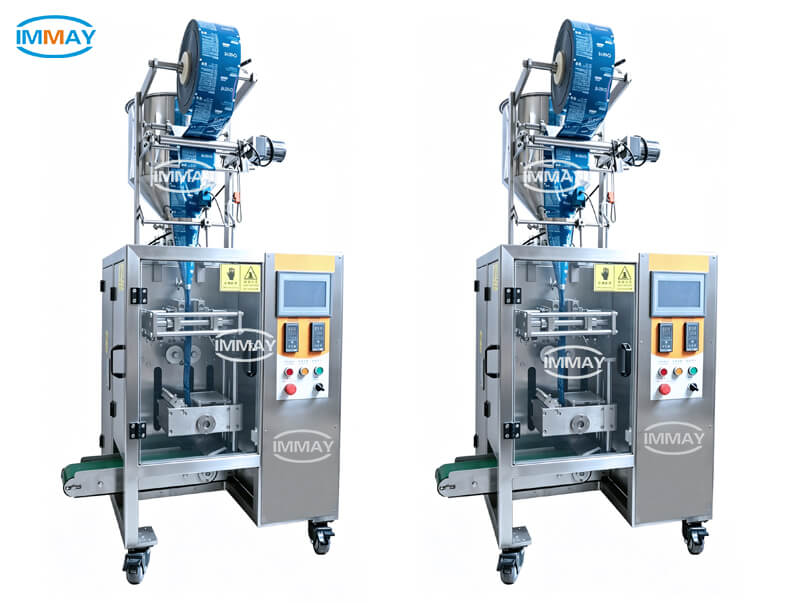
Sauce packets have become increasingly common in food service, especially in fast food, takeaway, and catering operations. From meal kits to delivery orders, this small packaging format is now used in a wide range of service scenarios.
Sauce packets have become a standard packaging format in modern food service systems. Their widespread use is not only related to convenience, but also to how food businesses manage portion control, consistency, and large-scale distribution.
One of the main reasons sauce packets are widely used is portion control. In fast food and takeaway services, every serving needs to remain consistent regardless of location or operator.
Pre-measured sachets help ensure that each customer receives the same amount of sauce, which supports standardized meal composition. This is especially important in chain restaurant systems where product consistency is a core requirement.
From an operational perspective, portion-controlled packaging also helps reduce overuse and improves cost management across high-volume service environments.
Sauce packets are designed for simplicity in both usage and handling. For consumers, they provide a ready-to-use format without the need for additional utensils or preparation.
For food service operators, they simplify storage and distribution. Pre-packed portions can be easily included in meal sets, takeaway orders, or delivery packages without additional handling steps.
Standardized packaging also reduces variability during service, ensuring that sauces are delivered in a uniform and controlled format across different service channels.
Beyond fast food chains, sauce packets are widely used in other food service environments where bulk handling and standardized portions are required.
In catering operations, they support large-scale meal distribution where consistency and speed are important. In delivery services, sachets help maintain product separation and prevent cross-mixing during transport.
Institutional food service environments, such as cafeterias and airline catering, also rely on portioned sauce packaging to simplify distribution and improve operational efficiency. In these systems, packaging format plays an important role in maintaining structured meal delivery processes.
In sachet filling production, Sauces are commonly classified into two main categories based on their flow resistance during filling processes: low-viscosity and high-viscosity products.
Typical products include:
Ketchup
Soy sauce
Chili oil
Vinegar-based sauces
Thin salad dressings
Liquid seasoning sauces
Typical products include:
Mayonnaise
BBQ sauce
Garlic sauce
Hoisin sauce
chili sauce
Salad dressing
Curry sauce
Before the filling process begins, sauces are first stored and then transferred through a controlled feeding system to ensure stable and continuous supply to the filling machine.
stainless steel storage tank → feeding system → filling machine hopper
Sauces are typically stored in stainless steel storage tanks before entering the filling line.
These tanks act as a buffer system, ensuring that the product remains in a stable condition and is available for continuous production without interruption.
From the storage tanks, the sauce is transferred through a feeding system into the filling line.
Depending on the production setup and product characteristics, this system mainly include:
Pumps
Sauce feeding machines
The purpose of this stage is to maintain a continuous and controlled product supply toward the filling machine.
The product is then delivered into the filling machine hopper.
The hopper serves as a short-term buffer that ensures a stable and consistent feed into the dosing system during high-speed sachet production.
In industrial sachet production lines, filling and sealing are carried out in a continuous and coordinated system. The process is designed to ensure accurate dosing, stable forming, and reliable sealing at high production speeds.
The operation typically follows a continuous chain:
dosing → filling → forming → sealing
The dosing system is the core stage of sauce sachet production, where precise quantities of product are delivered into each individual package.
In most industrial sauce filling machines, piston filling systems are widely used due to their stable volumetric dosing performance. This method allows consistent portion control for a wide range of products such as ketchup, chili sauce, BBQ sauce, and mayonnaise.
During operation, the product is supplied from the hopper into the dosing unit, where it is measured and then filled directly into the forming sachets in a controlled cycle.
The sachet forming process is based on continuous roll film packaging technology.
A packaging film is unwound from a roll and guided through a forming tube, where it is shaped into a vertical tube structure. As the film moves downward, it is continuously formed into individual sachets ready for filling.
This process is synchronized with the dosing system to ensure that each formed sachet receives a precise and consistent amount of product without interruption during high-speed production.
After filling, the sachets are immediately sealed to ensure product protection and packaging integrity.
Heat sealing is the most commonly used method in industrial production. The sealing jaws apply controlled pressure and temperature to form strong and consistent closures at the top, bottom, and vertical seams of each sachet.
The sealing process operates in synchronization with filling and forming stages, ensuring that each package is sealed immediately after dosing, maintaining continuous and stable production flow.
In a complete sauce sachet production line, forming, filling, and sealing are synchronized processes.
The system is designed for continuous operation, where packaging film unwinding, product dosing, sachet forming, and sealing are all coordinated within a single automated cycle. This integration ensures stable output, consistent portion control, and efficient high-speed production.
Selecting a suitable sachet packing machine for sauce production depends on several practical factors, including packaging material, filling volume, and production speed. These parameters directly affect machine configuration, dosing system selection, and overall line efficiency.
The choice of packaging material determines how the sachet behaves during forming and sealing.
Common materials used in sauce sachet packaging include laminated films such as PET/PE, OPP/PE, and other heat-sealable multilayer structures. These materials are selected based on their barrier properties, sealing performance, and compatibility with liquid or viscous food products.
A suitable machine should ensure stable film unwinding, accurate forming, and consistent heat sealing performance for your material type.
Filling volume is a key factor in determining the configuration of the dosing system.
Sauce sachets are typically designed for small, single-serve portions, but the required volume can vary depending on application needs, such as fast food, takeaway, or institutional catering.
The filling system must ensure accurate and repeatable dosing for each sachet.
Production speed directly affects the selection of machine type.
High-speed sachet production lines require synchronized operation between film forming, filling, and sealing systems to maintain stable output without interruptions.
Machine design must ensure that dosing accuracy and sealing quality remain consistent even under continuous high-speed operation.
The growing demand for sauce sachets in food service and takeaway industries reflects a broader shift toward convenient and standardized portion packaging.
To meet this demand, production is typically organized as a continuous packaging process designed for stable and efficient high-speed operation.
This process integrates feeding, filling, forming, and sealing into a coordinated production line. When each stage operates in sequence and remains properly synchronized, the system can maintain consistent output and stable packaging quality during continuous operation.