- Home
- Equipment
- Industries
- We Immay
- Resource
- Contact
Author: Site Editor Publish Time: 2026-07-16 Origin: Site
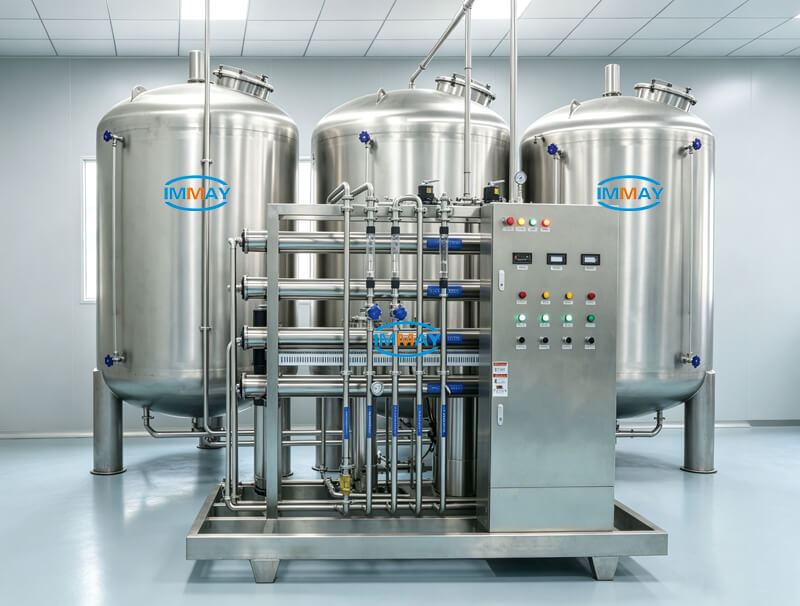
Industrial boilers continuously convert water into steam to provide heat and power for manufacturing processes. As water evaporates, dissolved minerals such as calcium, magnesium, silica, and other impurities remain inside the boiler and gradually become more concentrated. Over time, these deposits can cause scale formation, reduce heat transfer efficiency, and increase maintenance requirements.
This is why many industrial facilities use reverse osmosis (RO) systems to produce high-quality boiler feed water. By reducing dissolved minerals before water enters the boiler, an industrial RO system helps improve operating efficiency, lower maintenance costs, and support reliable long-term performance.
Industrial boilers have stricter water quality requirements compared with many other industrial systems because they operate under continuous evaporation, high temperatures, and high pressure. During steam generation, water is continuously converted into steam and removed from the boiler, while dissolved minerals and impurities remain behind. As a result, the concentration of these substances gradually increases inside the boiler system.
With continuous operation, the accumulation of calcium, magnesium, silica, and other dissolved solids can lead to mineral deposits on heat transfer surfaces. Under high-temperature conditions, these deposits can become harder and more difficult to remove, affecting heat transfer efficiency and increasing the risk of scaling and corrosion.
Because industrial boilers often run for long periods to support manufacturing processes, maintaining stable feed water quality is essential. Properly treated boiler feed water helps reduce impurity buildup, protect internal components, and support efficient and reliable boiler performance over the entire operating cycle.
Scale is one of the most common problems caused by untreated boiler feed water. Dissolved minerals such as calcium, magnesium, and silica remain inside the boiler as water evaporates and gradually form hard deposits on internal surfaces. These deposits reduce heat transfer efficiency, restrict water flow, and make the boiler work harder to produce the required amount of steam. Over time, excessive scale can significantly affect overall system performance and increase operating costs.
Untreated water may contain dissolved oxygen, carbon dioxide, and other impurities that contribute to corrosion inside boilers and piping systems. Corrosion gradually weakens metal surfaces, increasing the risk of leaks, equipment damage, and unexpected shutdowns. If left uncontrolled, corrosion can also release corrosion products into the system, further affecting boiler operation and increasing maintenance requirements.
Boilers transfer heat from the combustion source to the water through metal heat transfer surfaces. When scale builds up on these surfaces, it acts as an insulating layer that slows heat transfer. As a result, the boiler requires more energy to generate the same amount of steam, reducing overall operating efficiency. Even relatively thin mineral deposits can negatively affect heat transfer performance over time.
Mineral deposits and corrosion often require more frequent inspections, cleaning, and component replacement. As operating problems accumulate, maintenance intervals may become shorter, resulting in increased labor costs and production downtime. Proper boiler feed water treatment helps reduce these maintenance requirements and supports more stable long-term operation.
Continuous exposure to scaling, corrosion, and inefficient operating conditions places additional stress on boiler components. Heat exchangers, tubes, pumps, valves, and other equipment may wear more quickly under these conditions, reducing the overall service life of the boiler system. Maintaining good feed water quality helps protect critical components and supports reliable operation for many years.
Reverse osmosis (RO) systems improve boiler performance by reducing dissolved minerals and impurities in boiler feed water. By treating water before it enters the boiler, RO systems help minimize common problems such as scaling, corrosion, and efficiency loss.
RO systems remove a large amount of dissolved minerals, including calcium and magnesium, which are major contributors to scale formation. By reducing these minerals before water enters the boiler, RO-treated water helps keep heat transfer surfaces cleaner and reduces the accumulation of hard deposits.
By lowering dissolved salts and other impurities in feed water, RO treatment helps reduce conditions that can accelerate corrosion inside boilers and related piping systems. Cleaner water quality supports more stable operation and helps protect important components.
High-quality boiler feed water allows boilers to operate under more consistent conditions. Reduced mineral buildup and lower impurity levels help maintain stable heat transfer performance and support reliable steam production during continuous operation.
When scaling and corrosion problems are reduced, boilers typically require fewer cleaning operations and less frequent component maintenance. This helps reduce downtime and improves the overall efficiency of industrial operations.
Poor water quality can gradually damage heat exchangers, tubes, valves, and other internal components. Using RO-treated water helps protect these parts from mineral deposits and corrosion, supporting longer equipment service life.
By maintaining cleaner heat transfer surfaces and reducing energy losses caused by deposits, RO water helps boilers operate more efficiently. Better feed water quality can contribute to lower operating costs and more predictable long-term performance.
RO water is widely used for industrial boiler feed water treatment, but the required water quality depends on boiler operating conditions, pressure level, and steam quality requirements. Different types of boilers may require different levels of water purification to maintain stable operation and minimize scaling and corrosion risks.
For many low-pressure industrial boilers, a properly designed reverse osmosis (RO) system can provide suitable boiler feed water by reducing dissolved minerals, salts, and other impurities. Single-pass RO systems are often used in these applications to improve water quality, reduce scale formation, and support stable boiler operation.
Medium- and high-pressure boilers generally require higher-quality feed water because operating conditions are more demanding. In these applications, a double-pass RO system may be used to achieve lower conductivity and further reduce dissolved impurities.
For applications with stricter water purity requirements, an RO system combined with EDI (Electrodeionization) or other polishing processes may be selected to produce higher-purity water. The appropriate treatment configuration depends on factors such as boiler pressure, feed water quality, and required water specifications.
Choosing the correct RO system for boiler feed water requires evaluating the complete operating conditions rather than selecting equipment based only on boiler capacity. Feed water analysis, daily water consumption, required conductivity, and future operating needs should all be considered when designing an industrial water treatment solution.
Selecting the right industrial RO system for boiler feed water requires a comprehensive evaluation of the boiler operating conditions and water treatment requirements. The correct system configuration depends not only on the boiler size but also on water quality, daily consumption, and the required purity level.
Boiler capacity is one of the main factors when selecting an RO system. A larger boiler typically requires a higher volume of feed water, which means the RO system should be designed with sufficient production capacity to meet continuous operation needs. The required RO capacity should match the boiler's water consumption while allowing stable performance during daily operation.
The quality of the incoming water directly affects RO system design. Different water sources, such as municipal water, groundwater, or surface water, may contain different levels of hardness, dissolved solids, organic matter, and other impurities. A proper pretreatment process should be selected based on feed water conditions to protect RO membranes and maintain stable system performance.
Daily water consumption helps determine the required RO system output. Industrial facilities should consider both normal operating demand and peak water usage when selecting equipment capacity. Choosing an appropriate production capacity helps avoid insufficient water supply and supports continuous boiler operation.
The required conductivity of boiler feed water depends on boiler pressure and operating requirements. Lower conductivity indicates lower levels of dissolved ions in the treated water. For applications requiring higher purity, configurations such as double-pass RO or RO combined with EDI may be considered to achieve lower conductivity levels.
When selecting an industrial RO system, future production changes should also be considered. A properly planned system can provide flexibility for increased water demand as facility operations expand. Evaluating future requirements during the initial design stage helps avoid major equipment modifications later.
Industrial boilers depend on high-quality feed water to maintain efficient and reliable operation. By reducing dissolved minerals and impurities before water enters the boiler, an industrial RO system helps minimize scale formation, reduce maintenance requirements, improve heat transfer performance, and protect critical boiler components.
Selecting the right RO configuration based on boiler operating conditions, feed water quality, required conductivity, and water demand is essential for achieving stable long-term performance. A properly designed boiler feed water treatment system helps support continuous operation and provides a reliable water source for industrial steam generation.