- Home
- Equipment
- Industries
- We Immay
- Resource
- Contact
Author: Site Editor Publish Time: 2025-10-29 Origin: Site
Spending time outdoors often brings the unwelcome presence of mosquitoes, making protection against bites a daily concern for many people. From evening walks to camping trips, effective mosquito repellents help individuals stay comfortable while minimizing exposure to mosquito-borne diseases.
But what exactly is a mosquito repellent liquid, and how does it work to keep mosquitoes at bay? Understanding the nature of these products provides the foundation for exploring their formulation and production.
Mosquito repellent liquid is a liquid formulation designed to prevent mosquito bites by keeping mosquitoes away from the user. Its primary purpose is to reduce the risk of mosquito-borne diseases and provide comfort during outdoor activities.
The liquid works by creating a protective barrier that interferes with the mosquito's sensory system. Most repellents target the insect’s sense of smell or taste, masking human odors or producing a scent that mosquitoes find unpleasant. This discourages mosquitoes from landing on or biting the skin.
Mosquito repellent liquids can be applied directly to the skin or sprayed onto clothing and other surfaces. Their effectiveness depends on both the consistency of the formulation and the way it is used.
For manufacturers, maintaining uniform mixing of active ingredients and solvents is essential to ensure product effectiveness, stability, and quality across all batches.
Mosquito repellent liquids rely on a carefully balanced combination of active ingredients, solvents, and auxiliary components to deliver effective protection and a pleasant user experience. Understanding these components is essential for both formulation design and production consistency.
Synthetic actives: Common compounds include DEET, Picaridin, and IR3535. These chemicals interfere with the mosquito’s olfactory receptors, masking the human scent or producing odors that mosquitoes find unpleasant, thereby reducing the likelihood of bites.
Natural actives: Essential oils such as citronella, lemon eucalyptus, lavender, and lemongrass offer plant-based alternatives. They act similarly by repelling mosquitoes through scent, though often with a shorter duration of effect compared to synthetic compounds.
Ethanol is the most commonly used solvent, dissolving both synthetic and natural active ingredients. It ensures rapid evaporation after application, leaving a light, non-greasy layer on the skin.
Purified water is often blended with ethanol to adjust concentration, reduce irritation potential, and achieve a desired sprayable consistency.
Fragrances: Added to improve user experience and mask strong odors of active ingredients.
Humectants: Compounds like glycerin or propylene glycol help retain skin moisture and reduce dryness caused by alcohol.
Emulsifiers (optional): Used in formulations containing essential oils to ensure proper dispersion in the water-ethanol mixture, enhancing stability.
The precise combination and concentration of these ingredients determine the repellent’s effectiveness, longevity, and sensory properties. By carefully controlling these factors, manufacturers can produce a stable and reliable mosquito repellent liquid that meets consumer expectations.
Industrial production of mosquito repellent liquid focuses on accurately combining active ingredients, solvents, and auxiliary components to achieve a consistent and effective product.
Active ingredients, ethanol, purified water, and optional additives such as fragrances or humectants are measured according to the formulation.
Precise measurement ensures batch-to-batch consistency and proper performance of the final product.
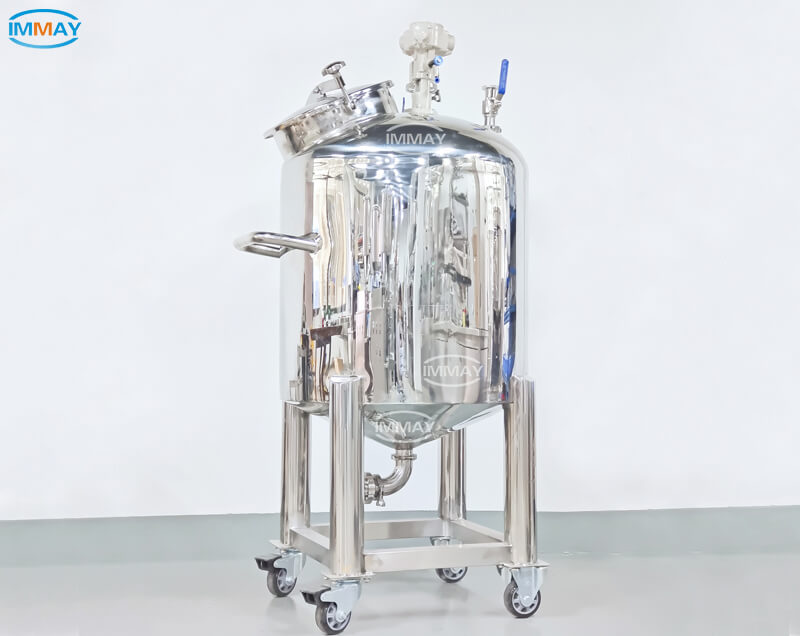
Ingredients are added to a liquid stainless steel mixing tank.
A pneumatic motor-driven agitator is used to blend the components thoroughly.
Mixing ensures uniform distribution of active ingredients and consistent product quality across the batch.
Filtration may be applied to remove undissolved particles if required by the manufacturer.
This step is optional and depends on the formulation; some natural oil-based repellents may retain slight cloudiness without affecting efficacy.
Once mixed (and optionally filtered), the liquid is transferred to filling lines for bottling or spray packaging.
Proper filling ensures each container receives a consistent volume and active ingredient concentration.
Samples need to be tested to verify ingredient concentration and overall homogeneity, ensuring consistent effectiveness of the mosquito repellent liquid.
Within a modern mosquito repellent liquid production line, precise blending of alcohol-based solvents, active ingredients and auxiliary components is essential for consistent efficacy and quality. Selecting the right mixing equipment is therefore critical, and stainless steel mixing tanks have become the preferred solution for manufacturers.
Mosquito repellent liquids commonly contain ethanol and essential oils, which are highly corrosive to ordinary materials. Stainless steel, particularly SUS316L, offers superior resistance to chemical corrosion, ensuring the tank maintains integrity over repeated use. Its durability minimizes maintenance needs and extends equipment lifespan.
Smooth, polished surfaces of stainless steel tanks prevent residue buildup and make cleaning and sanitation straightforward. This helps maintain batch-to-batch consistency, ensuring each production run meets the required formulation standards. Uniform mixing also reduces the risk of uneven distribution of active ingredients, which is essential for product effectiveness.
Mosquito repellent liquids are flammable due to their high ethanol content. A pneumatic motor-driven agitator helps reduce the risk of sparks and enhances production safety. Pneumatic mixer also provides reliable and adjustable mixing speeds, ensuring thorough dispersion of both synthetic and natural actives.
By combining material reliability, hygienic design, and safe, efficient mixing, stainless steel mixing tanks equipped with pneumatic mixer provide an ideal solution for mosquito repellent liquid manufacturing, ensuring both product quality and operational efficiency.
Producing high quality mosquito repellent liquid requires a clear understanding of the product’s ingredients and the overall manufacturing process. With this knowledge, manufacturers can select the appropriate industrial mosquito repellent liquid manufacturing machines to meet their specific production needs.
Using stainless steel mixing tanks with pneumatic mixer enables uniform blending, stable formulations, and efficient production, ensuring each batch meets consistent quality standards.
With the support of IMMAY’s advanced mosquito repellent liquid mixing solutions, brands can confidently scale up production and reliably manufacture effective mosquito repellent products.