- Home
- Equipment
- Industries
- We Immay
- Resource
- Contact
Author: Site Editor Publish Time: 2026-02-13 Origin: Site


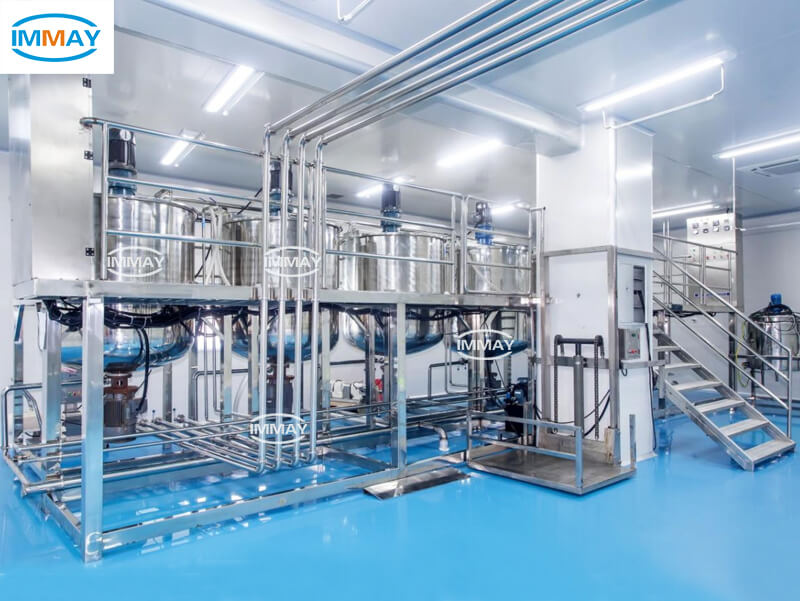
In modern industrial production, achieving consistent, high-quality products is not simply a matter of combining raw materials. Whether in cosmetics, pharmaceuticals, food, or specialty chemical manufacturing, the transformation of ingredients into stable, uniform, and functional formulations relies on controlled mixing. Industrial stainless steel mixing tanks with agitators are central to this process.
These systems do more than blend—they govern flow patterns, shear distribution, and circulation dynamics that directly affect product structure, texture, and performance. By providing both mechanical durability and efficient material processing, they form the backbone of scalable, repeatable, and reliable production operations.
Understanding the interplay between tank construction, material properties, and agitation design is essential for manufacturers seeking to optimize efficiency, maintain product consistency, and protect long-term equipment investment. This article explores how well-engineered industrial mixing systems deliver durability, efficiency, and process control across multiple industries.
Industrial production relies on controlled transformation. Raw materials are combined, dispersed, dissolved, or structured into a final product with defined physical and functional properties. Within this chain of operations, the mixing system is not a secondary utility—it is a central process unit that directly influences product structure, process efficiency, and long-term consistency.
In industrial environments, mixing is often misunderstood as simple agitation. In reality, it is a controlled mechanical process that determines how materials interact at both macro and micro levels.
When liquids are blended, the objective is not only visual uniformity but molecular-level distribution. In paste and high-viscosity systems, mixing governs internal shear history, which affects texture, flow behavior, and stability. In suspension systems, effective mixing maintains solid particles in controlled distribution, preventing sedimentation and uneven concentration.
The quality of mixing directly influences:
Homogeneity of ingredients
Stability of structured systems
Reproducibility between batches
Downstream processing performance
Inconsistent mixing can lead to variations in viscosity, uneven active distribution, and fluctuations in product performance. For manufacturers operating at scale, even small deviations can compound over multiple production cycles.
Because of this, mixing should be understood as a structure-forming process rather than a simple blending step.
The performance of a mixing process is not determined by raw materials alone. Equipment design plays a decisive role in shaping flow patterns, shear distribution, and circulation efficiency inside the tank.
Different tank geometries and agitation systems generate different hydrodynamic conditions:
Axial flow promotes vertical circulation and bulk turnover
Radial flow increases localized shear and dispersion
High-viscosity systems require controlled torque and optimized blade geometry
If the flow field inside the tank is uneven, dead zones may form. These areas reduce mixing efficiency and create inconsistency within the batch. Over time, this leads to variability between production cycles.
Process stability depends on the interaction between:
Tank dimensions
Impeller design
Rotational speed
Well-engineered mixing systems produce predictable internal flow behavior. Predictability leads to repeatability, and repeatability is the foundation of industrial production.
For manufacturers aiming to improve production efficiency and maintain long-term equipment durability, understanding the structural relationship between tank construction and agitation design is essential. This foundation sets the stage for evaluating why stainless steel construction combined with properly engineered agitators plays a critical role in modern industrial mixing systems.
In industrial production, durability is not defined by how long a tank exists, but by how reliably it performs under continuous mechanical and chemical stress. Mixing systems operate under rotational forces, torque loads, thermal fluctuations, and exposure to reactive formulations. The structural material of the tank determines whether these stresses remain controlled over time or gradually compromise performance.
Stainless steel construction plays a central role in maintaining long-term equipment durability because it addresses both mechanical strength and environmental resistance within demanding production settings.
Industrial mixing tanks are subject to constant dynamic loads. Agitator rotation generates torque that transfers force through the shaft and into the tank structure. In high-viscosity systems, resistance from the product increases mechanical stress on the vessel wall, bottom head, and support frame.
Under continuous operation, the tank must withstand:
Rotational forces from agitation
Vibration from the drive system
Weight of high-density materials
Thermal expansion and contraction
Stainless steel provides the structural rigidity necessary to resist deformation under these loads. Its tensile strength and fatigue resistance allow the vessel to maintain dimensional stability during prolonged use.
Structural integrity is not only about preventing visible failure. Even minor deformation can affect internal flow patterns, impeller clearance, and shaft alignment. Over time, this may reduce mixing efficiency and accelerate mechanical wear. A structurally stable stainless steel tank preserves geometric precision, which is essential for consistent process performance.
Industrial formulations often contain water, acids, alkalis, salts, surfactants, or solvents. Each of these components can gradually degrade materials that lack corrosion resistance.
In water-based systems, prolonged exposure can initiate surface oxidation. Acidic or alkaline formulations can accelerate chemical attack. Salt-containing products increase the risk of pitting corrosion, while certain solvents may weaken less resistant metals.
Stainless steel forms a passive protective layer that shields the base material from chemical interaction. This protective surface significantly reduces the risk of:
Pitting
Surface degradation
Structural weakening
Contamination caused by material breakdown
For industries such as food processing, cosmetics, pharmaceuticals, and specialty chemicals, maintaining material integrity is essential not only for equipment lifespan but also for product consistency. Corrosion can alter surface roughness, which may influence flow behavior and mixing efficiency. By resisting chemical attack, stainless steel maintains stable internal conditions throughout the equipment’s operational life.
The internal surface condition of a mixing tank influences both durability and process efficiency. A properly finished stainless steel surface reduces friction between the product and the vessel wall, promoting smoother circulation during agitation.
Lower internal resistance supports:
More predictable flow patterns
Reduced localized buildup
Improved bulk turnover
Surface smoothness also minimizes the risk of material accumulation along the walls or bottom. Deposits can create uneven loading conditions, increase mechanical strain on the agitator, and alter mixing behavior over time.
By maintaining a stable internal surface profile, stainless steel construction supports long-term operational consistency. The tank retains its original geometry and flow characteristics, ensuring that mixing performance does not gradually decline due to surface degradation.
Durability, therefore, is not simply a matter of thickness or weight. It is the result of structural strength, chemical resistance, and surface stability working together. Stainless steel construction provides the mechanical and environmental resilience required for industrial mixing systems to operate reliably over extended production cycles.
While tank construction provides structural durability, the agitator determines how effectively materials are transformed inside the vessel. Production efficiency is not simply a function of motor power or rotational speed. It is the result of controlled fluid movement, targeted shear application, and optimized energy transfer.
A properly engineered agitation system improves mixing speed, enhances uniformity, and stabilizes batch-to-batch performance. Its design directly influences how quickly raw materials reach a homogeneous and process-ready state.
The flow pattern generated by an agitator defines how materials circulate within the tank. Two fundamental flow behaviors are commonly observed: axial flow and radial flow.
Axial flow impellers push fluid parallel to the shaft, promoting vertical circulation. This type of movement enhances top-to-bottom turnover, which is particularly important in large-volume tanks where uniform distribution must be achieved throughout the entire batch.
Radial flow impellers direct fluid outward toward the tank wall. This increases localized turbulence and improves dispersion near the impeller zone. Radial flow is often beneficial when stronger shear forces are required in a concentrated region.
The interaction between these flow patterns determines overall mixing efficiency. Effective circulation reduces stagnant zones, shortens blending time, and ensures that all components experience similar mechanical treatment.
Circulatory movement is critical for minimizing mixing time. When fluid turnover is consistent, materials are repeatedly exposed to controlled shear zones. This accelerates homogenization and reduces the time required to reach uniform composition.
Beyond circulation, agitators influence how shear forces are distributed throughout the product. Shear plays a central role in processes such as emulsification, dispersion, and dissolution.
Different impeller designs produce varying shear intensities:
Paddle and anchor designs provide moderate shear with strong bulk movement
Turbine-style impellers increase localized shear
High-speed systems create intense mechanical disruption for droplet or particle size reduction
Uniform shear distribution prevents over-processing in one region while under-processing in another. Balanced mechanical energy application improves structural consistency in emulsions, promotes even particle dispersion in suspensions, and accelerates solute incorporation in liquid systems.
Process optimization occurs when the agitator design matches the rheological properties of the material. High-viscosity systems require torque stability and controlled blade geometry, while low-viscosity fluids demand efficient circulation without excessive energy input.
By aligning impeller type with product characteristics, manufacturers improve both mixing precision and overall process efficiency.
Production efficiency is closely linked to mixing duration. Extended mixing cycles increase operational costs, limit production throughput, and place additional mechanical stress on equipment.
An optimized agitation system reduces mixing time by:
Enhancing fluid turnover
Eliminating dead zones
Delivering appropriate shear intensity
Shorter mixing cycles translate into higher production capacity within the same operational timeframe.
Energy efficiency is another critical factor. When flow dynamics are properly engineered, energy input is converted into effective mixing rather than wasted turbulence. This reduces unnecessary power consumption while maintaining desired performance levels.
Consistent agitation design also improves batch-to-batch repeatability. When flow patterns and shear distribution remain stable, each production cycle follows predictable mechanical conditions. This stability strengthens product consistency and supports long-term operational reliability.
In industrial production, agitators are not simply rotating components. They are engineered systems that control how materials move, interact, and transform. Their design directly determines how efficiently production targets are achieved.
Production efficiency and equipment durability are often discussed as separate objectives. In practice, they are structurally interconnected. The performance of an industrial mixing system depends on how the tank geometry and the agitation mechanism function as a unified mechanical system.
A well-designed tank without a properly configured agitator cannot achieve stable flow behavior. Likewise, an advanced agitation system cannot compensate for poor vessel geometry. Integrated design ensures that fluid dynamics, mechanical loading, and structural stability operate in balance over long production cycles.
The geometry of a mixing tank directly shapes internal circulation patterns. One of the most influential parameters is the ratio between tank diameter and height.
A tall, narrow tank promotes vertical circulation but may require stronger axial flow to achieve uniform turnover. A wider tank increases radial dispersion but can demand greater torque to maintain consistent mixing across the entire volume. Selecting appropriate proportions ensures that the agitator can generate effective bulk movement without excessive energy input.
Bottom configuration also plays a critical role in flow dynamics. Flat bottoms, dished bottoms, and conical designs influence how materials move near the base of the vessel. Poorly designed bottom structures may create stagnant regions where flow velocity decreases. These dead zones reduce mixing efficiency and can lead to uneven mechanical loading.
When geometry supports smooth circulation, the entire batch participates in the mixing cycle. This reduces processing time and prevents localized stress concentration within the vessel.
The positioning of the agitator within the tank affects both flow symmetry and mechanical stability.
Center-mounted agitation is common in many industrial systems because it produces predictable, symmetrical circulation. When properly aligned, it distributes mechanical forces evenly across the tank structure.
Eccentric or off-center installation can be used intentionally to disrupt vortex formation or improve mixing in specific configurations. However, such designs require careful engineering to prevent imbalance or uneven load transfer.
Mechanical balance is essential for long-term durability. Misalignment or improper positioning can introduce vibration, which increases stress on bearings, shafts, and support structures. Over time, vibration accelerates component wear and reduces system lifespan.
Effective vibration control depends on:
Precise shaft alignment
Proper bearing selection
Rigid structural support
Balanced impeller design
When agitation remains mechanically stable, both efficiency and equipment integrity are preserved.
During operation, mechanical loads are continuously transferred through the drive system into the shaft, impeller, and tank body. The way these loads are distributed determines whether the system remains stable or gradually experiences structural fatigue.
High-viscosity materials generate increased resistance against the rotating impeller. This resistance translates into higher torque demand and greater bearing load. If the tank structure and drive system are not engineered to manage this force distribution, premature wear may occur.
Proper load management involves:
Selecting bearings capable of handling radial and axial forces
Designing shafts with sufficient rigidity
Ensuring the drive system maintains consistent torque delivery
When mechanical stress is evenly distributed and structural support remains stable, the system operates under controlled conditions rather than fluctuating strain. This stability protects both performance and longevity.
In industrial mixing systems, efficiency and durability are not independent attributes. They are outcomes of coordinated engineering decisions. Tank geometry influences flow behavior, agitation positioning affects mechanical balance, and load distribution determines structural endurance. When these elements function together, production efficiency improves while long-term operational stability is maintained.
Industrial stainless steel mixing tanks with agitators are used across multiple production sectors where controlled blending, structural consistency, and mechanical stability are required. Although formulations vary between industries, the underlying technical demands remain similar: uniform mixing, stable flow behavior, and long-term equipment reliability.
Expanding application coverage not only reflects the versatility of the equipment but also highlights how integrated tank and agitation design supports different material systems.
In cosmetics and personal care production, mixing systems play a central role in forming structured products with defined texture and performance characteristics.
Lotions require controlled emulsification to achieve stable oil-in-water systems with uniform droplet distribution. Creams often involve higher viscosity profiles, demanding strong bulk circulation combined with adequate shear control. Gel systems depend on consistent polymer hydration and even thickener dispersion to maintain smooth rheology.
Efficient agitation ensures:
Uniform distribution of active ingredients
Stable internal structure formation
Controlled viscosity development
Consistent texture across batches
Because cosmetic formulations often combine water phases, oil phases, thickeners, and functional additives, stainless steel tanks provide the structural durability and corrosion resistance necessary for repeated production cycles under variable processing conditions.
In food manufacturing, mixing performance directly influences product texture, flavor distribution, and visual consistency.
Sauces require homogeneous blending of liquid bases with spices, stabilizers, and sometimes dispersed oil phases. Seasonings often involve controlled dispersion of powders into liquid carriers. Syrups demand uniform dissolution of sugars while maintaining consistent viscosity.
Efficient agitation systems support:
Even distribution of ingredients
Reduced mixing time
Controlled thermal transfer in heated systems
Stable product texture
Because food formulations may contain acids, salts, or sugar solutions, stainless steel construction provides chemical resistance while maintaining internal surface stability during repeated cleaning and production cycles.
Pharmaceutical processing places high demands on mixing precision and material stability. Liquid formulations, suspensions, and semi-solid products require accurate ingredient distribution and repeatable process control.
Uniform agitation ensures consistent dispersion of active compounds and excipients. Stable flow dynamics reduce variability between production batches. Structural integrity of the mixing tank supports predictable mechanical performance throughout extended operation periods.
In pharmaceutical environments, durability is closely tied to long-term process reliability. Stainless steel construction helps maintain dimensional stability and corrosion resistance when exposed to various solvent systems or water-based formulations.
Chemical and specialty manufacturing frequently involves surfactant systems, reactive intermediates, and functional liquids with diverse rheological properties.
Surfactant formulations often require controlled shear to ensure complete dissolution and uniform molecular distribution. Functional liquids may contain additives that influence viscosity, density, or surface tension. In some systems, higher torque is necessary to manage resistance during blending.
Integrated tank and agitation design supports:
Effective handling of variable viscosity ranges
Stable mechanical load distribution
Consistent mixing under continuous or batch operation
Stainless steel mixing tanks provide the structural strength and corrosion resistance needed for chemically active environments while maintaining reliable performance over extended production lifecycles.
Across cosmetics, food, pharmaceuticals, and chemical manufacturing, the combination of durable tank construction and optimized agitation design enables stable, efficient, and repeatable production processes.
Investing in industrial stainless steel mixing tanks with agitators is not simply a purchase—it is a strategic decision that impacts production efficiency, product consistency, and operational costs over the equipment’s entire lifecycle. Viewing equipment as a long-term component of the production system shifts the focus from initial capital cost to sustainable performance, reliability, and return on investment.
A well-engineered mixing system reduces downtime, maintains consistent product quality, and minimizes maintenance requirements, ensuring that operational efficiency is preserved throughout repeated production cycles.
Equipment failure or unscheduled maintenance can interrupt production, causing delays, batch inconsistencies, and additional labor or energy costs. Stainless steel construction provides mechanical strength and corrosion resistance that reduce the risk of structural fatigue and material degradation over time.
When tank geometry, internal surfaces, and agitation systems are properly designed and aligned, operational stresses are distributed evenly. This minimizes vibration, wear, and mechanical strain on critical components. As a result, production downtime due to mechanical issues is reduced, and the system remains ready for continuous operation across multiple production cycles.
Long-term investment in reliable equipment also ensures that process conditions remain repeatable. Consistency in flow dynamics, shear distribution, and circulation directly impacts how ingredients are blended, emulsified, or dissolved.
With stable mechanical and structural performance, each batch experiences controlled processing conditions. This leads to predictable viscosity, uniform texture, and consistent product composition—essential for industries such as cosmetics, pharmaceuticals, food, and specialty chemicals, where even minor variations can affect product quality.
Durable materials and precise mechanical engineering reduce the frequency and intensity of maintenance interventions. Stainless steel’s corrosion resistance prevents surface degradation, while optimized agitator and shaft design minimizes wear on seals and drive systems.
Lower maintenance requirements translate into:
Reduced labor and service costs
Fewer production interruptions
Extended equipment lifespan
Predictable operational performance
By focusing on long-term reliability, manufacturers can maximize the efficiency of each production cycle while protecting the value of their investment. Industrial mixing equipment is not a disposable asset; it is a critical component of a sustainable and efficient production system that delivers consistent results over many years.
Industrial mixing efficiency and long-term equipment durability are not independent attributes. They are the result of deliberate engineering decisions that integrate tank construction and agitation system design.
Stainless steel construction ensures structural strength, corrosion resistance, and surface stability, providing the foundation for long-lasting operation. The agitator system drives controlled flow patterns, shear distribution, and uniform mixing, directly impacting production efficiency. When these elements are combined, the result is a stable, predictable, and sustainable industrial production process.
Choosing a properly engineered industrial stainless steel mixing tank with an optimized agitation system is not merely a purchasing decision—it is a long-term commitment to production stability, consistent product quality, and operational efficiency. IMMAY’s expertise in designing and manufacturing integrated mixing solutions ensures that each system meets the exact demands of your production processes, supporting reliable performance over the equipment’s entire lifecycle.
Contact IMMAY today to learn how our stainless steel mixing tanks with agitators can optimize your industrial production and enhance long-term operational efficiency.