(0086)18936474568 sales@immay-auto.com

- Home
- Equipment
- Industries
- We Immay
- Resource
- Contact
Author: Site Editor Publish Time: 2026-07-15 Origin: Site
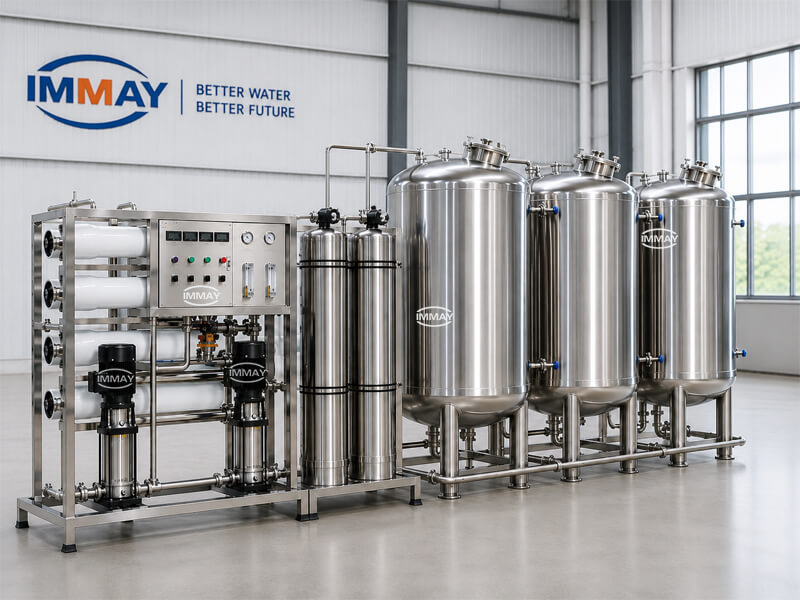
An industrial reverse osmosis system is usually selected based on a specific water production capacity to meet the daily purified water requirements of a facility. However, after continuous operation, some users may notice that their RO system is producing less water than it did during the initial operation period.
A decrease in RO water production does not always indicate membrane failure. The reduction in output can be caused by various factors, including changes in operating conditions, feed water quality fluctuations, pretreatment performance, operating pressure, or gradual membrane fouling.
Understanding the actual reasons behind reduced RO system production is important because different causes require different solutions. Checking the complete system condition rather than replacing membranes immediately can help identify the real problem and maintain stable water production.
A reduction in water production is usually the result of changes in system operating conditions rather than a single component failure. Identifying the actual cause is the first step toward restoring the original production capacity of an industrial reverse osmosis system.
RO membrane fouling is one of the most common reasons for reduced water production after long-term operation. As the system continues to run, contaminants in the feed water may gradually accumulate on the membrane surface.
Common types of membrane fouling include:
Suspended solids
Organic matter
Mineral scaling
As these deposits build up, they increase the resistance to water flow through the membrane.
As a result:
Water passage through the membrane decreases
Membrane flux declines
Permeate flow is reduced
Membrane fouling does not necessarily mean the membrane has reached the end of its service life. In many cases, the performance loss is caused by accumulated contaminants rather than permanent membrane damage.
Feed water temperature has a direct impact on RO membrane performance. Even when the RO system is operating normally, lower water temperatures can significantly reduce water production.
As feed water temperature decreases:
Water viscosity increases
Water molecules pass through the membrane more slowly
Membrane permeation decreases
Permeate production declines
This is why many industrial RO systems produce less water during colder seasons, even when there are no equipment problems.
Changes in feed water quality can also affect RO system production capacity.
For example, if the feed water TDS increases from 500 ppm to 1,000 ppm, the osmotic pressure of the feed water also increases.
As a result:
Osmotic pressure increases
Effective membrane driving pressure decreases
Water permeation becomes more difficult
Permeate flow decreases
For this reason, changes in feed water quality should always be checked when investigating a reduction in RO system output.
The performance of the pretreatment system has a direct influence on RO membrane performance.
Common pretreatment components include:
Quartz sand filter
Activated carbon filter
Cartridge filter
If these pretreatment units cannot effectively remove suspended particles, organic contaminants, or other impurities, more contaminants will reach the RO membranes.
This may result in:
Increased membrane fouling
Reduced membrane permeability
Lower permeate production
Maintaining effective pretreatment helps protect the RO membranes and supports stable long-term water production.
Reverse osmosis membranes require sufficient operating pressure to drive water through the membrane.
If the operating pressure falls below the recommended range, the membrane produces less permeate water.
Possible causes include:
Reduced high-pressure pump performance
Pressure control issues
Changes in system operating conditions
Lower operating pressure reduces the effective driving force across the membrane, leading to a decrease in permeate flow even when the membrane itself is functioning normally.
Restoring the water production capacity of an industrial reverse osmosis system begins with identifying the actual cause of the performance decline. Since reduced RO output can result from different operating conditions, there is no single solution for every situation.
Instead of replacing RO membrane elements immediately, it is recommended to evaluate the complete system, including pretreatment performance, feed water quality, operating pressure, and membrane condition. The following technical recommendations can help identify potential issues and improve system performance.
An effective pretreatment system helps protect RO membranes from excessive fouling and scaling.
If pretreatment performance has declined, inspect the operating condition of components such as the quartz sand filter, activated carbon filter, and cartridge filter. Maintaining proper pretreatment reduces the amount of contaminants reaching the RO membranes and helps restore stable permeate production.
Feed water quality should be checked whenever a noticeable reduction in water production occurs.
Monitoring parameters such as TDS, hardness, and conductivity can help determine whether changes in the water source are affecting membrane performance. If feed water quality has changed significantly, the operating conditions or pretreatment process may need to be adjusted accordingly.
Reverse osmosis membranes operate most efficiently within their recommended pressure range.
If system pressure decreases because of pump performance, valve conditions, or other operating factors, the permeate flow rate may also decline. Regularly monitoring operating pressure helps maintain stable membrane performance and consistent water production.
Reduced water production does not necessarily indicate that the membrane has reached the end of its service life.
Before considering membrane replacement, evaluate whether the performance loss is caused by membrane fouling, scaling, or changes in operating conditions. If membrane contamination is identified, appropriate maintenance procedures recommended by the membrane manufacturer may help restore performance.
Seasonal temperature changes can naturally affect RO membrane production.
Lower feed water temperatures increase water viscosity and reduce membrane permeability, resulting in lower permeate flow. When evaluating reduced system output, feed water temperature should be considered before concluding that the equipment is malfunctioning.
Maintaining stable water production is not only about solving problems after they occur, but also about preventing performance decline through proper system operation and regular monitoring. A well-maintained industrial reverse osmosis system can operate more consistently, reduce unexpected production losses, and extend the service life of key components.
The following practices can help maintain stable RO system performance over the long term.
Pretreatment is the first line of protection for an industrial RO system. Properly functioning pretreatment equipment helps remove suspended solids, chlorine, organic matter, and other contaminants before the water reaches the RO membranes.
Regular inspection and maintenance of the pretreatment system can reduce membrane fouling, minimize scaling risks, and support consistent water production over time.
Routine monitoring allows potential performance issues to be identified before they significantly affect water production.
Important operating parameters include:
Feed water pressure
Operating pressure
Feed water conductivity
Feed water temperature
Permeate flow rate
Product water conductivity
Tracking these parameters helps detect changes in system performance and provides valuable information for troubleshooting when production begins to decline.
Long-term production stability begins with selecting an RO system that matches the actual application requirements.
Factors such as required water production capacity, feed water quality, target water quality, and future production expansion should all be considered when choosing the membrane configuration. A properly matched 1-stage RO system, 2-stage RO system, or 2-stage RO system with EDI can provide more stable water production and reduce unnecessary operating challenges throughout the system's service life.
A reduction in the water production capacity of an industrial reverse osmosis system is usually the result of multiple factors working together rather than a single component failure. Changes in feed water quality, operating pressure, water temperature, pretreatment performance, and membrane condition can all affect system output over time. Identifying the actual cause is the first step toward restoring stable water production.
Instead of assuming that the RO membranes need immediate replacement, it is important to evaluate the entire system and address the underlying issue. Regular monitoring, effective pretreatment, and selecting an RO system configuration that matches the application requirements can help maintain consistent water production, improve operating efficiency, and support reliable long-term system performance