- Home
- Equipment
- Industries
- We Immay
- Resource
- Contact
Author: Site Editor Publish Time: 2026-07-29 Origin: Site
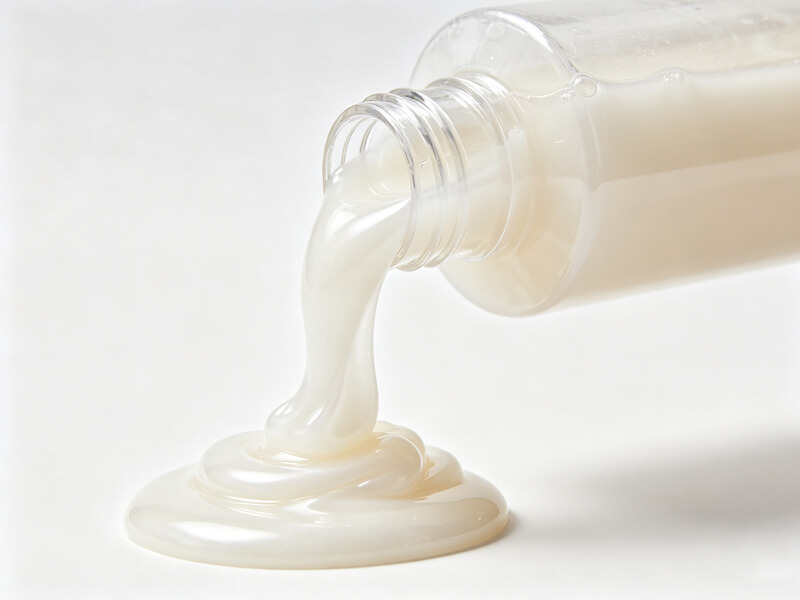
Shampoo viscosity is an important quality parameter in industrial production. It affects not only the final product appearance but also practical manufacturing operations such as pumping, filling, and maintaining consistent batch performance. When viscosity is outside the expected range, manufacturers may face difficulties in production control and product consistency.
However, viscosity problems are not always caused by an incorrect formula. The same shampoo formulation can produce different viscosity results when raw materials, processing conditions, production scale, or mixing equipment change.
To identify the actual cause, manufacturers need to evaluate the entire production process, including:
Formula → Raw Materials → Manufacturing Process → Equipment
This article will analyze the common causes of shampoo viscosity problems from a production perspective and provide a step-by-step troubleshooting approach to help manufacturers identify the root cause and find suitable solutions.
Shampoo viscosity problems are common challenges during industrial manufacturing. Although viscosity is usually measured as a specific value during quality inspection, the actual production impact goes beyond the number itself. A viscosity deviation often indicates that changes have occurred somewhere in the formulation, raw materials, processing conditions, or production system.
Understanding what type of viscosity problem occurs is the first step toward finding the actual cause. Before adjusting formulas or changing production parameters, manufacturers need to identify whether the problem is caused by the product becoming thinner, becoming thicker, or showing inconsistent results between batches.
In shampoo manufacturing, viscosity out of specification means that the measured viscosity does not match the expected production target. This situation usually appears in three common forms.
Viscosity Lower Than Target
When shampoo viscosity is lower than expected, the product may become too fluid compared with the required texture. This can affect handling during production and may cause differences in filling performance, product appearance, and consumer perception.
A lower viscosity result may be related to changes in formulation, raw material properties, processing conditions, or insufficient development of the product structure during manufacturing.
Viscosity Higher Than Target
When viscosity is higher than the target range, the shampoo may become difficult to transfer, pump, or fill. In some cases, excessive thickness can also affect production efficiency because more time or adjustment may be required before filling.
A higher viscosity result does not always mean that more thickening ingredients are present. It may also be influenced by mixing conditions, temperature changes, or interactions between different raw materials.
Batch-to-Batch Viscosity Variation
One of the most challenging situations for manufacturers is when the same formula produces different viscosity results between batches.
This type of variation often indicates that one or more production conditions have changed, such as:
Raw material differences
Water quality changes
Mixing parameters
Temperature conditions
Production scale or equipment differences
Identifying the point where the variation begins is usually more effective than repeatedly modifying the formula.
Maintaining stable viscosity is important because it directly affects both production operations and final product consistency.
Consistent Filling Performance
Shampoo viscosity influences how smoothly the product moves through pipelines and filling systems. Large viscosity differences between batches may require additional adjustments during the filling process.
Stable Product Appearance
Viscosity affects how shampoo looks and feels. Changes in viscosity can influence product texture, flow behavior, and the overall appearance after filling.
Easier Production Control
When viscosity remains stable, manufacturers can operate with more predictable production parameters. This helps reduce unnecessary adjustments during each batch.
Reduced Batch Adjustment Time
If viscosity frequently falls outside the target range, production teams may spend additional time correcting the product. A stable manufacturing process helps reduce repeated adjustments and improves overall efficiency.
Before adjusting mixing parameters or changing production equipment, manufacturers should first confirm whether the viscosity problem comes from the formula itself. A shampoo formulation is a complex system where surfactants, thickeners, conditioning ingredients, and other components interact with each other. Even when the production process remains unchanged, formula differences can lead to significant viscosity changes.
For this reason, formula-related factors should be evaluated before assuming that the mixing process or equipment is the main cause.
Surfactants are one of the main components that determine the structure and viscosity behavior of shampoo. Different surfactant systems can create different thickening responses, meaning that even small changes in the ratio of surfactants may affect the final product viscosity.
In shampoo formulations, anionic surfactants, amphoteric surfactants, and nonionic surfactants often work together to achieve the desired cleansing performance and texture. However, changing the proportion between these components can influence how the system responds to salt, thickeners, and other ingredients.
For example, if the ratio between surfactant components changes while the production process remains the same, the final shampoo may not reach the expected viscosity level. A batch may become thinner than normal, require more adjustment, or show different viscosity compared with previous production runs.
When manufacturers experience unexpected viscosity changes, especially when mixing conditions, temperature, and production procedures have not changed, checking the formula ratio should be one of the first troubleshooting steps.
A shampoo formula that performs well in laboratory testing does not always produce the same result after being transferred to industrial production. The reason is that scaling up changes the physical conditions of the manufacturing process.
During laboratory development, a small batch may have very different mixing behavior compared with a large industrial batch. Factors such as mixing energy, heat transfer, material circulation, and addition conditions can all change when production volume increases.
Common differences between laboratory and industrial production include:
Different Mixing Energy
Small laboratory mixers and industrial mixing tanks generate different levels of shear and circulation. A formula that achieves good dispersion in a small container may require different mixing conditions when produced in a larger tank.
Different Heat Transfer Conditions
Temperature changes occur differently in small and large batches. Industrial tanks usually require more careful heating and cooling control because the product volume is much larger.
Different Addition Conditions
The speed, location, and method of adding raw materials can influence how ingredients are dispersed and hydrated. A process that works manually in the laboratory may need adjustment when converted to industrial production.
Different Processing Time
Larger batches often require different mixing and holding times to allow the product structure to fully develop. Using the same processing time as laboratory trials may result in viscosity differences.
Therefore, when shampoo viscosity changes after increasing production capacity, manufacturers should not immediately modify the formula. The first step is to evaluate whether the formula has been properly adapted to the industrial manufacturing process.
After confirming that the formula itself is suitable, the next step is to evaluate whether raw material variations are affecting shampoo viscosity. In industrial production, manufacturers often assume that the same formula and the same process should always produce the same result. However, raw materials are not always identical between different batches, and even small changes in material properties can influence the final viscosity.
Before changing mixing parameters or modifying equipment settings, manufacturers should first confirm whether the incoming raw materials remain consistent.
Raw material consistency plays an important role in maintaining stable shampoo viscosity. Even when the formulation and manufacturing process remain unchanged, differences between raw material batches can cause noticeable changes in the final product.
Common factors that may influence viscosity include:
Surfactant Active Content Differences
Surfactants are usually supplied as solutions or concentrated materials with specific active content levels. If the active content changes between batches, the actual amount of surfactant components added into the formula may vary, which can affect the final viscosity response.
For example, using the same weighing amount of a surfactant material with different active content may result in different product structures after mixing.
Thickener Performance Variation
Thickeners are sensitive components in shampoo formulations. Differences in hydration ability, consistency, or performance between batches can influence how effectively the final product develops viscosity.
A thickener that performs well in one production batch may produce different results if its characteristics change, even when the same dosage and mixing procedure are used.
Supplier Batch Differences
Raw materials from different production batches or suppliers may have variations in physical properties. These differences may not always be visible during incoming inspection but can become noticeable after the materials are processed into the final shampoo product.
When a manufacturer experiences unexpected viscosity changes without any process adjustment, checking raw material batch records and comparing previous production data can help identify whether material variation is the actual cause.
Water is one of the largest components in most shampoo formulations, but it is often underestimated as a factor affecting viscosity. In addition to acting as a solvent, water participates in the formation and stability of the entire product system.
Changes in water quality can influence how surfactants, thickeners, and other ingredients interact during production.
Water Hardness
Minerals such as calcium and magnesium can affect the behavior of some ingredients in shampoo formulations. Different water hardness levels may lead to differences in product texture, clarity, and viscosity development.
Dissolved Minerals
The concentration of dissolved minerals in water can influence the interaction between formulation components. Even when the formula remains unchanged, variations in mineral content may contribute to batch-to-batch viscosity differences.
Ionic Content
The ionic environment of the water system can affect how certain ingredients respond during mixing and viscosity adjustment. This is especially important for formulations where small changes in ingredient interactions can create noticeable viscosity changes.
For this reason, manufacturers producing shampoo at an industrial scale often evaluate water quality as part of the production process. Using a stable purified water source, such as water treated by an industrial reverse osmosis water purification system, can help reduce unnecessary variation caused by inconsistent water conditions and provide a more predictable starting point for shampoo manufacturing.
After checking the formula and raw material factors, manufacturers should evaluate whether the production process itself is causing viscosity variation. Even when the formula and raw materials remain unchanged, differences in mixing sequence, mixing time, shear conditions, and temperature control can influence how the shampoo structure develops.
During industrial production, viscosity is not created by a single ingredient alone. It is the result of how different components interact under specific processing conditions. Therefore, reviewing the actual manufacturing parameters is an important step when troubleshooting viscosity problems.
The order in which raw materials are added can significantly affect shampoo viscosity development. In a complex formulation system, each ingredient needs suitable conditions to disperse, dissolve, or interact with other components.
An incorrect addition sequence may affect several key stages:
Surfactant Dispersion
Surfactants need to be properly dispersed throughout the water phase before other ingredients are introduced. If certain components are added too early or without sufficient dispersion, the final product structure may not develop as expected.
Thickener Hydration
Many thickening ingredients require enough time and suitable conditions to fully hydrate. Adding other materials too early may interfere with the hydration process and result in lower or unstable viscosity.
Final Viscosity Adjustment
Viscosity adjustment ingredients, such as salt in certain shampoo systems, need to be added at the correct stage. Adding them too early or before the main structure has formed may make it difficult to achieve the target viscosity.
For this reason, manufacturers should evaluate whether the actual production sequence follows the validated process rather than assuming that ingredient order has little impact.
Mixing time is another important factor affecting shampoo viscosity. A batch may contain all required ingredients, but the product structure may not be fully developed if the mixing process stops too early.
Insufficient mixing time can lead to:
Components Not Fully Dispersed
Some ingredients may remain unevenly distributed within the batch, causing differences in local concentration and inconsistent viscosity.
Viscosity Development Incomplete
Certain formulation systems require time for surfactants, thickeners, and other components to interact properly. Measuring viscosity before the system has stabilized may result in inaccurate evaluation.
Early Testing Gives Inaccurate Results
If viscosity is checked immediately after mixing without allowing enough time for the product structure to develop, the measured value may not represent the final product condition.
Therefore, manufacturers should establish a suitable testing point instead of relying only on immediate measurements after production.
Mixing speed and shear conditions directly influence how materials are dispersed and how the shampoo structure develops. However, higher mixing speed does not always mean better results.
Too little shear may cause:
Poor dispersion of certain ingredients
Uneven product structure
Longer processing time
Excessive shear may affect some formulations by changing the interaction between ingredients or creating unnecessary processing stress.
Different shampoo formulations require different mixing conditions depending on:
Product viscosity
Ingredient characteristics
Batch size
Required dispersion level
This is why agitator design and mixing configuration are important considerations in industrial shampoo production. The same mixing speed may produce different results in different tank designs or with different agitator structures.
Temperature affects how raw materials dissolve, hydrate, and interact during shampoo manufacturing. Changes in processing temperature can influence the final viscosity even when the formula and ingredient quantities remain unchanged.
Important temperature-related factors include:
Raw Material Dissolution
Some ingredients require specific temperature conditions to dissolve or disperse effectively. Incorrect temperature control may lead to incomplete dissolution and inconsistent product texture.
Thickener Hydration
Many thickening systems depend on proper hydration conditions. Temperature changes can influence the speed and effectiveness of this process, affecting the final viscosity development.
Viscosity Development
The final viscosity of shampoo is often influenced by when and how temperature changes occur during production. Cooling conditions, measurement timing, and temperature consistency between batches should all be considered when troubleshooting viscosity differences.
For industrial manufacturers, maintaining stable process parameters—including mixing sequence, mixing time, shear conditions, and temperature control—is essential for achieving consistent shampoo viscosity from batch to batch.
After checking the formula, raw materials, and manufacturing process parameters, manufacturers should then evaluate whether the production equipment is suitable for the shampoo formulation. In many cases, the formula may perform well under laboratory conditions, but viscosity variations appear after moving to industrial production because the mixing system cannot provide the same processing conditions.
Equipment does not directly determine shampoo viscosity by itself, but it affects how consistently ingredients are dispersed, hydrated, heated, and mixed throughout the batch. Therefore, tank design, agitator configuration, and production scale should be considered when investigating repeated viscosity problems.
The design of a mixing tank influences how materials move and interact during production. A suitable tank structure helps maintain consistent mixing conditions throughout the entire batch, while an unsuitable design may create uneven processing results.
Several tank-related factors can affect shampoo viscosity consistency:
Tank Geometry
The shape and internal structure of the mixing tank influence product circulation during operation. Tank diameter, height-to-diameter ratio, and internal space affect how effectively materials move throughout the vessel.
If the tank design does not match the product characteristics and batch size, some areas may receive insufficient mixing, which can contribute to viscosity differences within the same batch.
Batch Size
The same shampoo formula may behave differently when produced in different batch volumes. A small batch and a large industrial batch do not have identical mixing conditions because the product movement, heat transfer, and circulation pattern change as the production volume increases.
For example, increasing production from a small trial batch to a 2000L or 5000L industrial batch requires evaluation of whether the mixing system can maintain the required processing conditions.
Mixing Pattern
A consistent mixing pattern helps distribute ingredients evenly and allows the product structure to develop uniformly. Poor circulation may result in areas with different ingredient concentrations, causing variations in viscosity.
Manufacturers should consider whether the mixing system can provide sufficient movement throughout the entire working volume.
Dead Zones
Dead zones are areas inside the tank where product movement is limited. When ingredients do not circulate effectively in these areas, they may not fully participate in the mixing process.
This can lead to:
Uneven ingredient distribution
Inconsistent viscosity within the batch
Longer mixing time requirements
For this reason, tank design should be evaluated together with agitator selection rather than considered separately.
The agitator is one of the key components affecting how materials are dispersed and mixed inside the tank. Different shampoo formulations may require different mixing conditions depending on viscosity, ingredients, and production requirements.
Frame Agitator
Frame-style agitators are commonly used for products requiring gentle and uniform bulk movement. They help move higher-viscosity products throughout the tank and support consistent mixing during longer processing periods.
For shampoo formulations with moderate viscosity, a suitable frame agitator design can help maintain uniform product circulation.
Scraper Design
Scrapers help improve heat transfer and reduce material accumulation on the tank wall, especially when processing more viscous products.
By continuously moving product away from the vessel wall, scraper systems can support more consistent temperature distribution and mixing performance.
High Shear Mixing Requirements
Some shampoo formulations may require additional high-shear mixing to improve the dispersion of certain ingredients or achieve a more uniform structure.
However, high shear is not always required for every formulation. The appropriate mixing configuration depends on:
Formula characteristics
Ingredient properties
Target viscosity
Production requirements
Selecting the correct combination of agitator type and mixing intensity is important for maintaining consistent results.
One common challenge in shampoo manufacturing is that a formula performs well during laboratory testing or small-scale trials but produces different viscosity results after production capacity increases.
For example, moving from a small laboratory batch to a 2000L or 5000L industrial mixing tank changes the physical conditions of production.
Mixing Efficiency Changes
Larger tanks require the mixing system to move a much greater volume of product. If the agitator design and power are not suitable for the increased batch size, the mixing efficiency may change.
Heat Transfer Changes
Temperature control becomes more complex as batch size increases. A larger volume of product requires different heating and cooling conditions compared with laboratory-scale production.
Material Circulation Changes
The circulation pattern inside a large industrial tank is different from a small container. Ingredient distribution, mixing time, and viscosity development may change if the equipment configuration is not properly matched to the production scale.
For manufacturers experiencing viscosity differences after increasing production capacity, the solution is not always to modify the formula. Evaluating whether the mixing tank design, agitator configuration, and production scale are suitable for the product is an important step in identifying the actual cause.
When shampoo viscosity does not meet the expected target, manufacturers should avoid changing the formula or production parameters immediately. A systematic troubleshooting process helps identify whether the problem comes from formulation, raw materials, manufacturing conditions, or equipment limitations.
The following checklist can help production teams quickly identify possible causes and determine the first areas to investigate.
Problem | Possible Cause | First Check |
Shampoo is too thin | Formula changes, incorrect salt adjustment, incomplete mixing, insufficient viscosity development | Check formula records, raw material dosage, and mixing process records |
Shampoo is too thick | Formula ratio changes, excessive thickener level, over-adjustment during viscosity control | Check formula composition and raw material addition records |
Same formula gives different viscosity between batches | Raw material variation, water quality changes, process parameter differences | Compare batch records, raw material batches, and production conditions |
Laboratory result differs from industrial production | Scale-up effects, different mixing conditions, different heat transfer | Review industrial mixing conditions and equipment configuration |
Viscosity changes after production capacity upgrade | Different tank size, agitator performance, mixing efficiency, temperature control differences | Evaluate whether the mixing system matches the new production scale |
Viscosity changes after changing raw material supplier | Different material characteristics, active content variation, ingredient performance differences | Compare supplier specifications and incoming material data |
Viscosity is unstable after cooling | Temperature variation, incomplete product stabilization, incorrect testing time | Check cooling conditions and viscosity testing procedure |
Viscosity adjustment takes too long during production | Incorrect addition sequence, unsuitable mixing conditions, poor process control | Review the production sequence and mixing parameters |
A troubleshooting checklist is useful because viscosity problems are usually caused by multiple interacting factors rather than a single mistake. By comparing production records, raw material information, process conditions, and equipment performance, manufacturers can narrow down the actual cause more efficiently and avoid unnecessary formula adjustments.
Solving a shampoo viscosity problem is important, but preventing the problem from happening repeatedly is even more valuable for long-term production stability. A consistent manufacturing process requires control over raw materials, production parameters, batch records, and equipment selection.
Instead of correcting viscosity after each production batch, manufacturers can reduce variation by establishing a standardized production system and monitoring the factors that have the greatest influence on final product performance.
Consistent raw material handling is the foundation for stable shampoo viscosity. Even when the formula and production process remain unchanged, variations in raw material preparation can lead to differences between batches.
Manufacturers should establish clear procedures for:
Raw material inspection before production
Accurate weighing and measurement
Proper storage conditions
Recording material batch information
For ingredients that strongly influence viscosity, such as surfactants and thickeners, maintaining consistent material characteristics is especially important. Comparing raw material records between different production batches can also help identify the source of unexpected viscosity changes.
Mixing conditions directly affect how ingredients disperse, hydrate, and interact during shampoo production. Once the appropriate process parameters are established, maintaining consistency is essential.
Important parameters to control include:
Mixing sequence
Mixing speed
Mixing time
Temperature during processing
Addition timing of viscosity adjustment ingredients
Small changes in these conditions may create noticeable differences in the final viscosity, especially for formulations that rely on precise ingredient interactions.
A standardized mixing procedure helps ensure that each batch experiences similar processing conditions.
Production records are an important tool for identifying the cause of viscosity variation. Without detailed batch information, manufacturers may only see the final viscosity difference without knowing where the change occurred.
Useful production records include:
Raw material batch numbers
Ingredient addition sequence
Mixing speed and time
Heating and cooling conditions
Final viscosity test results
By comparing successful batches with problematic batches, production teams can identify whether the variation comes from raw materials, process changes, or equipment conditions.
When production volume increases or product requirements become more complex, equipment selection becomes an important factor in maintaining viscosity consistency.
A suitable mixing system should match:
Product viscosity range
Batch size
Required mixing intensity
Heating and cooling requirements
Ingredient characteristics
Different shampoo formulations may require different mixing configurations. For example, higher-viscosity products may need stronger circulation and suitable scraper designs, while some formulations may require additional high-shear mixing to achieve proper dispersion.
Choosing a shampoo mixing tank based on actual product characteristics rather than only production volume can help manufacturers maintain more stable results during long-term operation.
For shampoo manufacturers, consistent viscosity is not achieved by adjusting a single parameter. It requires coordination between formula control, raw material management, production procedures, and suitable mixing equipment. Building a repeatable manufacturing process is usually more effective than repeatedly correcting individual production batches after problems occur.
Shampoo viscosity problems are usually not caused by a single factor. The final viscosity is the result of interactions between formulation design, raw material characteristics, manufacturing conditions, and production equipment. When a batch does not meet the expected viscosity target, manufacturers should first identify where the variation begins instead of repeatedly adjusting the formula without understanding the actual cause.
A systematic troubleshooting approach—from checking the formula and raw materials to reviewing mixing parameters and equipment conditions—can help producers locate problems more efficiently and maintain more stable production performance. This approach reduces unnecessary adjustments and provides a clearer direction for improving product consistency.
For manufacturers expanding production capacity or upgrading their production processes, evaluating mixing conditions, tank configuration, and equipment suitability together with product requirements is an important step toward achieving reliable batch-to-batch consistency. The right production setup should support the actual characteristics of the shampoo formulation and provide stable conditions for long-term manufacturing.