- Home
- Equipment
- Industries
- We Immay
- Resource
- Contact
Author: Site Editor Publish Time: 2026-06-11 Origin: Site
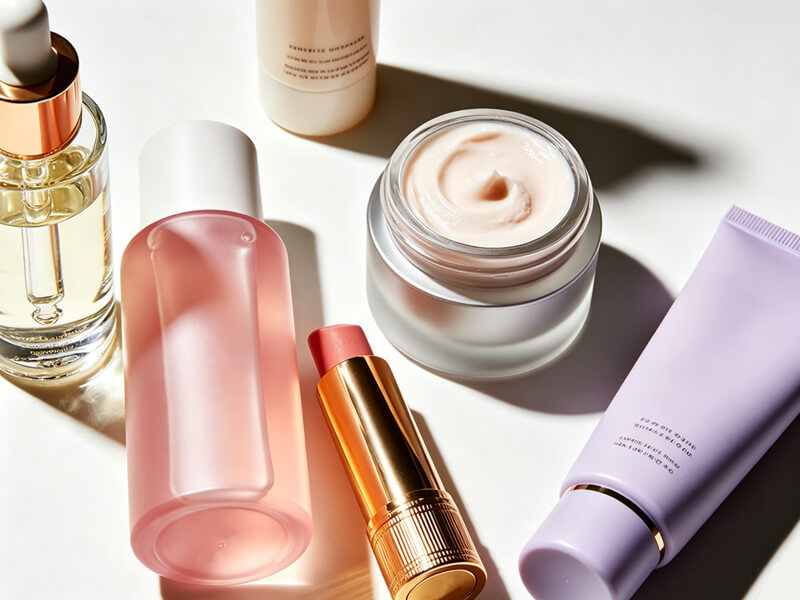
Not all cosmetic products require the same mixing process.
A face cream, shampoo, toner, perfume, and lipstick have completely different formulation characteristics. Viscosity, emulsification requirements, heating conditions, and ingredient dispersion all influence the type of cosmetic mixing machine required.
This guide explains how different cosmetic products affect equipment selection and helps manufacturers choose the appropriate mixing system for their production needs.
The formulation itself is the primary factor influencing cosmetic mixing machine selection. Different ingredient systems require different mixing technologies to achieve uniform blending, stable emulsification, and consistent product quality.
The following formulation characteristics usually determine the required mixing process.
Product Viscosity
Viscosity directly affects the mixing force required during production.
Low-viscosity products such as facial toners and perfumes generally require simple agitation systems, while high-viscosity products such as creams, lip glosses, and concealers require stronger mixing mechanisms and higher torque to maintain efficient material circulation.
Emulsification Requirement
Many cosmetic formulations contain both oil and water phases that must be combined into a stable emulsion.
Products such as creams, lotions, foundations, and certain serums require high-shear homogenization to reduce droplet size and achieve uniform dispersion.
Heating and Cooling Requirements
Some formulations require temperature control throughout the mixing process.
Ingredients such as waxes, butters, and certain oils may need heating to melt completely before mixing, while controlled cooling helps develop the final viscosity and texture after emulsification.
After the formulation requirements have been determined, production capacity becomes the next factor in equipment selection.
Laboratory development, pilot production, and industrial manufacturing require different vessel capacities, motor power, and mixing configurations. Selecting equipment that matches the planned batch size helps improve production efficiency while allowing room for future expansion.
Different cosmetic formulations have different processing requirements. Understanding the characteristics of each product type helps manufacturers select mixing equipment that matches their production process and product objectives.
Creams and lotions are among the most common cosmetic products manufactured in personal care and skincare facilities. Although their textures may vary from lightweight lotions to rich moisturizing creams, they share a similar production principle: combining oil-based ingredients and water-based ingredients into a stable and uniform emulsion.
For this reason, cream and lotion production places higher demands on mixing equipment than many other cosmetic products.
Most creams and lotions contain both oil and water phases. Common ingredients may include vegetable oils, esters, emulsifiers, humectants, active ingredients, and purified water.
Compared with products such as toners or perfumes, creams and lotions generally have medium to high viscosity and require a stable emulsion structure. The oil droplets must be evenly dispersed throughout the water phase to create a smooth appearance and consistent texture.
In addition, many formulations require heating during production to melt oils, waxes, or other ingredients before mixing.
Producing creams and lotions involves more than simply blending ingredients together.
One of the main challenges is achieving uniform emulsification between the oil phase and water phase. Insufficient mixing can lead to uneven texture, poor product stability, or phase separation during storage.
Another challenge is creating a fine droplet distribution throughout the batch. Smaller and more uniformly distributed droplets help improve product consistency and contribute to a smoother finished texture.
As product viscosity increases during production, effective agitation becomes increasingly important. The mixing system must continuously move material throughout the vessel to prevent localized accumulation and ensure all ingredients are evenly incorporated.
Temperature control is also an important consideration, as many formulations require both heating and cooling stages during the manufacturing process.
A vacuum emulsifying mixer is commonly used for the production of creams and lotions because it combines several essential processing functions within a single system.
The high-shear homogenizer helps disperse oil droplets into the water phase, supporting the formation of a more uniform emulsion structure. At the same time, the anchor scraper agitator continuously moves product along the vessel wall and bottom, helping maintain consistent mixing throughout the batch.
The vacuum system assists the mixing process by reducing air incorporation during production, while the jacketed vessel allows controlled heating and cooling according to formulation requirements.

These combined functions make vacuum emulsifying mixers suitable for manufacturing a wide range of skincare products, including:
Facial creams
Body lotions
Hand creams
Moisturizers
Sunscreen creams
Gel creams
Beauty creams
For manufacturers producing emulsion-based cosmetic products, a vacuum emulsifying mixer provides the mixing, homogenizing, heating, cooling, and vacuum functions typically required during cream and lotion production.
Hair dye is a chemical-based cosmetic product used for coloring hair. It is typically formulated with pigments, conditioning agents, and active chemical ingredients designed to penetrate and color the hair fiber effectively.
Compared with skincare and makeup products, hair dye formulations often involve stronger chemical components and require stable and corrosion-resistant mixing conditions during production.
Hair dye cream is generally a high-viscosity formulation containing water-based ingredients, pigments, and chemical additives.
The product must maintain consistent color performance and stable texture throughout production and storage. Depending on the formulation, it may also require controlled temperature conditions to support proper mixing of raw materials.
The main challenge in hair dye production is achieving uniform dispersion of pigments and chemical ingredients within a high-viscosity system.
Because the formulation contains reactive components, the mixing process must ensure stable operation without contamination or material degradation. At the same time, the final mixture must remain consistent in both color and texture across different batches.
Corrosion resistance and material stability of the equipment are also important considerations due to the chemical nature of the formulation.
A stainless steel mixing tank with 316L inner layer is commonly used for hair dye cream production due to its excellent corrosion resistance and suitability for chemical-based formulations.
The tank provides stable mixing performance for high-viscosity materials while maintaining material integrity during processing. Depending on production requirements, the system can also be equipped with heating and temperature control functions to support raw material processing.

* Excellent corrosion resistance for chemical formulations
* Suitable for high-viscosity mixing applications
* Ensures uniform pigment and ingredient distribution
* Supports stable temperature-controlled production
* Designed for long-term industrial use
* Permanent hair dye cream
* Semi-permanent hair color cream
* Conditioning hair color formulations
Shampoos and body washes are among the highest-volume products manufactured in cosmetic and personal care factories. Unlike creams and lotions, these products are typically based on surfactants dissolved in water and generally do not require the formation of a complex oil-water emulsion.
As a result, their production process focuses more on ingredient blending, dissolution, and batch consistency.
Most shampoos and body washes are formulated with surfactants, conditioning agents, moisturizers, preservatives, fragrances, and purified water.
Compared with facial toners, these products have a higher viscosity, but they are generally less viscous than creams or ointments. Their texture ranges from free-flowing liquids to moderately thick gels, depending on the formulation.
Many shampoo and body wash formulations are produced in relatively large batches to meet commercial production requirements, making production efficiency an important consideration.
One of the primary challenges in shampoo and body wash production is achieving complete and uniform distribution of all ingredients throughout the batch.
Various raw materials are often added at different stages of production, requiring effective mixing to maintain formulation consistency. Some ingredients may also require heating to improve dissolution before being incorporated into the final product.
For higher-viscosity formulations, the mixing system must also provide sufficient circulation to ensure ingredients remain evenly distributed throughout the vessel.
A stainless steel mixing tank is commonly used for shampoo and body wash production because it provides the functions required for blending liquid ingredients efficiently on a commercial scale.
The agitator continuously circulates the product throughout the vessel, helping achieve uniform ingredient distribution during production. Depending on the formulation requirements, the tank can also be equipped with a heating jacket to support ingredient dissolution and temperature control.
Compared with vacuum emulsifying mixers, stainless steel mixing tanks offer a simpler configuration for products that do not require vacuum degassing. This makes them suitable for routine production of liquid cleansing and personal care products.
* Provides reliable mixing for medium-viscosity formulations
* Supports uniform distribution of surfactants and additives
* Can be equipped with a heating system for ingredient dissolution
* Suitable for large production volumes
* Available in a wide range of tank capacities
* Shampoo
* Body Wash
* Shower Gel
* Liquid Soap
* Bubble Bath
* Hair Conditioner
Facial toners are among the most widely produced skincare products and are commonly used as part of daily cleansing and moisturizing routines. Compared with creams, lotions, and other emulsion-based products, toners are typically water-based formulations with very low viscosity.
Because these products do not normally contain a significant oil phase, their manufacturing process is generally simpler and focuses on ingredient dissolution, blending, and formulation consistency.
Most facial toners are primarily composed of purified water combined with humectants, botanical extracts, preservatives, fragrances, and other water-soluble ingredients.
Their viscosity is usually similar to water, allowing the product to flow freely and spread easily during application. Unlike creams and lotions, facial toners generally do not require the formation of a stable oil-water emulsion.
Many toner formulations also contain active ingredients that must be evenly distributed throughout the batch to ensure consistent product quality.
Although toner production is less complex than cream manufacturing, achieving complete ingredient dissolution remains an important part of the process.
Water-soluble ingredients, extracts, and functional additives must be blended thoroughly to create a uniform formulation. Uneven mixing may result in concentration differences within the batch, affecting product consistency.
For formulations containing multiple active ingredients, maintaining homogeneous distribution throughout production is also essential. In addition, manufacturers often require efficient batch turnover due to the relatively large production volumes associated with toner products.
A liquid stainless steel mixing tank is commonly used for facial toner production because it provides efficient blending for low-viscosity, water-based formulations.
The mixing system continuously circulates liquid throughout the vessel, helping ingredients dissolve and distribute evenly. Depending on production requirements, the tank can also be equipped with a heating system to assist ingredient dissolution and improve process efficiency.
Because facial toners typically do not require intensive emulsification, a liquid stainless steel mixing tank often provides the functionality needed while maintaining a straightforward production process.
* Designed for low-viscosity liquid products
* Supports efficient ingredient blending and dissolution
* Promotes uniform formulation consistency
* Available with optional heating functions
* Suitable for small, medium, and large production batches
* Facial Toner
* Hydrating Toner
* Micellar Water
* Essence Water
* Refreshing Mist
Facial serums are concentrated skincare products designed to deliver active ingredients such as vitamins, peptides, hyaluronic acid, and botanical extracts. Depending on the formulation type, serums can vary significantly in viscosity and production requirements.
Some serums are fully water-based solutions, while others contain oil phases or functional additives that require emulsification.
Facial serums typically have low to medium viscosity and are formulated with a high concentration of active ingredients.
Unlike basic cleansing products, serums place greater emphasis on ingredient stability and functional performance. The formulation may include water-soluble ingredients, oil-based components, or a combination of both depending on the product type.
One of the main challenges in serum production is maintaining the stability and uniform distribution of active ingredients throughout the entire batch.
Because serums often contain sensitive or functional ingredients, the mixing process must ensure consistent dispersion without compromising formulation integrity. In some cases, temperature control is also required to protect active components during processing.
Another important consideration is formulation type. Water-based serums and emulsion-based serums behave differently during production, which directly affects equipment selection.
Depending on the formulation structure, different types of mixing equipment are used:
* Stainless Steel Mixing Tank
* Vacuum Emulsifying Mixer
Water-based serums generally require only gentle mixing to achieve full ingredient dissolution and uniform distribution.
However, emulsion-based serums that contain oil phases require emulsification to ensure stable structure and consistent texture. In these cases, a vacuum emulsifying mixer is often used to improve dispersion and product stability.
* Hydrating Serum
* Brightening Serum
* Anti-aging Serum
* Vitamin C Serum
* Niacinamide Serum
* Oil-based Serum Formulations
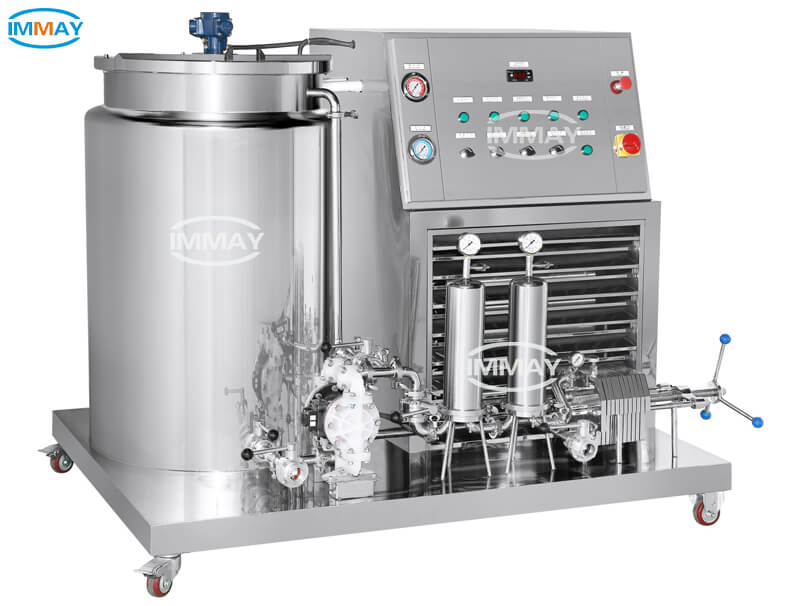
Perfume production is based on an alcohol solution combined with fragrance compounds and other soluble ingredients. Due to its low viscosity and volatile nature, the process focuses on complete mixing, low-temperature clarification, and circulation filtration to achieve a clear and stable final product.
Perfume is typically an alcohol-based liquid with very low viscosity. The main components include ethanol, fragrance oils, and stabilizers.
The formulation is designed to ensure that all raw materials are fully dissolved and evenly distributed within the alcohol base, forming a uniform liquid system.
The main challenge in perfume production is achieving complete and uniform blending of fragrance compounds in the alcohol system while ensuring final product clarity.
After all raw materials are added, they are mixed thoroughly to form a uniform solution. During this stage, certain unstable components or insoluble particles may still exist in the system.
To ensure product clarity and stability, a controlled clarification process is required.
In this production system, perfume manufacturing follows a process of mixing, controlled freezing, and circulation filtration to achieve final product clarification.
After all ingredients are fully mixed, the solution is cooled to a specific low temperature. This controlled freezing process helps separate unstable substances and promotes the formation of fine particles that can be removed more easily.
The material is then continuously circulated through a filtration system, which removes these precipitated particles and improves product transparency and stability.
This integrated process ensures efficient clarification and consistent quality in alcohol-based fragrance production.
* Ensures uniform mixing of alcohol and fragrance compounds
* Provides controlled low-temperature treatment for clarification
* Uses circulation filtration for continuous particle removal
* Improves product transparency and batch consistency
* Designed for alcohol-based low-viscosity fragrance systems
* Body Mist
* Fragrance Spray
* Alcohol-based Perfumed Water
Lip gloss is a high-viscosity cosmetic product designed to create a glossy and smooth appearance on the lips. It is typically formulated using oils, waxes, film-forming agents, and pigments depending on the product type.
The production process mainly focuses on heating, melting, and uniform mixing to achieve a stable and consistent texture.
Lip gloss formulations are usually high-viscosity materials based on oils and waxes combined with color pigments or pearlescent additives.
Depending on the formulation, the product may be transparent, colored, or contain shimmer particles. The texture is designed to ensure smooth application and stable appearance during use.
The main challenge in lip gloss production is achieving uniform dispersion of pigments and additives within a high-viscosity wax-oil base.
Pigments must be evenly distributed to avoid color inconsistency or visible particles in the final product. In addition, wax-based ingredients require controlled heating to ensure complete melting before mixing.
Maintaining a stable temperature during production is also important to prevent premature solidification and ensure consistent texture.
A heated stainless steel mixing tank is commonly used for lip gloss production due to its ability to provide controlled heating and stable mixing conditions for high-viscosity materials.
The heating system ensures that waxes and oils are fully melted and maintained at a suitable processing temperature during production. The agitator provides continuous mixing, allowing pigments and other additives to be evenly distributed throughout the batch.
* Provides controlled heating for wax and oil melting
* Ensures uniform mixing of high-viscosity formulations
* Maintains stable processing temperature during production
* Supports consistent pigment distribution
* Simple and efficient solution for lip gloss manufacturing
* Clear lip gloss
* Colored lip gloss
* Shimmer lip gloss
* Lip balm-type gloss products
Lipstick is a solid or semi-solid cosmetic product designed for color application on the lips. It is typically formulated using waxes, oils, pigments, and other functional additives to achieve color, texture, and structural stability.
The production process focuses on controlled heating, melting, and uniform mixing before the material is shaped and formed.
Lipstick formulations are generally solid at room temperature and must be heated during production to reach a molten state.
The base ingredients usually include waxes, oils, and pigments. Different formulations may vary in hardness, melting point, and color intensity depending on product requirements.
The final product must maintain consistent color distribution, smooth texture, and stable structure after cooling.
The main challenge in lipstick production is achieving uniform dispersion of pigments within a wax-based molten system.
Pigments must be evenly distributed to ensure consistent color without streaking or spotting. At the same time, waxes and oils must be fully melted and maintained at a stable temperature throughout the mixing process.
Temperature control is critical, as overheating may affect ingredient stability, while insufficient heating may lead to incomplete melting and uneven texture.
A heated stainless steel mixing tank is commonly used in lipstick production because it provides controlled heating and stable mixing conditions for wax-based formulations.
The heating system allows waxes to be fully melted and maintained in a workable state during processing. The agitator ensures continuous movement of the molten material, helping pigments and additives distribute evenly throughout the batch.
* Provides stable heating for wax melting
* Ensures uniform pigment dispersion in molten base
* Maintains consistent processing temperature
* Supports smooth and stable batch mixing
* Suitable for wax-based cosmetic formulations
* Bullet lipstick
* Matte lipstick
* Satin lipstick
* Cream lipstick
Cosmetic mixing machine selection depends on formulation type, viscosity, and processing requirements.
Different products require different processes, such as simple blending, emulsification, heating and melting, or clarification and filtration.
There is no single machine suitable for all cosmetic products. The correct equipment must be chosen based on the specific production process of each formulation.