- Home
- Equipment
- Industries
- We Immay
- Resource
- Contact
Author: Site Editor Publish Time: 2026-07-31 Origin: Site
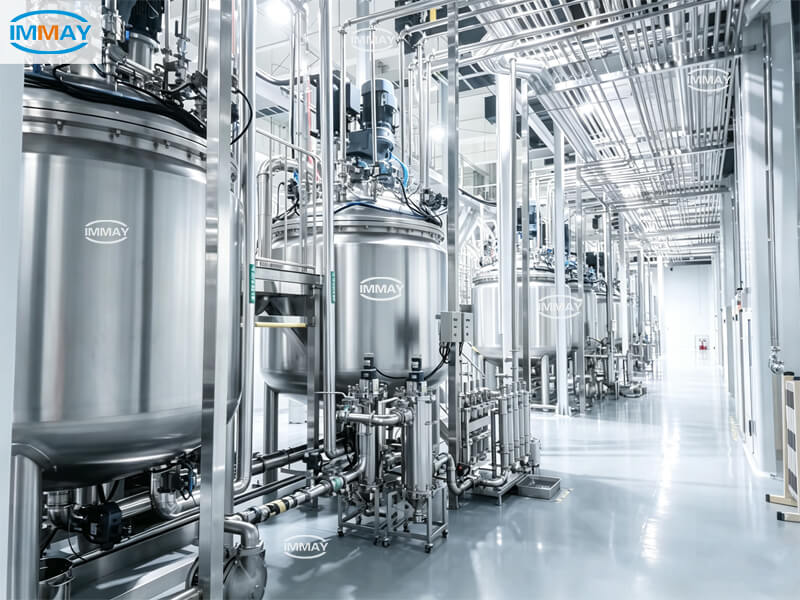
When purchasing industrial stainless steel mixing tanks, one of the most common questions buyers ask is: How long will a stainless steel mixing tank last?
There is no single answer. While some mixing tanks remain in service for more than two decades, others may require replacement much sooner. The actual service life depends on much more than age alone. Factors such as tank design, stainless steel grade, product characteristics, operating conditions, and maintenance practices all play an important role in determining how long the equipment performs reliably.
Understanding these factors before purchasing can help buyers compare different options more effectively, estimate long-term ownership costs, and select a stainless steel mixing tank that matches both current production requirements and future operational needs.
There is no universal service life for a stainless steel mixing tank. Two tanks with the same capacity can have very different lifespans depending on the materials used, the products being processed, operating conditions, and maintenance practices.
Instead of focusing on a fixed number of years, it is more useful to understand the typical service life under different applications. The estimates below are general industry references, as actual performance varies from one production environment to another.
Operating Condition | Typical Service Life Trend |
304 stainless steel tank used for general industrial liquids | Long service life under normal operating conditions |
316L stainless steel tank used for corrosive products | Often provides a longer service life in corrosive environments |
Intermittent production with routine maintenance | Generally longer operating life |
Continuous production under demanding conditions | May experience faster wear on mechanical components |
Products containing corrosive chemicals or high chloride content | Service life depends heavily on material selection and operating practices |
Although the tank body is designed for long-term use, the overall service life of the equipment is not determined by the vessel alone. Components such as mechanical seals, bearings, motors, and gearboxes typically require replacement earlier than the stainless steel tank itself. Understanding the factors that influence equipment longevity is therefore more valuable than relying on a single estimated lifespan.
The service life of a stainless steel mixing tank is influenced by a combination of design, materials, production conditions, and daily operation. Even two tanks with the same capacity may have very different operating lives if they are used in different environments or manufactured to different specifications.
Understanding these factors helps buyers evaluate equipment more effectively and choose a configuration that delivers reliable long-term performance.
The stainless steel grade has a direct impact on corrosion resistance and long-term durability.
For general industrial applications, 304 stainless steel is widely used and provides reliable performance under normal operating conditions. However, products containing chlorides, acids, alkalis, or other corrosive ingredients may require 316L stainless steel, which offers improved resistance to chemical corrosion. Selecting the appropriate material for the product being processed can significantly influence the tank's service life.
A well-designed mixing tank is better able to withstand years of continuous operation.
Factors such as appropriate wall thickness, structural reinforcement, welding quality, and overall fabrication accuracy all contribute to the long-term strength and stability of the equipment. High-quality manufacturing also helps reduce the risk of deformation, leakage, and premature structural failure over time.
The properties of the product being mixed can greatly affect equipment longevity.
Highly acidic or alkaline formulations, products containing chlorides or abrasive particles, elevated processing temperatures, and high-viscosity materials may all increase stress on the tank and mixing system. Choosing a tank configuration that matches the product characteristics helps improve long-term reliability.
How the equipment is used is just as important as how it is built.
Continuous production schedules generally place more demand on mechanical components than intermittent operation. Processing temperature, operating pressure, production frequency, and batch duration can all influence wear rates. Operating the equipment within its intended design limits helps maintain stable performance and extend its service life.
In most cases, the stainless steel tank itself is not the first component to reach the end of its service life. The vessel is designed for long-term structural durability, while several mechanical and electrical components naturally experience wear during daily operation.
Understanding which parts typically require replacement helps buyers estimate long-term maintenance costs and evaluate the total cost of equipment ownership.
The mechanical seal is one of the most common wear components in a mixing tank. Continuous shaft rotation, product characteristics, operating temperature, and cleaning frequency can all influence its service life. A worn seal may lead to leakage and should be replaced promptly to maintain reliable operation.
The motor provides the power required for mixing. Although industrial motors are designed for long-term use, continuous operation, frequent start-stop cycles, excessive loading, or poor operating conditions may gradually reduce their service life. In most cases, the motor can be replaced without replacing the entire tank.
For mixing tanks equipped with a gearbox, this component transfers torque from the motor to the agitator. Long operating hours, heavy loads, and improper operating conditions can increase wear over time. Gearboxes are typically replaceable and do not determine the overall life of the mixing tank.
Bearings support the rotating shaft and help maintain smooth operation. As with most rotating equipment, bearings experience normal wear after extended use. Replacing worn bearings helps reduce vibration and supports stable mixing performance.
The agitator itself usually has a long service life, but blades or scraper components may gradually wear depending on the product being processed, operating conditions, and production frequency. Individual agitator components can often be repaired or replaced when necessary.
Temperature sensors, level sensors, pressure gauges, and electrical control components may require replacement during the equipment's lifetime. These components are considered routine service items and typically have little impact on the structural life of the stainless steel tank.
Overall, the tank body is usually the longest-lasting part of the equipment. In many cases, replacing a few wear components allows the mixing tank to continue operating reliably for many more years.
Replacing an entire stainless steel mixing tank is not always the only option when equipment performance declines. In many cases, the tank vessel remains structurally sound while only a few mechanical or electrical components have reached the end of their service life. Refurbishing these components can restore reliable operation and extend the useful life of the equipment.
The decision to refurbish or replace should be based on the overall condition of the equipment, future production requirements, and long-term operating costs rather than the age of the tank alone.
Refurbishment is often a cost-effective solution when the stainless steel tank remains in good structural condition and production requirements have not changed significantly.
Common refurbishment work includes:
Replacing the motor
Installing a new mechanical seal
Upgrading the agitator
Replacing the electrical control cabinet
Installing new sensors and instruments
These upgrades can improve equipment reliability and production efficiency while allowing the original tank to remain in service.
Replacing the complete mixing tank may be the better long-term option when the equipment can no longer meet production or process requirements.
Replacement is generally worth considering if:
The tank body shows significant corrosion or structural damage.
Repeated repairs result in frequent production downtime.
The existing tank capacity is no longer suitable for current production volumes.
Process changes require a different mixing system, heating method, or tank configuration.
The overall cost of refurbishment approaches the value of purchasing a new tank.
How Buyers Can Make the Right Decision
Before deciding whether to refurbish or replace a mixing tank, buyers should evaluate the condition of the tank body, the remaining life of key components, expected production plans, and the total cost of future operation.
If the vessel is still in good condition, replacing a few wear components may provide many additional years of reliable service. However, if production requirements have changed or structural deterioration has become significant, investing in a new stainless steel mixing tank is often the more economical long-term solution.
The service life of a stainless steel mixing tank is influenced long before the equipment is installed. Many factors that determine long-term reliability are established during the purchasing and design stage rather than during daily operation. Selecting a configuration that matches the production process can help reduce unnecessary wear and support stable performance over many years.
Material selection should be based on the products being processed rather than cost alone. While 304 stainless steel is suitable for many industrial applications, products containing acids, alkalis, chlorides, or other corrosive ingredients require 316L stainless steel to improve corrosion resistance and long-term durability.
An agitator should be selected according to the viscosity and mixing characteristics of the product. Using an unsuitable agitator can reduce mixing efficiency and place unnecessary stress on the motor, gearbox, and shaft. Matching the mixing system to the application helps improve both process performance and equipment longevity.
Choosing the correct tank capacity is just as important as selecting the right material. A tank that is significantly larger or smaller than the required batch size may reduce mixing performance and increase unnecessary operating loads. Equipment should be sized according to actual production requirements and planned future capacity.
Cleaning requirements should be evaluated before purchasing the tank. Products that require frequent cleaning or involve different formulations may benefit from design features that simplify cleaning and reduce residue buildup. Selecting a suitable tank configuration for the intended cleaning process can contribute to consistent long-term operation.
The internal surface finish influences both product contact and cleanability. A smoother surface can reduce product residue, improve cleaning efficiency, and help minimize the risk of corrosion caused by material buildup over time.
The overall manufacturing quality of the equipment has a direct impact on its service life. Buyers should pay attention to factors such as welding quality, structural design, material traceability, and fabrication standards when comparing suppliers. A well-manufactured mixing tank is more likely to provide stable performance throughout its operating life.
Selecting a stainless steel mixing tank is not only about meeting today's production requirements. Careful evaluation of materials, design, and manufacturing quality during the purchasing process can help reduce long-term operating costs and maximize the value of the equipment throughout its service life.
Providing complete production information before requesting a quotation helps equipment manufacturers recommend a suitable tank configuration and reduces the need for design revisions later in the project. The more accurately production requirements are defined, the easier it is to select equipment that meets both current and future manufacturing needs.
Before contacting a stainless steel mixing tank supplier, buyers should prepare the following information.
The type of product, including its viscosity, ingredients, and processing characteristics, is one of the most important factors in selecting the appropriate mixing system.
Specify the expected batch size, daily production volume, and whether production is continuous or batch-based. These factors help determine the appropriate tank capacity and mixing configuration.
Provide information about the expected operating temperature, whether heating or cooling is required, and any special pressure requirements that may influence the tank design.
If the tank will be used for multiple products or requires frequent cleaning, this should be discussed before equipment design begins. Cleaning requirements can influence the internal configuration and overall tank design.
Corrosive ingredients, abrasive materials, or high-viscosity products may require different stainless steel grades or specialized mixing solutions to improve long-term equipment performance.
If production capacity is expected to increase in the future, discussing expansion plans during the purchasing stage may allow the equipment to be configured for future upgrades, helping reduce modification costs later.
The service life of a stainless steel mixing tank depends on much more than the age of the equipment. Material selection, tank design, manufacturing quality, product characteristics, and operating conditions all contribute to long-term reliability. Understanding these factors allows buyers to evaluate equipment based on its expected lifetime value rather than initial purchase cost alone.
Before requesting a quotation, it is worth defining your production requirements, product characteristics, batch capacity, and future expansion plans. Providing this information early helps equipment manufacturers recommend a stainless steel mixing tank that matches your application, reduces unnecessary design changes, and supports reliable operation throughout the equipment's service life.