- Home
- Equipment
- Industries
- We Immay
- Resource
- Contact
Author: Site Editor Publish Time: 2026-06-17 Origin: Site
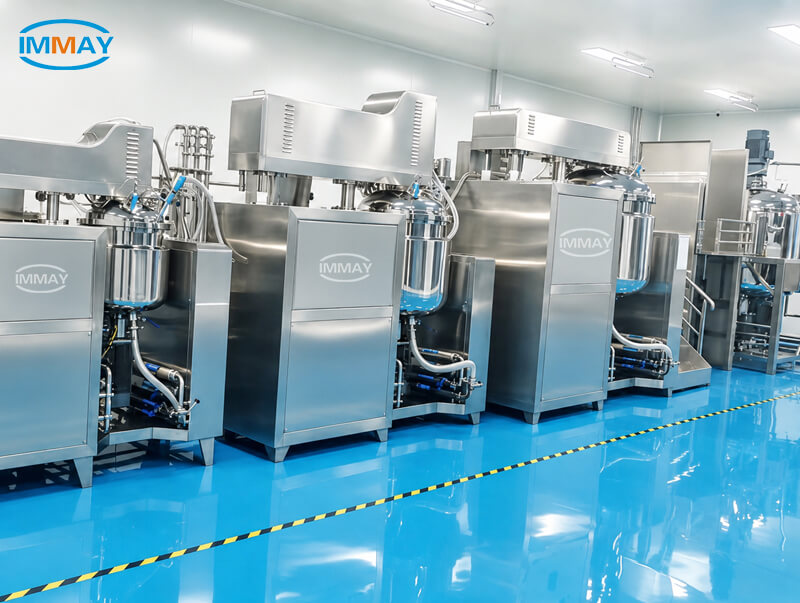
The total cost of a cosmetic cream production line is influenced by several factors, including formula development, equipment investment, raw materials procurement, packaging materials procurement, shipping and installation, and factory preparation requirements.
Among these factors, production equipment is an important part of the overall investment. The main equipment costs come from the RO water treatment plant, vacuum emulsifying mixer, filling and capping equipment, packaging machinery, and related production systems.
This guide explains the common cost structure of a cosmetic cream production line, starting with equipment investment and the factors that affect the final project cost.
Cosmetic Cream Production Line Equipment Cost by Production Capacity
Production Capacity | Common Equipment Configuration | Estimated Investment Range |
Small Batch Production (100–300L) | Small RO water treatment plant + small vacuum emulsifying mixer + semi-automatic filling and capping machine | $15,000–$50,000 |
Medium Production (500–1000L) | RO water treatment plant + vacuum emulsifying mixer + stainless steel storage tanks + automatic filling and capping system | $50,000–$150,000 |
Large Production (2000L+) | Industrial RO water treatment plant + multiple vacuum emulsifying mixers/tanks + multiple stainless steel storage tanks + automated filling and packaging systems | $150,000–$300,000+ |
The actual equipment cost depends on production capacity, equipment configuration, automation level, and water requirements.
A complete cosmetic cream production line usually consists of several systems, from purified water preparation and cream manufacturing to filling and packaging.
The main equipment includes:
Water quality plays an important role in cosmetic cream production because purified water is one of the common raw materials used in cream formulations.
A cosmetic production water system typically includes:
1 stage or 2 stage reverse osmosis system
Water storage tank
Water supply system
The required RO capacity depends on:
Daily production output
Water consumption
Raw water quality
The vacuum emulsifying mixer is the core production equipment for manufacturing cosmetic creams.
It is used for:
Heating and mixing oil and water phases
High shear emulsification
Producing smooth cream textures
The equipment cost mainly depends on:
Working volume
Mixing system configuration
Heating and cooling requirements
3. Stainless Steel Storage Tanks
Storage tanks are used for temporary storage and product transfer after cream production.
The cost depends on:
Tank capacity
Number of tanks required
For larger production lines, multiple stainless steel tanks are needed to connect different production stages.
4. Cosmetic Cream Filling Machine
The filling machine transfers finished cream products into containers.
The price is affected by:
Filling speed
Filling accuracy requirements
Container type
Automation level
Small production facilities may choose semi-automatic filling machines, while higher-output factories usually require automatic filling systems.
5. Cosmetic Cream Capping Machine
After filling, containers need to be sealed with suitable caps.
The configuration depends on:
Cap type
Container design
Production speed
Labeling equipment is used for applying product labels after filling and capping.
The cost depends on:
Labeling method
Bottle shape (jar, tube, bottle and other)
Production speed
Investing in a cosmetic cream production line requires balancing initial equipment costs with production goals, product requirements, and future expansion plans.
A lower investment does not always mean a better choice. Selecting equipment that matches your current production needs while allowing future growth can help avoid unnecessary costs and equipment limitations.
Production capacity is one of the most important factors affecting investment.
Many buyers choose oversized equipment because they want to prepare for future growth. However, larger machines usually require higher investment, more installation space, and greater utility consumption.
A better approach is to evaluate:
Expected daily production output
Batch size requirements
Product variety
Future growth plans
For startup brands or small manufacturers, a smaller production line with room for expansion may be a more practical choice.
Not every part of a cosmetic cream production line needs the same investment priority.
The core production process usually depends on:
RO Water Treatment Plant
Vacuum Emulsifying Mixer
Filling and capping Equipment
These systems directly affect product manufacturing capability and should be selected based on actual production requirements.
Additional automation filling and packaging equipment can be added gradually as production volume increases.
Automation level has a direct impact on the initial investment.
Semi-Automatic Production Line
Suitable for:
Small and medium production
Flexible product changes
Lower initial investment
Automatic Production Line
Suitable for:
Higher production output
Continuous production
Reduced manual operation
The right choice depends on whether higher automation can improve production efficiency enough to justify the additional investment.
Some buyers add advanced features that may not be necessary for their current products.
Before selecting equipment, consider:
Product viscosity
Mixing requirements
Production volume
Required processing steps
For example, a high-capacity mixing system may not provide additional value if the actual production demand is limited.
A well-planned production line should support future development.
Important considerations include:
Whether additional stainless steel storage tanks can be added
Whether filling capacity can be upgraded
Whether the production layout allows expansion
Planning ahead helps avoid replacing major equipment when production grows.
Every cosmetic product has different processing requirements.
An experienced manufacturer can help evaluate:
Required water treatment capacity
Suitable cosmetic cream mixer capacity
Appropriate automation level
Complete cosmetic cream line configuration
This helps you avoid unnecessary investment while ensuring the equipment meets production needs.
When estimating the investment for a cosmetic cream production line, many buyers focus mainly on equipment prices. However, starting actual production requires additional preparation costs that can significantly affect the total project budget.
These additional costs are usually outside the equipment quotation but should be considered when planning the complete production project.
Cost Category | Common Investment Range |
Formula Development | $1,000–$10,000+ |
Initial Raw Material Inventory | $5,000–$50,000+ |
Packaging Materials | $3,000–$30,000+ |
Installation and Setup | $2,000–$15,000+ |
Factory Utilities and Preparation | $5,000–$50,000+ |
The actual amount varies depending on product type, production scale, product formulation, packaging requirements, business model, and factory conditions. These figures are provided as a general reference only.
Understanding these additional costs helps manufacturers create a more realistic investment plan.
Before mass production, cosmetic manufacturers need to develop and optimize their cream formulas.
The costs include:
Raw material selection
Formula testing
Small-batch trials
Product adjustment
Although formula development usually represents a relatively small portion of the total production investment, it plays an important role in determining future raw material procurement costs for large-scale production. A well-developed formula helps manufacturers better define ingredient requirements, optimize material usage, and plan long-term production costs.
Raw materials are an important part of the initial production investment.
Common cosmetic cream ingredients include:
Oils
Emulsifiers
Active ingredients
Thickeners
Preservatives
Fragrances
The initial cost depends on:
Formula complexity
Order quantity
Raw material suppliers
Inventory requirements
Many new manufacturers need to prepare sufficient raw material inventory before starting continuous production.
Packaging is another cost that is often underestimated.
Common packaging materials include:
Jars
Bottles
Tubes
Caps
Labels
Outer packaging boxes
The cost depends on:
Container type
Material selection
Custom design requirements
Minimum order quantity
For new brands, customized packaging usually requires higher initial investment because suppliers often have minimum production quantities.
The equipment purchase price may not represent the complete installation investment.
Additional costs include:
Equipment transportation and positioning
Electrical connection
Pipeline installation
Commissioning
Operator training
The installation requirements depend on the production line size and factory conditions.
A cosmetic cream production line requires suitable factory support conditions.
Common infrastructure requirements include:
Electrical power supply
Water supply system
Compressed air system
Production area preparation
For larger production facilities, utility planning is an important part of the total investment.
The total cost of a cosmetic cream production line depends on the complete production setup, including equipment selection, production capacity, automation requirements, and preparation for actual manufacturing.
A practical investment plan should consider both the initial equipment purchase and the requirements needed to start and operate production efficiently. By choosing the right configuration based on product needs and future growth, manufacturers can build a production line that supports long-term business development.