- Home
- Equipment
- Industries
- We Immay
- Resource
- Contact
Author: Site Editor Publish Time: 2026-08-17 Origin: Site
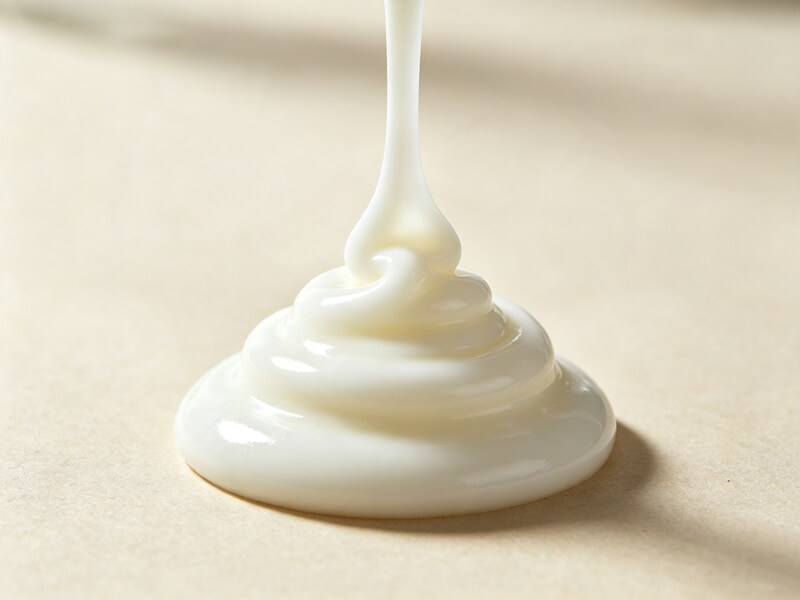
Mixing high-viscosity liquids is more difficult than mixing low-viscosity liquids because they resist flow more strongly and tend to circulate more slowly within a mixing vessel. As viscosity increases, achieving uniform movement throughout the liquid can become more challenging, particularly when the product has non-Newtonian flow behavior, contains solids, or is sensitive to shear and temperature. The goal is not simply to make the liquid move, but to achieve the required degree of uniformity without creating excessive shear, air entrainment, or stagnant areas.
There is no single mixing method that works for every high-viscosity liquid. The appropriate approach depends on the product's rheology, viscosity, shear sensitivity, composition, temperature, and the intended mixing result. Simple blending, dissolving, dispersion, and emulsification can require different mixing conditions, so the mixing method should be selected based on what the process needs to achieve rather than viscosity alone.
High-viscosity liquids can flow, but they offer greater resistance to movement than low-viscosity liquids. During mixing, this resistance makes it more difficult to move the entire liquid mass through the vessel, distribute mechanical energy evenly, and replace material near the vessel walls or bottom. As a result, several mixing challenges can become more significant as viscosity increases.
One of the main challenges is achieving sufficient bulk circulation throughout the liquid. In a lower-viscosity liquid, movement generated by the mixing element can propagate relatively easily through the vessel. With a high-viscosity liquid, the movement tends to be more localized, so the liquid farther from the mixing element may circulate more slowly.
This means that simply increasing the mixing speed does not necessarily produce better overall mixing. The mixing system needs to generate enough movement to bring different portions of the liquid into circulation and achieve a more uniform composition throughout the vessel.
High-viscosity liquids can also be more prone to poorly mixed regions, particularly when the mixing action does not adequately reach the vessel walls, bottom, or other areas away from the main flow pattern. These regions may experience limited movement even while the liquid close to the mixing element is moving actively.
Such dead zones can result in uneven composition, incomplete incorporation of ingredients, or longer mixing times. Their formation depends not only on viscosity, but also on the vessel geometry, liquid level, mixing pattern, and properties of the product.
Mechanical energy is not necessarily distributed evenly throughout a high-viscosity liquid. The region close to the mixing element may experience relatively high shear, while much of the bulk liquid may move more slowly.
This creates an important distinction between local shear and overall circulation. Increasing the speed may increase shear around the mixing element without proportionally improving movement throughout the rest of the liquid. For shear-sensitive products, excessive local shear may also affect product structure or introduce other processing problems.
High-viscosity liquids can make air removal more difficult because entrained air bubbles tend to rise and escape more slowly through a thick liquid. This can be particularly relevant for creams, gels, pastes, and other viscous formulations where bubbles may remain trapped in the product for longer periods.
Air can also be introduced during ingredient addition or excessive agitation. Therefore, mixing speed and the way ingredients are introduced need to be considered together rather than treating higher agitation intensity as automatically better.
Heat transfer can become another challenge when mixing high-viscosity liquids. Because the liquid circulates less readily, material near a heated or cooled vessel wall may not be replaced as quickly by material from the bulk.
This can lead to temperature differences within the product and make heating or cooling less uniform. The effect becomes particularly important when temperature changes viscosity, because a change in viscosity can in turn alter the way the product circulates during mixing.
Viscosity is an important starting point when evaluating a high-viscosity liquid, but it does not provide enough information to determine how the product will behave during mixing. Two liquids with similar viscosity can respond very differently to agitation if they have different rheological properties, solids content, shear sensitivity, or temperature dependence.
Before selecting a mixing method, it is therefore useful to evaluate both the properties of the product and the result the process needs to achieve.
Property | Why It Matters |
Viscosity | Indicates the liquid's resistance to flow and affects the amount of force needed to move the product. |
Rheology | Describes how the liquid flows under different conditions, such as changes in shear rate or time. |
Yield Stress | Indicates whether a certain level of applied stress is needed before the material begins to flow significantly. |
Shear Sensitivity | Indicates how the product responds to mechanical shear and whether excessive shear may affect its structure or quality. |
Solids Content | Affects particle wetting, dispersion, suspension, and the tendency to form agglomerates. |
Temperature Sensitivity | Determines how changes in temperature may affect viscosity and therefore mixing behavior. |
Air Sensitivity | Helps determine whether air entrainment during mixing could be a significant concern. |
Mixing Objective | Determines whether the process requires simple blending, dissolving, dispersion, emulsification, or another type of mixing. |
For high-viscosity liquids, viscosity alone does not tell you how a product will behave during mixing. Some liquids maintain a relatively consistent viscosity as the applied shear changes, while others become thinner or thicker as they are subjected to different levels of shear.
A Newtonian liquid has a relatively consistent viscosity under a given temperature and pressure, while a non-Newtonian liquid can change its apparent viscosity depending on conditions such as shear rate or time. For example, a shear-thinning material becomes less viscous as shear increases, which can make it easier to move during agitation than its low-shear viscosity might initially suggest.
Some high-viscosity materials also exhibit yield stress, meaning that the material may require a certain amount of applied stress before significant flow begins. This is important when evaluating whether the mixing action can move the entire product rather than only creating movement close to the mixing element.
A viscosity value is useful, but it should not be treated as a complete description of how a high-viscosity liquid will behave during mixing.
The appropriate mixing method depends first on what the process needs to accomplish. A high-viscosity liquid may only need to be blended with another liquid, or it may need to dissolve a solid ingredient, disperse particles, or form an emulsion. These objectives require different types of movement and mechanical energy, so viscosity alone should not determine the mixing approach.
When two or more liquid components need to be combined into a uniform mixture without creating a separate dispersed phase, the primary objective is overall circulation and composition uniformity.
For high-viscosity liquids, the mixing method needs to move enough of the bulk material through the vessel rather than concentrating movement around the mixing element.
Key considerations include:
Bulk circulation
Liquid turnover
Avoiding stagnant regions
Uniform composition throughout the vessel
Typical system:
Liquid + liquid → uniform liquid mixture
If a solid ingredient needs to dissolve completely into a liquid, the process involves more than simply circulating the liquid. The solid needs to be adequately wetted and distributed so that it can dissolve into the surrounding liquid.
High viscosity can slow this process because the liquid moves less readily around the particles, while dissolved material may also be transported away from the particle surface more slowly.
Key considerations include:
Wetting
Powder addition rate
Particle size
Preventing agglomeration
Maintaining sufficient circulation
Dissolution time
Typical system:
Soluble solid + liquid → dissolved solution
It is important to distinguish dissolution from dispersion. If the solid remains as particles rather than dissolving into the liquid, the process is better described as dispersion.
Dispersion is different from dissolution. In a dispersion, solid particles are distributed throughout the liquid but do not necessarily dissolve.
For high-viscosity products, the challenge may be wetting the particles, breaking up agglomerates, and maintaining a uniform particle distribution throughout the liquid.
Key considerations include:
Particle wetting
Agglomerate breakup
Particle distribution
Shear intensity
Maintaining suspension
Typical system:
Insoluble particles + liquid → uniform particle dispersion
The required shear level depends on the particle characteristics, degree of agglomeration, product rheology, and desired dispersion quality. A high-shear approach is therefore not automatically required for every high-viscosity dispersion.
When two immiscible liquids need to be combined into a stable system, the objective is different from simple blending.
For example:
Oil + water → emulsion
The process needs to create and distribute droplets of one liquid phase within another. The required mechanical energy therefore depends on the desired droplet size and the characteristics of the final emulsion.
Key considerations include:
Droplet formation
Shear intensity
Phase properties
Emulsion stability
Temperature
Simple blending and emulsification should therefore not be treated as the same process. Blending aims to achieve uniform composition, while emulsification involves creating a dispersed liquid phase.
Mixing Objective | Typical System | Main Challenge |
Simple Blending | Liquid + liquid | Bulk circulation and uniformity |
Dissolving | Soluble solid + liquid | Wetting and dissolution |
Dispersion | Insoluble particles + liquid | Wetting, agglomerate breakup, and particle distribution |
Emulsification | Immiscible liquid + liquid | Droplet formation and stability |
This distinction is important because high viscosity alone does not determine the appropriate mixing method. The same viscosity range can involve very different mixing requirements depending on whether the goal is blending, dissolution, dispersion, or emulsification.
Different types of mixers can be used for high-viscosity liquids, but no single mixer is suitable for every product or process. The appropriate choice depends on the liquid's rheology, viscosity, shear sensitivity, mixing objective, and the degree of circulation or dispersion required. For high-viscosity liquids that remain flowable, some mixers are mainly designed to promote bulk circulation, while others provide more intensive shear for dispersion or emulsification.
Mixer Type | Typical Strength | Possible Limitation |
Frame Anchor Mixer | Good bulk circulation, wall sweeping, and heat transfer | Limited high-shear capability |
Helical Ribbon Mixer | Strong circulation and movement in highly viscous liquids | More complex design and cleaning |
Paddle Mixer | Relatively gentle bulk mixing | May be less effective as viscosity increases |
High-Shear Mixer | Effective for dispersion and breaking down agglomerates | May not be suitable for shear-sensitive products |
These mixers serve different purposes rather than representing a simple scale from lower to higher mixing power. An frame anchor mixer may be appropriate when bulk circulation and movement near the vessel walls are important, while a helical ribbon or paddle mixer may be considered for different flow and viscosity conditions. A high shear mixer is more appropriate when the process requires particle dispersion, agglomerate breakup, or emulsification rather than simple bulk blending.
The suitable mixer therefore depends on the properties of the liquid and the intended mixing result, rather than viscosity alone. A high-viscosity liquid that only needs uniform blending may require a different mixer from one that needs solid dispersion or emulsification.
Increasing mixing speed can increase the shear applied to a high-viscosity liquid and may improve circulation in some processes. However, a higher speed does not automatically result in better overall mixing. The effect depends on the product's rheology, mixer design, mixing objective, and how mechanical energy is distributed throughout the liquid.
As mixing speed increases, several effects need to be considered:
Higher shear: More mechanical energy is applied to the liquid, which can help with dispersion or breaking up agglomerates when higher shear is required.
Higher power demand: Increasing speed can significantly increase the power required to move a viscous product.
Localized heating: Mechanical energy can be converted into heat, which may affect temperature-sensitive products or change viscosity during processing.
Air entrainment: Excessive agitation can draw air into the product, particularly when the liquid surface becomes highly disturbed.
Product damage: Shear-sensitive products may be affected by excessive mechanical stress.
Motor load: Higher resistance from a viscous product can increase the load on the drive system as mixing speed increases.
Limited bulk circulation: Even with higher local shear, parts of the vessel may still experience insufficient movement if the mixing pattern does not adequately circulate the entire liquid mass.
For this reason, higher speed should not be treated as a universal solution for high-viscosity mixing. The goal is to achieve sufficient circulation, dispersion, or emulsification with an appropriate level of mechanical energy rather than simply maximizing RPM.
Higher mixing speed does not automatically mean better bulk mixing.
This distinction is particularly important for high-viscosity liquids because local mixing intensity and overall circulation are not necessarily the same thing. A process may have strong movement close to the mixing element while material farther away remains poorly circulated.
Heating can make some high-viscosity liquids easier to mix because their viscosity may decrease as temperature increases. Lower viscosity can allow the liquid to move more readily through the vessel, improve bulk circulation, and reduce the mechanical force required for mixing. However, the effect depends on how the particular liquid responds to temperature.
Heating should therefore be treated as a process variable, not a universal solution. Some products may be sensitive to temperature changes, while excessive heating can affect product stability, cause unwanted changes in texture or composition, or create temperature differences within the vessel if heat is not distributed evenly.
The relationship between temperature and viscosity is also not the same for every product. Some high-viscosity liquids become significantly less viscous when heated, while others may show a smaller change. For this reason, the useful temperature range should be determined from the product's properties and process requirements rather than assuming that higher temperature will always improve mixing.
When heating is used to assist high-viscosity mixing, several factors should be considered:
Viscosity reduction: A moderate temperature increase may make the liquid easier to move and mix.
Product temperature sensitivity: Heat-sensitive ingredients may be affected by excessive temperatures or prolonged heating.
Product stability: Temperature changes can alter the physical properties or stability of some formulations.
Heat transfer: Thick liquids may circulate slowly, making uniform heating more difficult.
Temperature uniformity: Localized heating can produce viscosity differences within the same batch, which may affect mixing behavior.
Therefore, heating can make some high-viscosity liquids easier to mix, but it does not replace an appropriate mixing method. The temperature, mixing conditions, and product properties need to be considered together.
Dead zones are areas within a mixing vessel where the liquid moves very slowly or receives insufficient mixing action. They can be particularly difficult to eliminate when working with high-viscosity liquids because the product does not circulate as easily as a low-viscosity liquid. A mixer may create strong movement in one part of the vessel while other areas remain relatively stagnant.
Preventing dead zones therefore requires more than simply increasing mixing speed. The mixing system should be considered as a whole, including the mixer configuration, vessel geometry, liquid level, and the location of internal components.
The mixing element should generate sufficient movement throughout the working volume rather than concentrating flow in one localized area. For high-viscosity liquids, this means considering how effectively the mixer reaches the upper, lower, and outer regions of the vessel.
A strong flow pattern close to the mixer does not necessarily mean that the entire batch is circulating effectively.
Vessel diameter, height, bottom shape, and the ratio between the vessel dimensions can all affect the resulting flow pattern. A mixing configuration that works well in one vessel geometry may produce poorly mixed regions when installed in a vessel with different proportions.
The distance between the mixing element and the vessel wall or bottom affects how material moves through these areas. Excessive clearance may leave regions with insufficient movement, while insufficient clearance can affect the flow pattern and mechanical operation.
The appropriate clearance depends on the mixer configuration, vessel geometry, and product properties.
High-viscosity mixing often requires sufficient movement through the bulk liquid rather than simply high local shear. The direction and reach of the flow generated by the mixer should therefore be considered when evaluating potential stagnant regions.
The working liquid level can also affect how effectively the mixer circulates the product. A mixing configuration designed for a particular working volume may not produce the same flow pattern when the liquid level changes significantly.
Baffles, heating or cooling surfaces, probes, pipes, and other components inside the vessel can alter the flow path. These components may be necessary for the process, but their position and arrangement should be considered when evaluating potential stagnant areas.
Ultimately, dead-zone prevention is a flow-distribution problem, not simply a speed problem. Increasing RPM may increase movement near the mixer without eliminating poorly circulated regions elsewhere in the vessel. Evaluating mixer coverage, vessel geometry, clearances, liquid level, and internal components together provides a more reliable way to identify and reduce stagnant areas.
Air can become trapped in high-viscosity liquids because bubbles move upward more slowly through a thick liquid than they do through a low-viscosity liquid. Air may also be introduced during ingredient addition, surface agitation, or excessive mixing intensity. Once entrained, the bubbles can take longer to escape and may remain distributed throughout the product.
Several factors can help reduce unnecessary air entrainment during mixing:
Avoid excessive vortexing: Strong surface turbulence can draw air from the liquid surface into the product. The mixing conditions should provide sufficient circulation without unnecessarily disturbing the surface.
Control the addition method: Powders and liquid ingredients should be introduced in a way that minimizes air incorporation. Rapid addition or dropping materials onto a highly agitated surface can introduce additional air.
Avoid unnecessary high-speed agitation: Higher speed can increase surface turbulence and air entrainment without necessarily improving bulk mixing.
Consider whether deaeration is required: Some products may tolerate a small amount of entrained air, while others require a lower air content because bubbles can affect appearance, texture, filling, or product consistency.
Allow sufficient processing time: Entrained bubbles may gradually rise and escape if the product is given sufficient time under suitable mixing conditions. The required time depends on viscosity, bubble size, temperature, and product properties.
Vacuum processing can be useful when air removal is an important process objective, but it should not be treated as a requirement for every high-viscosity liquid. Whether deaeration is necessary depends on the product and the desired final result.
The key is therefore not simply to eliminate all air during mixing, but to control how much air is introduced and determine whether the remaining air affects the product or downstream process.
Determining whether a high-viscosity liquid is properly mixed requires more than checking how long the mixer has been running. A product may appear uniform near the surface while differences in composition, temperature, or particle distribution remain elsewhere in the vessel. The appropriate endpoint therefore depends on the product properties and the intended mixing result.
Several indicators can be used to evaluate mixing uniformity:
Uniform appearance: The product has a consistent color, texture, and visual appearance throughout the batch.
Consistent viscosity: Viscosity measurements from representative samples are sufficiently consistent for the process.
Uniform ingredient distribution: Added ingredients are distributed throughout the product rather than concentrated in specific areas.
Consistent particle dispersion: For products containing insoluble particles, the particles remain adequately distributed without obvious agglomeration or settling.
Temperature uniformity: Temperature differences between different parts of the batch are within the desired process range.
No visible unmixed regions: There are no obvious areas near the vessel wall, bottom, or surface that appear different from the rest of the product.
Sampling from different locations: Samples taken from representative locations can provide a more reliable indication of batch uniformity than observing a single point.
For some processes, visual inspection may be sufficient as an initial check, while others may require viscosity measurements, temperature measurements, composition testing, or particle-size evaluation. The appropriate method depends on what “properly mixed” means for the specific product.
Mixing time should therefore be determined by the actual product and process rather than by a fixed time applied to every high-viscosity liquid. Viscosity, batch size, mixer configuration, ingredient addition sequence, temperature, and mixing objective can all affect how long uniformity takes to achieve.
High-viscosity mixing problems do not always come from using the wrong mixer. In many cases, problems arise from selecting mixing conditions without considering the product's flow behavior, mixing objective, or process conditions. Avoiding a few common mistakes can make it easier to achieve consistent mixing without applying unnecessary mechanical energy.
High-viscosity liquids can have very different rheological properties and mixing requirements. A liquid that only needs uniform blending may require a different mixing approach from one that contains solid particles or requires emulsification.
Selecting a mixer based on viscosity alone can therefore overlook important factors such as shear sensitivity, solids content, yield stress, and the desired mixing result.
Increasing mixing speed can increase shear and may improve certain processes, but it is not always an effective way to improve overall mixing. Excessive speed can increase power demand, air entrainment, localized heating, and mechanical stress on shear-sensitive products.
A higher speed should therefore be used when it provides a specific process benefit rather than simply because the product is highly viscous.
Two liquids with similar viscosity can behave differently during mixing if their rheological properties are different. For example, a shear-thinning liquid may become less viscous as mixing intensity increases, while a material with yield stress may require sufficient force before significant bulk movement occurs.
Considering rheology provides a better understanding of how the product will actually behave under mixing conditions.
Strong movement near the mixer does not necessarily mean that the entire batch is circulating effectively. Areas near the vessel wall, bottom, or other internal components may experience limited movement.
Ignoring these regions can result in incomplete mixing even when the mixer appears to be operating normally. Mixer coverage, vessel geometry, clearances, liquid level, and internal components should therefore be considered together.
Adding powders too quickly can cause several problems in a high-viscosity liquid, including poor wetting, agglomeration, and localized concentration of solids. Once large agglomerates form, they may be difficult to break down because the surrounding liquid offers greater resistance to movement.
The addition rate, particle characteristics, location of addition, and available circulation should therefore be considered as part of the mixing process.
Temperature can significantly affect the viscosity of some liquids. Heating may make a product easier to circulate, while cooling may increase its resistance to flow.
Ignoring this relationship can lead to different mixing behavior at different stages of production. Temperature should therefore be considered together with viscosity and mixing conditions, particularly when the product is temperature-sensitive.
A fixed mixing time does not necessarily indicate that a high-viscosity liquid has been properly mixed. Different products, batch sizes, mixer configurations, temperatures, and ingredient addition sequences can require different processing times.
Instead of relying only on time, the mixing endpoint should be evaluated using appropriate indicators such as composition uniformity, viscosity, particle distribution, temperature, appearance, or samples from different locations within the batch.
Mixing high-viscosity liquids is not simply a matter of increasing mixing speed or selecting a more powerful mixer. Product rheology, shear sensitivity, solids content, temperature, desired mixing result, and the risk of dead zones or air entrapment all affect the appropriate mixing approach.
Evaluating these factors before selecting a mixing method helps manufacturers determine whether conventional agitation is sufficient or whether a more specialized mixing system is needed for the specific product and process.