- Home
- Equipment
- Industries
- We Immay
- Resource
- Contact
Author: Site Editor Publish Time: 2026-09-24 Origin: Site
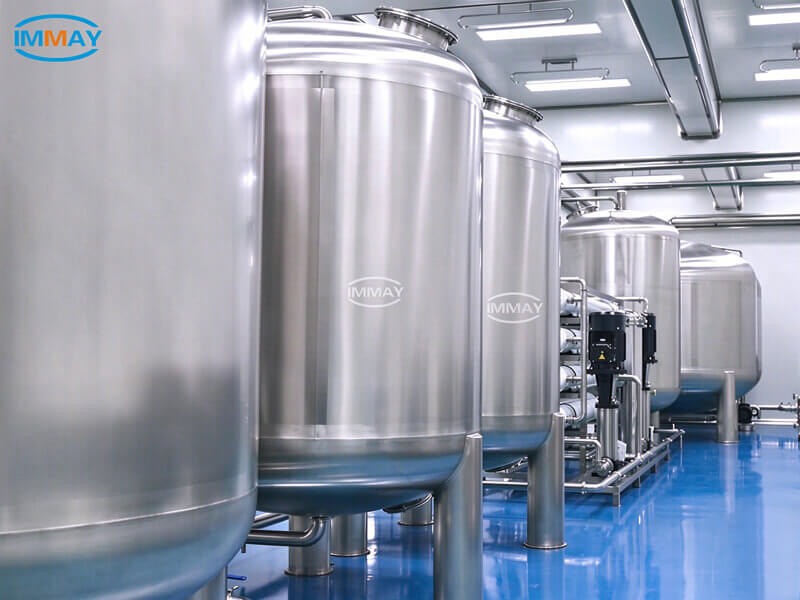
When planning an industrial RO system, one of the questions is whether a raw water tank should be included in the system. The answer depends on how raw water is supplied to the plant, how much water the treatment system requires, and how the system is operated.
A raw water tank provides a storage point between the water source and the treatment equipment. Understanding its purpose and place in the process helps determine when a raw water tank is needed and how it should be planned for the system.
A raw water tank stores the water that will be treated by the RO system. It is usually installed before the pretreatment equipment and provides a supply of raw water for the treatment process.
The raw water tank holds water before it enters the pretreatment stage. The tank can receive water from the factory’s water supply and store it until the treatment system needs it.
The required tank capacity depends on the water supply, system capacity, operating schedule, and actual water demand.
A raw water pump draws water from the tank and sends it to the pretreatment equipment. The water then passes through the pretreatment stages before entering the RO unit.
This arrangement separates the raw water supply from the treatment equipment, allowing the water supply and treatment process to be planned as connected parts of the same system.
An industrial RO system needs a raw water tank when the available water supply does not match the way the treatment system needs to operate. The decision depends on the water source, supply flow, operating schedule, and the amount of raw water available before treatment.
A raw water tank can be useful when the factory water supply is intermittent or varies during the day. The tank stores water when it is available and provides water to the treatment system during operation.
This is particularly relevant when the RO system needs to run for longer periods than the factory’s water supply is available.
The available water flow is lower than the flow required by the pretreatment and RO equipment. In this case, a raw water tank can provide the additional water needed during operation.
The tank size and pump capacity should be matched to the actual water supply and the required feed flow of the treatment system.
Some factories need to store raw water as part of their overall water supply arrangement. The reason may be related to production schedules, available water supply, or the way the water treatment equipment is arranged at the site.
In these cases, the raw water tank becomes part of the water supply system before the treatment equipment.
Once a raw water tank is included in the system, its capacity needs to match the actual water supply and the way the RO system will operate. A tank that is too small may not provide enough water for the planned operating period, while a larger tank takes up more space and increases the amount of water stored on site.
Start with the amount of raw water available from the factory water supply and the amount of water required for production. If the water supply is available only at certain times, the tank also needs enough capacity to cover the period when fresh water is not being supplied.
Daily water demand is useful for estimating the overall storage requirement, but the tank does not necessarily need to hold a full day’s water consumption. The actual capacity depends on how the water supply and treatment system are operated.
The RO system’s feed flow and planned operating hours determine how much raw water the treatment system needs during operation. The pretreatment equipment also needs to receive enough water to maintain the required flow to the RO unit.
For example, a system that runs for several hours each day may require a different tank capacity from a system with the same RO capacity but a shorter operating schedule. The tank should be sized according to the actual feed flow and operating arrangement.
If production is expected to increase, the raw water storage plan should take the expected change in water demand into account. This can affect the tank capacity, pump capacity, and the available space for future equipment.
Planning for future demand at the system design stage can make later changes to the water supply system easier.
A raw water tank is connected to the RO system through the raw water pump and pretreatment section. The tank receives water from the factory supply, and the pump sends the stored water to the treatment system.
The common flow is:
Factory Water Supply → Raw Water Tank → Raw Water Pump → Pretreatment → RO Unit
The raw water pump draws water from the tank and sends it through the pretreatment equipment. After pretreatment, the water enters the RO unit for membrane treatment.
The piping connects the raw water tank, pump, pretreatment equipment, and RO unit into one continuous water supply line. Pipe size and pump flow should match the required feed flow of the system.
The tank and piping arrangement can then be adjusted to the actual equipment layout and installation space.
When well water is used as the raw water source, a raw water tank is commonly included before the pretreatment system.
A common water flow is:
Well → Well Pump → Raw Water Tank → Raw Water Pump → Pretreatment → RO Unit
The well pump transfers water from the well to the raw water tank. The raw water pump then draws water from the tank and sends it through the pretreatment equipment and into the RO unit.
The tank provides a storage point between the well water supply and the RO system. Its capacity can be selected according to the well water supply, RO system capacity, operating hours, and production water demand.
When municipal tap water is used as the raw water source, a raw water tank is usually not required.
A common water flow is:
Municipal Water Supply → Raw Water Pump → Pretreatment → RO Unit
If the municipal water supply can provide sufficient flow during RO operation, the water can be supplied directly to the treatment system. For an RO system equipped with a raw water pump, an inlet pressure of around 0.7 bar (10 psi) can be sufficient for common system designs.
A raw water tank can still be added when the municipal water supply is intermittent, the available flow is insufficient, or the factory needs additional raw water storage.
The need for a raw water tank is closely related to the way an industrial RO water treatment system connects with the factory’s water supply. The water source, treatment process, and production demand together determine how the system should be arranged.
For this reason, raw water supply should be considered as part of the overall RO system design from the beginning. The right arrangement allows the water treatment system to fit naturally into the factory’s production process and meet its actual operating needs.