- Home
- Equipment
- Industries
- We Immay
- Resource
- Contact


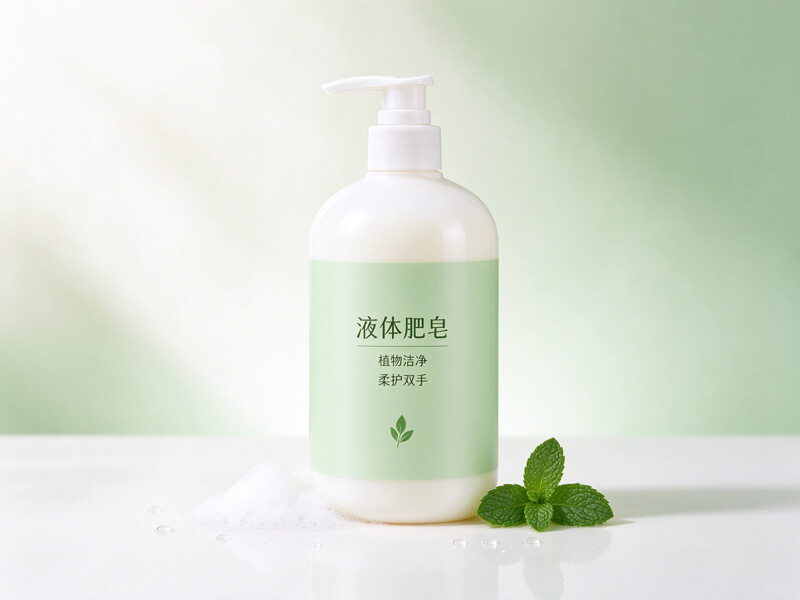
Liquid soap is used in a wide range of settings, from homes and public facilities to hotels and commercial establishments. Its broad range of applications gives manufacturers opportunities to serve different markets with products suited to their needs.
Developing a liquid soap product starts with understanding the product itself, including its ingredients and how they work together. These factors also shape the manufacturing process and the equipment required for production.
Liquid soap is a liquid cleansing product commonly used for handwashing and personal hygiene. It is widely used in homes, hotels, restaurants, public facilities, and other settings where liquid handwashing products are needed.
Liquid soap formulations generally contain cleansing ingredients, water, and other components that contribute to the product's viscosity, fragrance, and skin feel. The exact ingredients depend on the intended use and product requirements. These differences in formulation influence the properties of the finished soap and the way it is manufactured.
Liquid soap formulations vary depending on the cleansing ingredients, intended use, and desired product properties.
A common formulation mainly contain the following ingredients:
Deionized water: Serves as the liquid base in many formulations and helps dissolve or dilute other ingredients.
Cleansing agents: Provide the cleaning action. These may include soap-based ingredients or synthetic surfactants, depending on the product formulation.
Moisturizers: Ingredients such as glycerin can help retain moisture and improve skin feel.
Thickeners: Adjust the viscosity to achieve the desired consistency.
Fragrance and colorants: Give the product its preferred scent and appearance.
Preservatives: Help control microbial growth in water-containing formulations where preservation is needed.
The proportion of each ingredient depends on the product's intended use and the properties required in the finished soap. The choice of cleansing agents is particularly important because different ingredients have different solubility, foaming, and compatibility characteristics. These factors influence the formulation and the mixing process used during manufacturing.
Liquid soap manufacturing involves preparing the deionized water and raw materials, mixing the ingredients according to the formulation, checking the finished product, and packaging it for distribution. The specific process depends on the ingredients used and the properties required in the finished liquid soap.
Before mixing, the ingredients are weighed according to the formulation. These may include cleansing agents, moisturizers, thickeners, preservatives, fragrances, and other additives. Each ingredient is measured in the required quantity before being added to the stainless steel mixing tank.
Water is a major ingredient in many liquid soap formulations, so water quality needs to be considered during manufacturing. An industrial reverse osmosis (RO) water treatment system removes dissolved salts and other impurities from the incoming water. The treated water is stored in a suitable tank and supplied as needed for manufacturing.
The treated water and prepared ingredients are added to the stainless steel mixing tank in the required order. The mixture is stirred until the ingredients are evenly distributed and the desired consistency is achieved. Mixing speed and duration depend on the formulation and the properties of the ingredients.
After mixing, the liquid soap is checked for appearance, viscosity, pH, and consistency to confirm that it meets the required product specifications. Once the product passes these checks, it can proceed to filling.
The finished liquid soap is transferred to a liquid filling machine, which dispenses a specified volume into each bottle. The filled bottles then move to the capping machine, where the caps are fitted and tightened. A labeling machine applies the product labels to complete the main packaging process.
Filling, capping, and labeling can be handled by separate machines or connected equipment in an automatic packaging line. The configuration depends on the bottle type, filling volume, and required production output.
Liquid soap manufacturing requires attention to the formulation, ingredient compatibility, and mixing conditions. These factors are closely related, as changes in the ingredients or mixing process can affect the consistency and properties of the final product.
Different ingredients serve different functions in a liquid soap formulation, and their compatibility needs to be considered before manufacturing begins. The order in which ingredients are added also matters. Some ingredients need to be dissolved or mixed thoroughly before other components are introduced. Following the appropriate addition sequence helps achieve a uniform mixture.
Mixing speed and duration should suit the formulation and the properties of the ingredients. Insufficient mixing can leave some components unevenly distributed, while unsuitable mixing conditions can affect the final consistency. The mixing process should be established according to the specific formula and adjusted based on the results.
Viscosity affects how liquid soap flows during manufacturing and filling, as well as how it feels when dispensed by the user. Different formulations can have different viscosity requirements. The ingredients and their proportions should therefore be selected with the desired consistency in mind, and the finished batch should be checked against the product specifications.
Liquid soap manufacturing equipment covers water treatment, ingredient mixing, product storage, and packaging. The equipment configuration depends on the formulation, batch size, and required output. A manufacturing line commonly includes an industrial RO water treatment system, a liquid soap mixing machine, a stainless steel storage tank, and separate machines for filling, capping, and labeling bottles.
An industrial RO water treatment system treats incoming water by reducing dissolved salts and other impurities. Since water is a major ingredient in many liquid soap formulations, the system supplies treated water for the mixing process. Its treatment capacity should meet the water demand of the manufacturing operation.
A liquid soap mixing machine blends water, cleansing agents, and other ingredients according to the formulation. The agitator distributes the ingredients throughout the batch to achieve the required consistency. The mixing tank capacity and agitator configuration should suit the batch size and the properties of the formulation.
A stainless steel storage tank holds the finished liquid soap before it enters the packaging stage. It provides storage between mixing and filling, allowing the two operations to be scheduled according to production needs. The tank capacity should be appropriate for the batch size and the amount of product that needs to be held before filling.
A liquid soap filling machine dispenses a specified volume of liquid soap into each bottle. The machine should be suitable for the product's viscosity, bottle dimensions, and required filling volume. The number of filling nozzles and the operating speed help determine how many bottles can be filled within a given period.
A liquid soap capping machine fits and tightens caps on filled bottles. It should be compatible with the bottle openings and cap types used for the product. Its operating speed should correspond to the filling rate to maintain a consistent flow through the packaging stage.
A liquid soap labeling machine applies product labels to bottles after capping. Its configuration depends on the bottle shape, label dimensions, and labeling requirements. The labeling machine's operating speed should match the capping speed to maintain a smooth and continuous packaging flow.
When selecting liquid soap manufacturing equipment, manufacturers should choose mixing tank and storage tank capacities according to their batch size and overall production scale. Packaging automation should also match the required output. Smaller operations can use separate machines, while higher-volume manufacturing can call for an integrated automatic liquid soap production line connecting filling, capping, and labeling.
Understanding how liquid soap is manufactured is an important first step for businesses planning to enter this market. From choosing a suitable formulation to determining the manufacturing process and equipment, each decision affects how the product will be made on a commercial scale.
A well-planned manufacturing process gives manufacturers a clearer path from developing a product to establishing regular production. It also provides a practical basis for selecting equipment that fits the product requirements and the scale of the business.