- Home
- Equipment
- Industries
- We Immay
- Resource
- Contact
Author: Site Editor Publish Time: 2026-07-28 Origin: Site
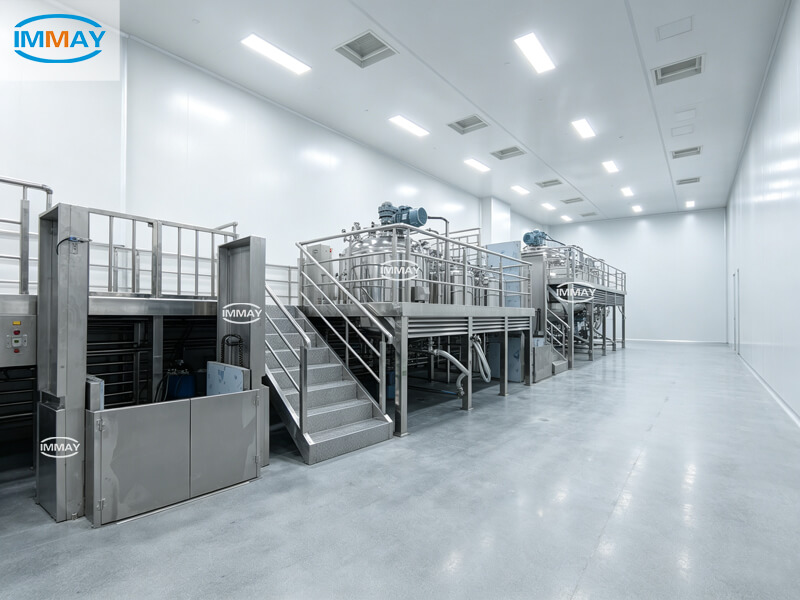
Selecting the right industrial stainless steel mixing tank involves more than choosing the required capacity. While buyers often focus on production volume, mixing performance, and material specifications, installation requirements are sometimes overlooked until the equipment is ready for delivery.
The overall dimensions of a stainless steel mixing tank affect much more than its footprint. They influence transportation, factory access, lifting arrangements, installation space, maintenance clearance, and even future production upgrades. A tank that meets process requirements may still present installation challenges if door openings, ceiling height, or available handling equipment are not considered in advance.
Before manufacturing begins, confirming the installation environment and comparing it with the mixing tank dimensions helps identify potential access limitations early. Careful planning can simplify transportation, reduce installation delays, and support a smoother equipment commissioning process.
Confirming the dimensions of an industrial stainless steel mixing tank before manufacturing is an important step in equipment selection and project planning. While tank capacity determines production volume, the overall dimensions determine whether the industrial stainless steel mixing tank can be transported, installed, operated, and maintained efficiently within the available factory space. Identifying potential space limitations early allows buyers and equipment manufacturers to make necessary design adjustments before fabrication begins.
The dimensions of an industrial stainless steel mixing tank directly influence transportation planning. Overall diameter, total height, shipping weight, and installed components all affect how the equipment is loaded, transported, and unloaded. Depending on the tank size and destination, transportation may require flatbed trucks, shipping containers, or special freight arrangements. Confirming shipping dimensions before production helps avoid unexpected transportation challenges.
After arriving at the factory, an industrial stainless steel mixing tank must be able to reach its installation location. Buyers should verify factory door width and height, corridor dimensions, ceiling clearance, available lifting equipment, and forklift access. Measuring these areas before manufacturing helps identify potential access restrictions and reduces the likelihood of installation delays.
An industrial stainless steel mixing tank requires sufficient installation space beyond its physical footprint. Buyers should allow room for process piping, electrical connections, control cabinets, operating access, and safe movement around the equipment. Proper space planning also simplifies positioning the tank during installation.
Leaving adequate clearance around an industrial stainless steel mixing tank makes routine inspection and maintenance more convenient. Components such as agitators, motors, gearboxes, valves, mechanical seals, and instrumentation should remain accessible for servicing throughout the equipment's operating life. Planning maintenance space before installation helps reduce future downtime.
Many production facilities expand over time by increasing capacity or adding new processing equipment. When installing an industrial stainless steel mixing tank, reserving sufficient surrounding space allows future piping modifications, equipment upgrades, and production line expansion without requiring major changes to the existing layout.
The overall dimensions of an industrial stainless steel mixing tank are influenced by much more than its working capacity. Two tanks with the same volume may have noticeably different diameters, heights, and overall footprints because their design is based on production requirements, process characteristics, and equipment configuration.
Understanding these design factors helps buyers compare quotations more accurately and determine whether a stainless steel mixing tank will fit within the available installation space.
Tank capacity is the primary factor affecting the dimensions of an industrial stainless steel mixing tank. As the working volume increases, both the vessel diameter and height generally increase to provide sufficient mixing space and operating volume.
However, capacity alone does not determine the final dimensions. Two 5,000-liter mixing tanks from different manufacturers may have different overall sizes depending on their structural design and optional configurations.
The ratio between the tank diameter and height is one of the most important design considerations.
Some industrial stainless steel mixing tanks are designed with a larger diameter and lower height to improve stability or accommodate buildings with limited ceiling clearance. Others use a narrower diameter and greater height to reduce the required floor space or meet specific mixing process requirements.
The selected ratio also influences mixing performance, liquid circulation, and equipment layout within the production area.
Many industrial stainless steel mixing tanks include a heating or cooling jacket for temperature control. The jacket surrounds the inner vessel and increases the external diameter of the tank.
Depending on the heating method and jacket design, the outside dimensions may be significantly larger than the dimensions of the inner processing vessel. Buyers should always refer to the overall equipment dimensions rather than the working tank size alone when planning installation.
When temperature stability is required, an insulation layer is typically installed outside the jacket. Although the insulation thickness is relatively small, it increases the overall diameter of the industrial stainless steel mixing tank and should be considered during transportation and installation planning.
Different mixing applications require different agitation systems, and the selected agitator influences the overall height of the equipment.
For example, frame agitators, paddle agitators, high-speed dispersers, and high-shear homogenizing systems may require different shaft lengths, support structures, or installation arrangements. These differences affect the total height of the tank, especially above the vessel.
The drive system installed on top of an industrial stainless steel mixing tank also contributes to the overall equipment height.
Motor size, gearbox type, mounting method, and support frame design vary according to mixing power and process requirements. In facilities with limited ceiling height, the total installed height—including the motor and gearbox—should be confirmed before manufacturing begins.
Optional accessories can also change the final dimensions of an industrial stainless steel mixing tank. Components such as manways, CIP interfaces, level sensors, load cells, pressure gauges, platforms, ladders, and control cabinets may increase the space required for transportation, installation, or routine operation.
For this reason, buyers should always request the complete equipment layout drawing rather than relying only on the vessel dimensions when evaluating available factory space.
There is no universal standard for the dimensions of an industrial stainless steel mixing tank. Tanks with the same working capacity may have different diameters and heights depending on the manufacturer's design, mixing process, jacket construction, insulation thickness, and installed accessories.
The following table provides approximate dimension ranges commonly seen in industrial applications. These values are intended for preliminary installation planning only and should not be used as manufacturing specifications.
Tank Capacity | Approx. Diameter | Approx. Overall Height |
500 L | 800–1,000 mm | 1,500–2,000 mm |
1,000 L | 1,000–1,200 mm | 2,000–2,500 mm |
2,000 L | 1,200–1,500 mm | 2,500–3,000 mm |
3,000 L | 1,500–1,700 mm | 2,800–3,500 mm |
5,000 L | 1,700–2,200 mm | 3,200–4,200 mm |
These dimensions represent complete industrial stainless steel mixing tanks rather than the vessel body alone. Overall height typically includes the tank, agitator assembly, motor, gearbox, and support structure. External diameter may also increase when heating jackets, cooling jackets, or insulation are incorporated into the design.
Because every production process has different mixing requirements, manufacturers often customize the diameter-to-height ratio, agitation system, and optional components. As a result, two industrial stainless steel mixing tanks with the same capacity can have noticeably different overall dimensions.
Before placing an order, buyers should request a General Arrangement (GA) drawing from the industrial stainless steel mixing tank supplier. A GA drawing provides the exact overall dimensions, connection locations, support details, and maintenance clearance requirements, allowing the installation area to be verified before manufacturing begins.
Before an industrial stainless steel mixing tank is manufactured and delivered, buyers should carefully evaluate the installation site. Confirming key dimensions in advance helps prevent transportation difficulties, installation delays, and costly modifications after the equipment arrives.
The following checklist covers the most important measurements to verify before placing an order.
The factory door should be wide enough for the industrial stainless steel mixing tank to pass through safely. Buyers should measure the clear opening rather than the nominal door size, taking the door frame, handles, and any fixed structures into account. If the tank is delivered with accessories already installed, the overall transport width should also be considered.
Door height is equally important, especially for vertical mixing tanks. The total transport height may include the vessel, support legs, lifting lugs, or temporary shipping fixtures. Confirming sufficient vertical clearance helps avoid access problems during delivery.
After entering the building, the industrial stainless steel mixing tank must be moved to its installation location. Narrow corridors, sharp corners, columns, and other obstacles can limit equipment movement even when the main entrance is large enough. Measuring the entire transportation route helps identify potential restrictions before manufacturing.
The available ceiling height should accommodate the complete installed height of the industrial stainless steel mixing tank, including the vessel, agitator shaft, motor, gearbox, and any lifting space required during installation or maintenance. Facilities with low ceilings may require a different tank configuration or drive arrangement.
If a crane is used for unloading or positioning the equipment, sufficient overhead lifting space should be available. Buyers should confirm crane capacity, hook height, lifting radius, and any structural obstructions that could interfere with safe installation.
Many industrial stainless steel mixing tanks are moved into position using forklifts before final installation. Buyers should verify that aisles, doorways, turning areas, and floor conditions allow forklifts to transport the equipment safely from the unloading area to its final location.
Large industrial stainless steel mixing tanks can become significantly heavier after being filled with product. The installation floor should be capable of supporting the combined weight of the tank, processing liquid, motors, and associated equipment. Floor load capacity should be confirmed during the planning stage, particularly for elevated platforms or upper-floor installations.
Adequate space should be reserved around the industrial stainless steel mixing tank for routine inspection and servicing. Components such as motors, gearboxes, valves, manways, and instrumentation should remain easily accessible throughout the equipment's service life. Allowing sufficient maintenance clearance also simplifies future repairs and component replacement.
Before approving the manufacturing drawings, buyers are encouraged to confirm the following:
Factory door width and clear opening
Door height
Corridor width and turning space
Ceiling height
Crane lifting capacity and available hook height
Forklift access route
Floor load capacity
Maintenance clearance around the equipment
Utility connection locations (water, electricity, compressed air, and piping)
Completing these measurements before manufacturing helps reduce installation risks and allows the industrial stainless steel mixing tank to be designed according to the actual conditions of the production facility.
Transportation planning is an important part of purchasing an industrial stainless steel mixing tank, especially for large-capacity equipment. The tank dimensions, total weight, lifting points, and shipping configuration can directly affect how the equipment is delivered and installed at the customer's facility.
Considering transportation requirements before manufacturing helps buyers avoid unexpected delivery issues and allows the supplier to prepare the appropriate shipping and handling solution.
Industrial stainless steel mixing tanks are commonly transported by road using trucks or specialized freight vehicles. The overall tank diameter, height, length, and weight should be considered when selecting a suitable transportation method.
For larger tanks, buyers and suppliers should confirm:
Transport vehicle size and loading capacity
Overall shipping dimensions
Weight distribution during transportation
Loading and unloading arrangements
The transportation dimensions may differ from the working dimensions of the tank because additional structures such as supports, motors, platforms, or protective packaging may affect the final shipping size.
For international projects, container transportation is often considered during the delivery planning stage. Whether an industrial stainless steel mixing tank can be shipped in a standard container depends on its external dimensions, weight, and shipping configuration.
Factors to evaluate include:
Container internal dimensions
Tank diameter and overall height
Possibility of removing certain components before shipment
Loading method and securing requirements
Large mixing tanks may require special shipping arrangements if their dimensions exceed standard container limitations.
After arriving at the factory, the industrial stainless steel mixing tank still needs to be moved from the unloading area to the final installation location.
The transportation route should be checked for:
Factory entrances
Corridors and passage widths
Turning areas
Floor conditions
Obstacles such as columns or equipment
A clear transportation path helps reduce difficulties during positioning and prevents delays after delivery.
Large industrial stainless steel mixing tanks usually require lifting equipment during unloading and installation. The lifting method depends on the tank weight, dimensions, lifting points, and available equipment at the site.
Before delivery, buyers should confirm:
Crane capacity
Available lifting height
Lifting space above the installation area
Position of lifting points on the tank
Proper lifting planning helps protect the equipment and allows safer installation.
The final positioning stage requires coordination between the equipment dimensions and the factory layout. After the industrial stainless steel mixing tank reaches its installation location, sufficient space should be available for alignment, connection of pipelines, electrical installation, and future maintenance access.
Planning the final position before delivery allows buyers to confirm:
Tank orientation
Pipe connection direction
Operator access area
Maintenance clearance
Connection locations for utilities
A complete transportation and installation plan ensures that the industrial stainless steel mixing tank can move smoothly from shipment to final operation without unnecessary modifications to the facility.
For large industrial stainless steel mixing tanks, transportation limitations may sometimes make it difficult to deliver the equipment as a complete assembled unit. In these situations, some tanks can be designed for sectional delivery and assembled at the installation site.
However, whether a mixing tank should be delivered in separate sections depends on the tank size, design requirements, installation conditions, and manufacturing process.
Modular Construction
Modular construction allows certain parts of a large industrial stainless steel mixing tank to be manufactured and transported separately before final assembly. This approach can be considered when the completed tank size exceeds available transportation routes, factory entrances, or shipping limitations.
Typical considerations include:
Tank diameter exceeding transport restrictions
Limited factory access
Difficult installation locations
Large-capacity equipment projects
The modular design should be planned during the engineering stage to ensure that the assembled equipment meets the required process conditions.
Field Assembly
For some large-capacity mixing tanks, certain components may be transported separately and assembled at the customer's facility. Field assembly can help overcome limitations related to transportation size and site access.
Before choosing this method, buyers should confirm:
Available installation space
Required assembly equipment
Site conditions
Installation schedule
Technical support requirements
Proper planning is important because field assembly involves additional coordination compared with delivering a fully assembled tank.
Welding on Site
In some special cases, large stainless steel mixing tanks may require on-site welding after the main sections are transported to the installation location.
This approach is usually considered when:
The tank diameter is too large for normal transportation
The installation location has limited access
The equipment size exceeds standard manufacturing or shipping limitations
The feasibility of on-site welding depends on the tank design, material requirements, available facilities, and project conditions.
Although sectional delivery can solve transportation challenges, it is not always the preferred option.
For many standard industrial stainless steel mixing tanks, delivering the equipment as a complete unit may provide advantages:
Shorter installation time
Reduced on-site work
Easier quality control
Simpler commissioning process
If the tank can be transported and installed as a complete unit, additional assembly steps may not provide practical benefits.
Before deciding whether a large industrial stainless steel mixing tank should be delivered in separate sections, buyers should discuss:
Final installation location
Transportation route
Factory access limitations
Available lifting equipment
Assembly requirements
Expected installation timeline
Early communication with the stainless steel mixing tank manufacturer helps determine the most suitable delivery method based on the actual project conditions.
Installation problems often occur because equipment selection focuses mainly on capacity and process requirements while site conditions are considered too late. Before manufacturing an industrial stainless steel mixing tank, buyers should confirm the installation environment and provide accurate site information to the equipment supplier.
Early preparation helps reduce transportation difficulties, avoid unexpected modifications, and improve the efficiency of the installation process.
Before ordering an industrial stainless steel mixing tank, buyers should review the complete factory layout, including the equipment location, surrounding machines, transportation routes, and available working space.
Important information includes:
Installation area dimensions
Distance from nearby equipment
Access route from unloading area to final position
Available operating space around the tank
A clear factory layout allows the mixing tank to be designed according to the actual production environment.
Door dimensions are one of the most common installation considerations for large industrial equipment. Buyers should confirm not only the door opening width and height but also the complete transportation path inside the facility.
Measurements should include:
Door frame clearance
Corridor width
Turning areas
Fixed obstacles
This information helps determine whether the industrial stainless steel mixing tank can reach the installation location without additional modifications.
The required installation height includes more than the tank body. Buyers should consider the complete equipment height, including:
Tank vessel
Agitator shaft
Motor and gearbox
Lifting space required during installation
Confirming ceiling height before manufacturing helps avoid conflicts between the equipment and the existing building structure.
An industrial stainless steel mixing tank requires proper connection planning before installation. Buyers should confirm the locations and requirements of utilities connected to the equipment.
Typical considerations include:
Power supply location
Heating or cooling connections
Water supply and drainage
Process piping direction
Compressed air requirements (if applicable)
Early utility planning helps simplify installation and connection work after delivery.
The final installation position should be determined before manufacturing begins. Buyers should consider:
Tank orientation
Operator access
Material feeding direction
Product discharge location
Connection space
A properly planned installation location improves daily operation and future servicing.
Large industrial stainless steel mixing tanks may require cranes, forklifts, or other handling equipment during installation. Buyers should confirm that available lifting equipment matches the tank weight and installation requirements.
Important factors include:
Lifting capacity
Lifting height
Access conditions
Installation sequence
Reserve Future Maintenance Space
Installation planning should consider not only the initial setup but also future servicing requirements. Sufficient clearance around the industrial stainless steel mixing tank allows easier access to motors, agitators, valves, and other components.
Leaving maintenance space during the initial layout can reduce difficulties during future inspections, repairs, or equipment upgrades.
Before production starts, buyers should provide the supplier with:
Factory layout drawing
Door and access dimensions
Ceiling height
Installation location
Utility connection information
Available lifting equipment
Maintenance space requirements
Sharing accurate site information allows the industrial stainless steel mixing tank to be designed and delivered according to the actual installation conditions.
Before manufacturing an industrial stainless steel mixing tank, suppliers usually need detailed information about the production process and installation environment. This information helps determine the appropriate tank configuration, overall dimensions, connection locations, and installation requirements.
Providing accurate project information at the early stage allows the equipment to be designed according to the actual factory conditions instead of making adjustments after manufacturing has started.
A factory layout or installation drawing helps suppliers understand where the industrial stainless steel mixing tank will be installed and how it will be transported into position.
Important details include:
Equipment installation area
Available floor space
Surrounding equipment layout
Transportation route
Maintenance access area
This information helps suppliers evaluate whether the proposed tank dimensions are suitable for the available space.
Suppliers usually request door dimensions and access route information for large mixing tanks.
Required details include:
Door width
Door height
Corridor dimensions
Turning space
Possible obstacles during transportation
These measurements help determine whether the industrial stainless steel mixing tank can be delivered as a complete unit or whether special transportation arrangements may be required.
The total installed height of a mixing tank includes more than the vessel itself. Suppliers need to know the available ceiling height to evaluate the space required for:
Agitator assembly
Motor and gearbox
Lifting operations
Maintenance activities
This is especially important for facilities with limited vertical space.
The location and direction of process connections can affect the final tank design and installation layout.
Suppliers need information about:
Feed inlet position
Discharge outlet direction
Heating or cooling connections
Drain location
Connection height requirements
Confirming these details before manufacturing helps avoid unnecessary piping modifications during installation.
The electrical requirements of an industrial stainless steel mixing tank depend on the selected motor, control system, and production process.
Suppliers request:
Local voltage specification
Frequency requirements
Electrical connection location
Available power supply conditions
Providing this information helps ensure that the equipment configuration matches the installation environment.
Drainage planning is an important part of mixing tank installation. Suppliers need to understand the drain position and surrounding layout to determine suitable tank outlet arrangements and installation height.
The drain location should be considered together with:
Floor drainage system
Cleaning requirements
Product discharge method
Production Process Information
The mixing process directly influences the design of an industrial stainless steel mixing tank. Suppliers typically need information about the product and application, including:
Product type
Working volume
Viscosity range
Required mixing speed
Heating or cooling requirements
Processing steps
This information helps determine the suitable vessel structure, agitator configuration, and auxiliary components.
The installation orientation of the tank should be confirmed before manufacturing. Suppliers need to know:
Feeding direction
Operator working position
Connection side
Equipment alignment with existing production lines
Proper orientation planning helps the industrial stainless steel mixing tank integrate smoothly into the customer's production area.
The more accurate information buyers provide before manufacturing, the easier it is for suppliers to prepare suitable drawings, confirm dimensions, and reduce installation uncertainties.
A complete project review before production helps ensure that the industrial stainless steel mixing tank matches both the production requirements and the actual factory environment.
Selecting an industrial stainless steel mixing tank requires consideration of both production requirements and installation conditions. While capacity and mixing performance determine whether the equipment meets the process needs, transportation routes, factory access, lifting conditions, utility connections, and available maintenance space also influence the success of the installation.
Before manufacturing begins, providing accurate site information and discussing installation requirements with the equipment supplier can help avoid unexpected challenges during delivery and setup. Early planning allows the industrial stainless steel mixing tank to be designed according to the actual production environment, helping simplify installation, reduce unnecessary adjustments, and support smoother project implementation.