- Home
- Equipment
- Industries
- We Immay
- Resource
- Contact
|


What Is an Industrial Ointment Mixing Machine?
Ointment formulations can contain oils, waxes, active ingredients, and other components with different physical properties. The mixing process brings these ingredients together to form a uniform ointment with the required consistency.
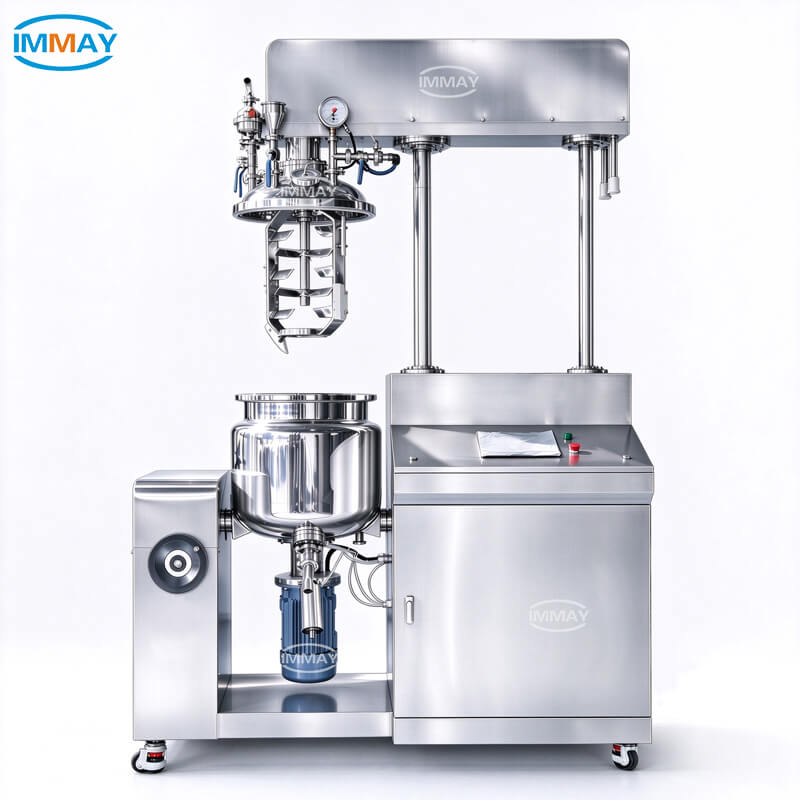
An industrial ointment mixing machine is a processing machine designed for the preparation of ointments and other viscous semi-solid formulations. It provides the mixing capacity and processing conditions required for different ointment formulations and production scales.
The machine can be configured according to the batch size, formulation characteristics, and required level of automation
Main Components of an Industrial Ointment Mixing Machine
Stainless Steel Mixing Vessel
The stainless steel mixing vessel is the main space for processing the ointment formulation. Stainless steel provides a durable, corrosion-resistant surface and is suitable for contact with different ointment ingredients. The vessel also forms the main structure for heating, mixing, homogenization, and cooling.
Hydraulic Lifting System
The hydraulic lifting system moves the mixing assembly vertically in relation to the vessel. When needed, it raises the agitator assembly to provide clearance for tilting the vessel and discharging the finished ointment. After discharge, the vessel is returned to its upright position, and the agitator assembly is lowered back into the vessel for next batch.
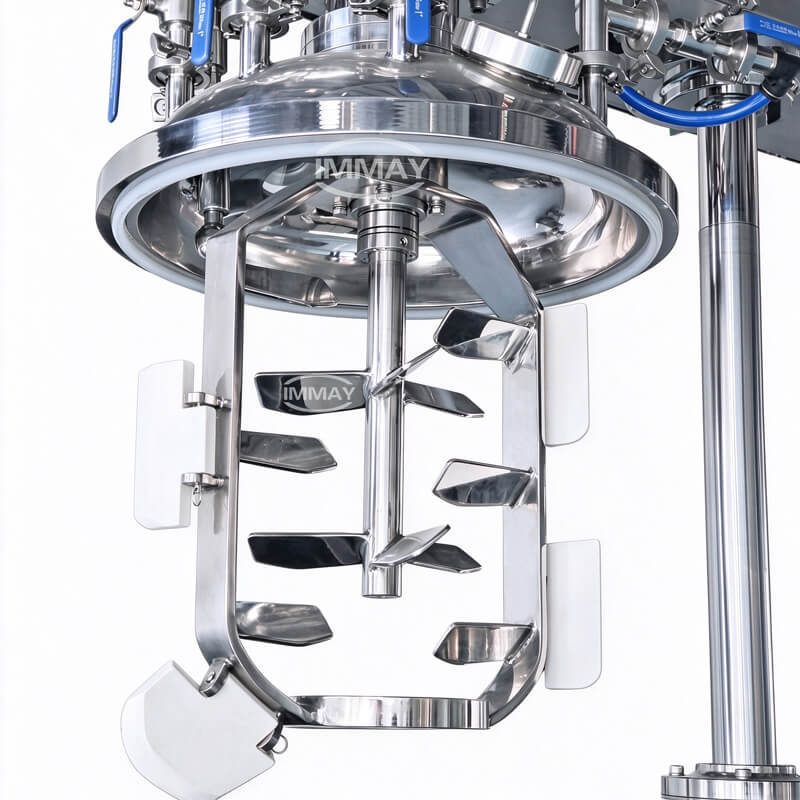
Frame Agitator with Wall and Bottom Scraper
The frame agitator is designed to move viscous ointment throughout the mixing vessel. The wall and bottom scraper follows the internal surfaces of the vessel during operation, moving material away from the wall and bottom and back into the main mixing area.
Opposite-Direction Mixing System
The mixing system consists of an outer agitator and an inner agitator that rotate in opposite directions. Their different movement directions create opposing material flows within the vessel, helping move the viscous ointment through different areas and improve mixing uniformity.
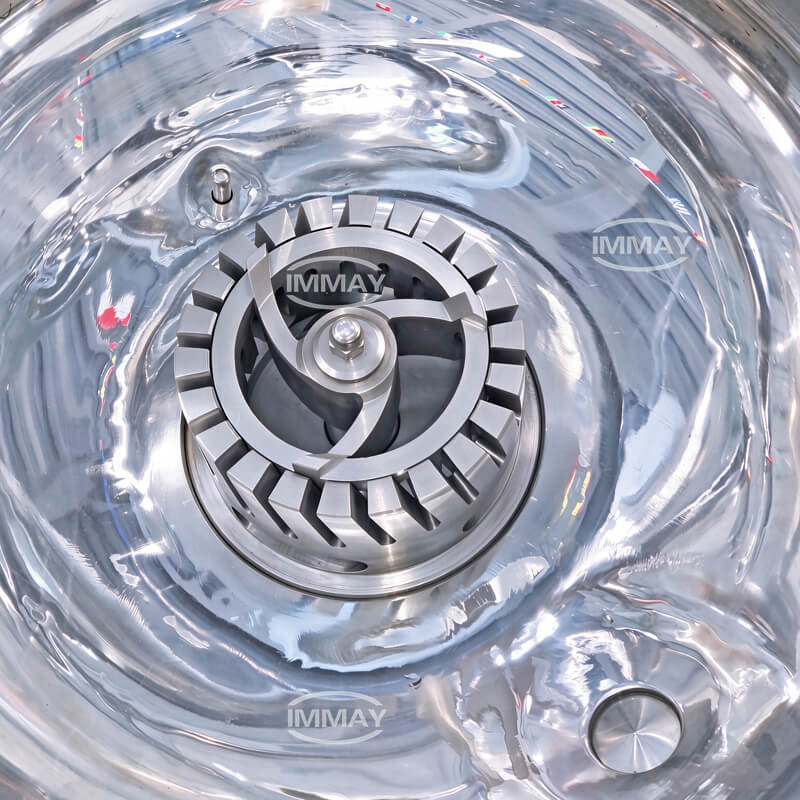
Bottom High-Shear Homogenizer
The high-shear homogenizer is installed at the bottom of the mixing vessel and applies strong shear to the material. It helps break down agglomerated components and disperse them more evenly throughout the ointment.
Heating and Cooling Jacket
The heating and cooling jacket surrounds the mixing vessel and transfers heat between the processing material and the heating or cooling medium. It provides temperature control during the different stages of ointment processing.
Vacuum Deaeration System
The vacuum deaeration system removes air from the ointment after the mixing process. By creating a vacuum inside the vessel, it helps remove entrained air and reduce bubbles in the finished ointment.
Control System
The control system operates the main functions of the machine, including mixing, homogenization, heating, and hydraulic lifting.
The machine can use PLC control or button control. PLC control manages the operating functions through a programmed system, while button control allows the operator to control the machine directly.
How Does an Industrial Ointment Mixing Machine Work?
The ointment mixing process starts with adding the ingredients that require melting into the mixing vessel. These ingredients are heated until they reach the required molten state, and the agitator then mixes them to form a uniform base.
Other ingredients are added at the appropriate stages according to the formulation and mixed into the base. Heating continues during this stage to maintain the required processing temperature.
After the main ingredients have been thoroughly mixed, After the main ingredients have been thoroughly mixed, the high shear homogenizer can be used to further disperse and homogenize the mixture, helping to achieve a more uniform product texture.
The mixture is then cooled, and temperature-sensitive active ingredients or other components can be added during the cooling stage if required. Mixing continues to distribute the added ingredients evenly throughout the ointment. After mixing is complete, vacuum deaeration is carried out to remove entrained air, and the finished ointment is then discharged from the vessel.
Industrial Ointment Mixing Machine Parameters
Parameter |
Specification |
Working Volume |
50–500 L |
Mixing Power |
Customized |
Homogenizer Power |
Customized |
Mixing Speed |
0 - 63 rpm |
Homogenizer Speed |
0 - 3000 rpm |
Lifting System |
Hydraulic lifting |
Control Mode |
PLC or button control |
Vessel Material |
Stainless steel |
How to Choose an Industrial Ointment Mixing Machine?
Choosing an industrial ointment mixing machine depends on the characteristics of the formula, batch production volume, available factory space, and whether the machine needs to work with an existing production line.
Formula Characteristics
The formula is an important factor when choosing an industrial ointment mixing machine. Consider the raw material characteristics and ointment viscosity. These factors help determine the suitable agitator structure, mixing speed, and other equipment configurations.
Batch Production Volume
The working volume of the mixer should match the required batch size. A suitable capacity helps avoid frequent small batches or excessive unused tank space.
Available Factory Space
The machine size, vessel height, lifting structure, control cabinet, and space required for operation and maintenance should all fit the available production area.
Integration with an Existing Production Line
If the mixer will be connected to existing storage tanks, pumps, filling machines, or other equipment, the outlet position, transfer method, piping connections, and control requirements should be considered during selection.
The selection of an industrial ointment mixing machine should be based on the formula, required batch size, available space, and the way the machine will be used in the production process. Considering these factors together helps determine the appropriate mixer configuration and how it will fit into the production area or connect with other equipment.
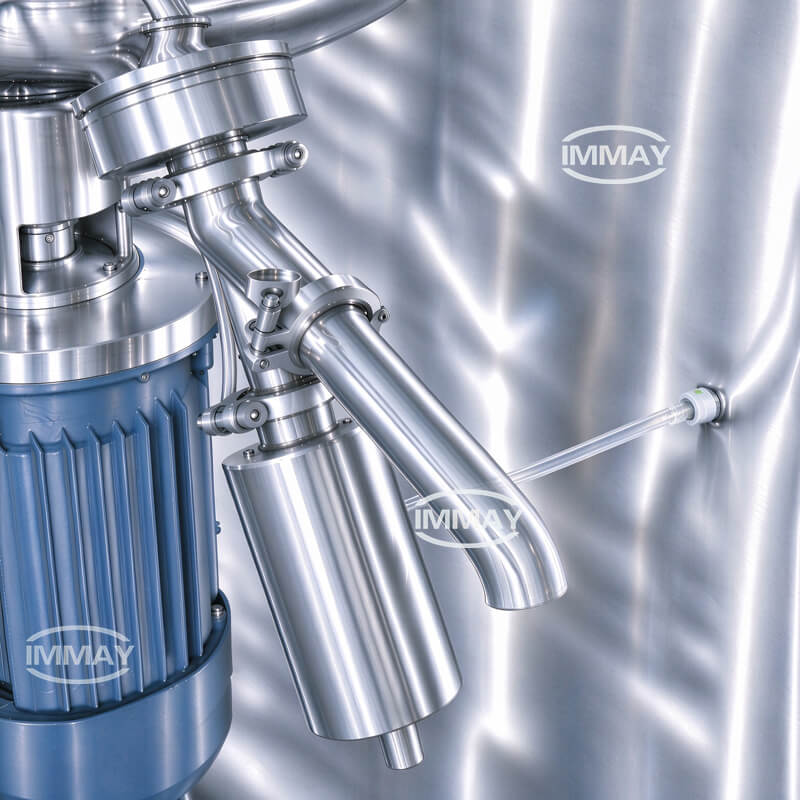
Main Details of An Industrial Ointment Mixing Machine
Recommended Products